
Northeast Europe (1540–1551 CE): Consolidation of Protestantism, …
Years: 1540 - 1551
Northeast Europe (1540–1551 CE): Consolidation of Protestantism, Emergence of New States, and Diplomatic Realignments
Between 1540 and 1551 CE, Northeast Europe experienced decisive religious transformations, political consolidation within emerging nation-states, and shifting diplomatic relationships. Following the definitive dissolution of the Kalmar Union, the Protestant Reformation solidified across the region, profoundly reshaping societal structures, political alliances, and cultural identities.
Firm Establishment of Lutheranism in Scandinavia
Under King Gustav I (Gustav Vasa), Sweden—including Finland—further entrenched Lutheran reforms, consolidating state control over religious institutions. Church lands continued to be secularized, significantly strengthening royal authority and reshaping educational and social institutions across Sweden and Finland. Similarly, under King Christian III, Denmark and Norway formally embraced Lutheranism following the Count's Feud (Grevens Fejde) of the 1530s, permanently altering ecclesiastical structures and governance in both realms.
Strengthened Sovereignty of Independent Sweden
Following the earlier dissolution of the Kalmar Union, Sweden under Gustav I significantly solidified its independence and administrative cohesion. Centralized governance structures, judicial reforms, and improved fiscal administration strengthened Sweden's internal stability and external influence, allowing it to become a significant regional power independent of Denmark-Norway.
Duchy of Prussia's Consolidation and Growth
The secularized Duchy of Prussia, under Duke Albert of Brandenburg-Ansbach, continued consolidating its political and religious reforms, strengthening governance structures and promoting economic resilience in key urban centers such as Königsberg. Under its vassal relationship with the Polish–Lithuanian Union, the Duchy maintained political stability, enhanced territorial governance, and facilitated Protestant reform, setting the stage for Prussia’s later prominence.
Livonian Confederation’s Diplomatic and Economic Stability
Amid broader regional upheaval, the Livonian Confederation, governed from the prosperous city of Riga, maintained autonomy through strategic diplomacy, effective governance reforms, and economic resilience. Its urban economies thrived, reinforcing regional stability despite growing pressures from neighboring states, particularly the increasingly powerful Duchy of Muscovy.
Increased Muscovite Influence and Pressure
The expanding power of the Grand Duchy of Muscovy began exerting significant pressure on Northeast European territories, particularly in Livonia and eastern border regions. Under Ivan IV (the Terrible), Muscovy intensified diplomatic demands and territorial ambitions, significantly influencing regional power dynamics and prompting strategic defensive alignments.
Economic Prosperity in Urban Centers
Key economic hubs, notably Reval (Tallinn), Riga, Königsberg, and Visby on Gotland, maintained significant commercial prosperity, bolstered by maritime trade and robust merchant networks. Economic vitality in these cities significantly contributed to regional stability, facilitating resilience amid political and religious transformations.
Cultural and Educational Transformations
The Lutheran Reformation continued reshaping cultural and educational frameworks, particularly in Scandinavia and Prussia. Ecclesiastical institutions, now largely under state control, emphasized vernacular literacy, biblical studies, and humanistic education. These reforms significantly influenced societal structures, cultural identities, and intellectual developments across Northeast Europe.
Strategic Diplomatic Adjustments
Diplomatic interactions intensified significantly amid evolving alliances, territorial concerns, and religious differences. The emerging geopolitical realities, including Muscovite expansion, the Protestant consolidation in Scandinavia and Prussia, and the weakened influence of traditional Catholic institutions, prompted careful diplomatic maneuvering and strategic negotiations among regional states.
Legacy of the Era
The era from 1540 to 1551 CE profoundly reshaped Northeast Europe’s geopolitical landscape, characterized by definitive religious reformation, strengthened nation-states, and emerging diplomatic alignments. These transformative developments significantly influenced subsequent political structures, territorial boundaries, and cultural identities, fundamentally guiding Northeast Europe into the early modern period.
People
Groups
- Polytheism (“paganism”)
- Latvians, or Letts (Eastern Balts)
- Estonians
- Christians, Roman Catholic
- Finland under Swedish rule
- Riga, Bishopric/Archbishopric of
- Terra Mariana (Livonian Confederation)
- Livonian Order
- Teutonic Knights of Prussia, or Monastic state of the Teutonic Knights (House of the Hospitalers of Saint Mary of the Teutons in Jerusalem)
- Moscow, Grand Principality of
- Hanseatic League
- Crown of the Kingdom of Poland
- Poland of the Jagiellonians, Kingdom of
- Lithuania, Grand Duchy of
- Lutheranism
- Sweden, (second) Kingdom of
- Prussia, Duchy of
- Denmark-Norway, Kingdom of
- Russia, Tsardom of
Topics
Subjects
Regions
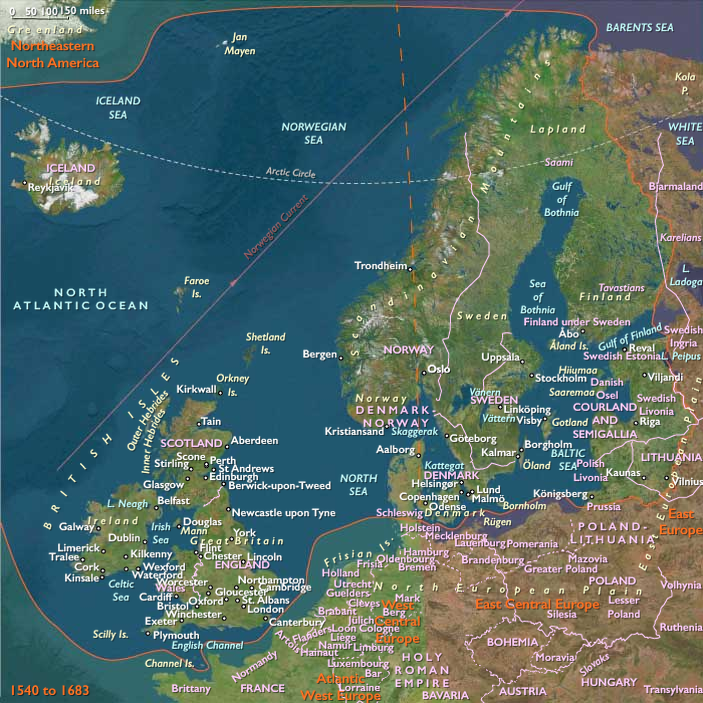
Subregions
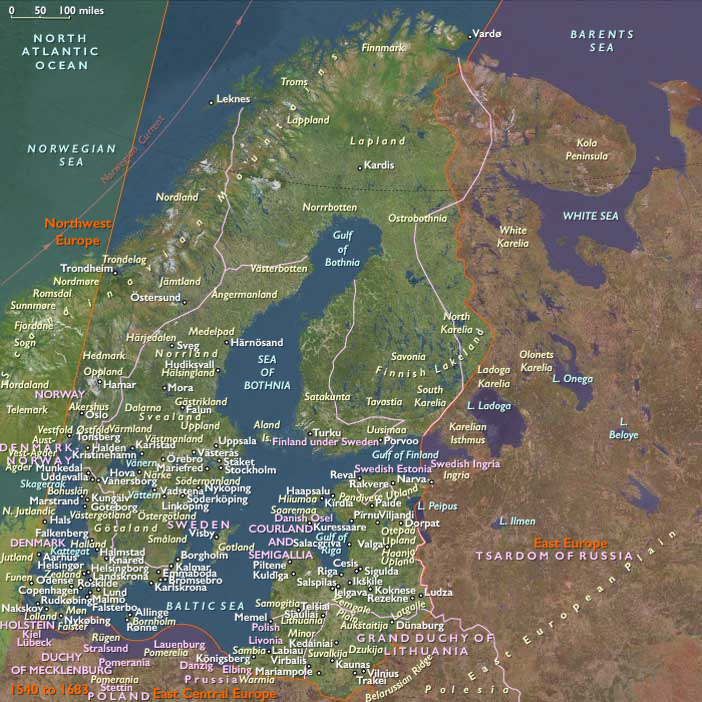
Related Events
Showing 10 events out of 37475 total
Years: 1540 - 1551
People
Groups
- Polytheism (“paganism”)
- Latvians, or Letts (Eastern Balts)
- Estonians
- Christians, Roman Catholic
- Finland under Swedish rule
- Riga, Bishopric/Archbishopric of
- Terra Mariana (Livonian Confederation)
- Livonian Order
- Teutonic Knights of Prussia, or Monastic state of the Teutonic Knights (House of the Hospitalers of Saint Mary of the Teutons in Jerusalem)
- Moscow, Grand Principality of
- Hanseatic League
- Crown of the Kingdom of Poland
- Poland of the Jagiellonians, Kingdom of
- Lithuania, Grand Duchy of
- Lutheranism
- Sweden, (second) Kingdom of
- Prussia, Duchy of
- Denmark-Norway, Kingdom of
- Russia, Tsardom of
Topics
Subjects
Regions
Subregions