Northeast Europe (1708–1719 CE): Turning Point of…
1708 CE to 1719 CE
Northeast Europe (1708–1719 CE): Turning Point of the Great Northern War and Emergence of Russian Power
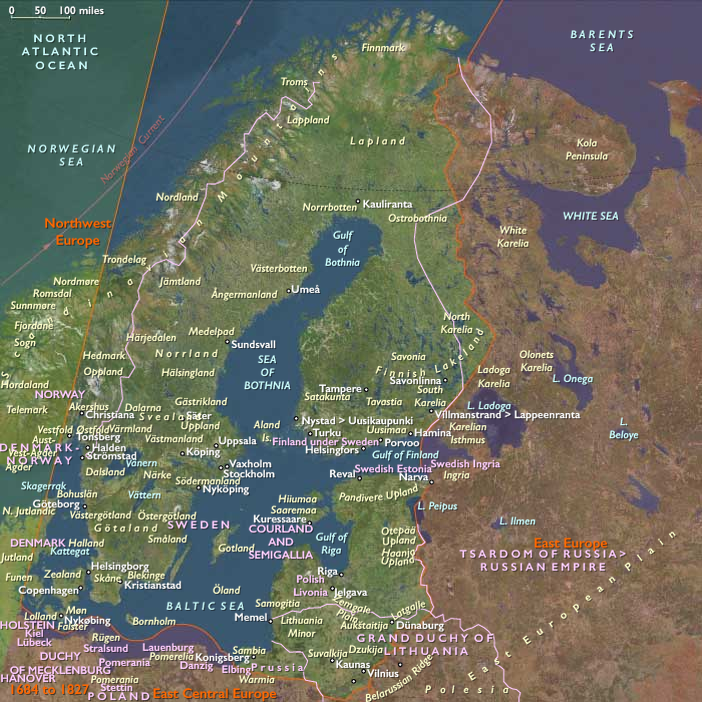
Between 1708 and 1719 CE, Northeast Europe experienced profound geopolitical transformations, marked by a decisive turning point in the Great Northern War, the dramatic decline of Swedish power, and the rapid rise of the Russian Empire under Tsar Peter I ("Peter the Great"). The era saw significant territorial realignments, economic disruptions, devastating epidemics, and complex diplomatic shifts across the region.
Charles XII's Russian Campaign and the Disaster at Poltava
In 1708, King Charles XII, flushed with confidence following his successful invasion of Poland and defeat of Augustus II, launched a bold attempt to invade Russia. However, this campaign turned disastrous, culminating in a decisive defeat at the Battle of Poltava in 1709. After enduring a long march severely hindered by persistent Cossack raids, Tsar Peter's scorched-earth tactics, and the exceptionally harsh winter conditions of early 1709, the Swedish forces arrived at Poltava greatly weakened, demoralized, and significantly outnumbered. The subsequent Russian victory at Poltava decisively shifted the tide of the war and marked the beginning of the end for Sweden's Baltic dominance.
Russian Ascendancy and Territorial Expansion
Capitalizing swiftly on their victory at Poltava, Russian forces advanced along the Baltic coast. By 1710, strategically crucial cities—including Reval (Tallinn), Riga, and Vyborg—fell under Russian control, fundamentally altering regional geopolitical dynamics. Tsar Peter established Saint Petersburg in previously captured Swedish territory as a symbol of Russia's new Baltic prominence, cementing its status as a major European power.
Devastation from Plague in Swedish Dominions
Further compounding Sweden’s strategic difficulties, a devastating plague outbreak raged across eastern Central Europe during this period. Between 1710 and 1711, approximately 190,000 people in Lithuania, Livonia, and Estonia were infected, and nearly half succumbed. The epidemic reached Central Sweden in 1710, severely weakening Sweden’s demographic, economic, and military capacity and intensifying the empire’s accelerating decline.
Charles XII's Final Campaign and Death in Norway
In a final bid to recover Swedish military prestige and territorial strength, Charles XII launched an invasion of Norway in 1716. Despite initial military progress, the campaign ended abruptly when the Swedish king was killed by a gunshot at the siege of Fredriksten Fortress in 1718. Though the Swedish forces were not militarily defeated at Fredriksten, Charles XII’s death led to the collapse of the campaign’s leadership and organization, forcing the Swedish army into a hasty withdrawal and signaling a definitive end to Swedish aspirations of renewed regional dominance.
Danish–Norwegian Resurgence and Strategic Ambitions
Denmark–Norway, under Frederick IV, leveraged Sweden’s difficulties by reasserting claims to previously lost territories, notably during the Norwegian campaigns. The abrupt end to Charles XII’s Norwegian invasion significantly bolstered Danish–Norwegian regional ambitions, further eroding Swedish influence and increasing regional tensions.
Internal Fragmentation in the Polish–Lithuanian Commonwealth
Under Augustus II the Strong, the Polish–Lithuanian Commonwealth continued to suffer from profound internal instability, exacerbated by the turmoil of ongoing warfare and foreign intervention. Increasing Russian diplomatic and military influence weakened the Commonwealth’s political cohesion and autonomy, hastening its decline as a major regional power.
Prussian Diplomatic Prudence and Stability
Under Frederick William I (r. 1713–1740), the Kingdom of Prussia continued its cautious diplomatic policy, maintaining careful neutrality to secure stability amid regional upheaval. Strengthened administrative reforms, disciplined military capabilities, and sustained economic prosperity, particularly in Königsberg, enabled Prussia to remain stable despite surrounding conflicts and disruptions.
Economic Strains and Urban Resilience
Despite widespread conflict and epidemic devastation, urban centers such as Reval (Tallinn), Riga, and Königsberg displayed remarkable economic resilience. Though maritime trade and regional commerce suffered significantly, robust local governance and merchant networks allowed partial mitigation of broader economic damage.
Cultural and Intellectual Activity Amidst Crisis
Cultural and intellectual pursuits continued despite severe disruptions caused by war and epidemic. Protestant and Lutheran universities and academies persisted, maintaining intellectual traditions and educational continuity even amid dire conditions, although these activities inevitably faced severe challenges.
Complex Diplomatic Realignments
Diplomatic interactions intensified dramatically as regional powers navigated shifting alliances and territorial claims in response to Sweden’s collapse. Russia, Denmark–Norway, Poland–Lithuania, and Prussia all repositioned strategically, adapting to the rapidly shifting balance of power following Sweden’s defeats, epidemics, and the loss of King Charles XII.
Legacy of the Era
The era from 1708 to 1719 CE profoundly reshaped Northeast Europe’s geopolitical trajectory, decisively marking the collapse of Sweden’s empire and heralding Russia’s rise as a dominant regional power. The catastrophic Swedish defeat at Poltava, coupled with devastating epidemics and the death of Charles XII, irreversibly shifted the balance of power, significantly influencing subsequent territorial boundaries, diplomatic alliances, and regional identities for generations to come.
People
Groups
Topics
Subjects
Regions

North Europe
View →Subregions