
Northeast Europe (1912–1923 CE): Independence, Revolution, and…
1912 CE to 1923 CE
Northeast Europe (1912–1923 CE): Independence, Revolution, and National Transformation
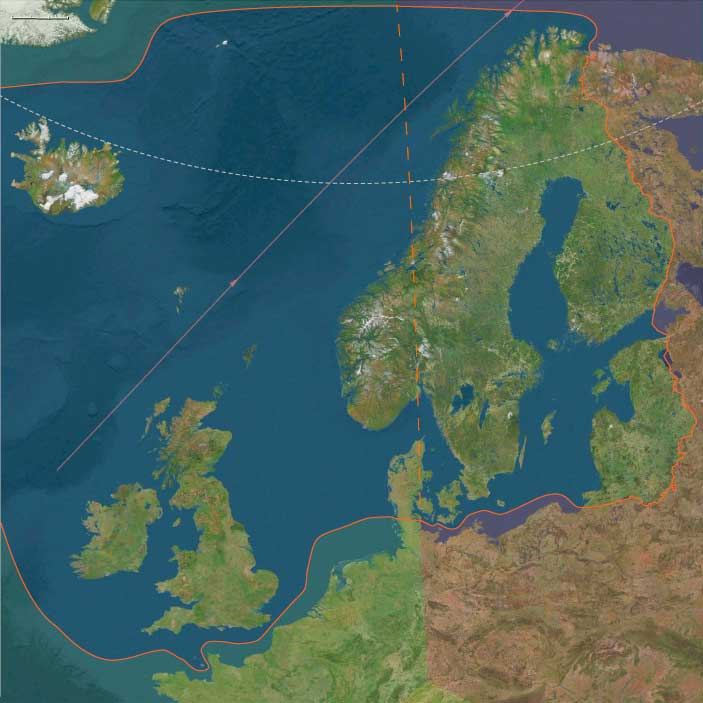
Between 1912 and 1923 CE, Northeast Europe experienced profound geopolitical transformations and intense national awakenings, shaped decisively by the upheavals of the First World War (1914–1918), the Russian Revolution of 1917, and the ensuing collapse of empires. Finland, Estonia, Latvia, and Lithuania successfully achieved independence amid turmoil. Denmark, Sweden, and Norway maintained neutrality but faced significant internal economic and political changes. Germany’s defeat in 1918 dramatically reshaped regional dynamics, altering long-standing economic relationships and geopolitical alignments.
Finland: From Russification to Independence and Civil War
Finnish resistance to Russification peaked during the First World War as national consciousness strengthened under external pressure. The Russian Revolution and the subsequent Bolshevik rise to power in 1917 provided Finland with a decisive moment to declare independence. On December 6, 1917, Finland formally declared itself a sovereign state, recognized shortly thereafter by Bolshevik Russia and other Western nations.
However, independence quickly led to internal strife. In January 1918, deep political divisions erupted into the Finnish Civil War, pitting the conservative, nationalist "Whites" against socialist "Reds," supported by the nascent Bolshevik regime in Russia. The conflict ended by May 1918 with a victory for the Whites under General Carl Gustaf Emil Mannerheim, who emerged as a central figure in Finnish history. The war’s bitter legacy shaped Finland’s political and social landscape profoundly for decades, contributing to cautious foreign policy and domestic polarization.
Estonia and Latvia: Struggle for Freedom and Statehood
Estonia and Latvia seized the opportunity created by the collapse of the Russian Empire and Germany’s defeat to pursue national independence. Both countries declared independence in 1918—Estonia on February 24, Latvia on November 18. Achieving independence, however, was complicated by intense conflicts involving Bolshevik forces, German troops, and domestic factions.
The Estonian War of Independence (1918–1920) and the Latvian War of Independence (1918–1920) became defining moments of national unity and resilience. After fierce battles, Estonia and Latvia secured their sovereignty. Estonia's landmark victory at the Battle of Võnnu (Cēsis) in 1919 and Latvia’s steadfast defense against Bolshevik incursions reinforced their national identity and democratic aspirations. Both nations established parliamentary republics, cultivating democratic governance and educational reforms.
Lithuania: Independence and National Consolidation
Lithuania’s declaration of independence on February 16, 1918, was followed by complex struggles against both Bolshevik Russia and Poland. Lithuania successfully defended its independence in the Lithuanian Wars of Independence (1918–1920), asserting national sovereignty despite geopolitical challenges, notably in the disputed Vilnius region, which was seized by Poland in 1920, becoming a persistent diplomatic tension.
The newly independent Lithuanian state developed as a parliamentary republic initially, with significant land reforms and educational expansions aimed at strengthening Lithuanian identity and society.
Denmark, Sweden, and Norway: Neutrality, Democratization, and Social Progress
During the First World War, Denmark, Sweden, and Norway maintained strict neutrality, managing complex diplomatic relations amidst the conflict. Although neutral, these nations faced economic disruption due to curtailed trade, submarine warfare, and resource scarcity.
Democratic and social reforms progressed significantly:
-
Norway had already granted universal suffrage by 1913, becoming a leader in democratic reforms and gender equality.
-
Denmark enacted major constitutional and social welfare reforms, solidifying democratic stability, and introducing significant labor protections.
-
Sweden further democratized its political system, significantly expanding suffrage in 1919, transitioning towards a fully representative parliamentary democracy. Additionally, Sweden improved its welfare system and labor protections, addressing earlier socioeconomic disparities.
Germany’s Defeat and Regional Realignment
Germany’s defeat in 1918 fundamentally reshaped the region’s economic and diplomatic landscape. The collapse of the German Empire and subsequent Treaty of Versailles (1919) drastically altered trade relationships and regional power dynamics. Former German territories and influence in the Baltic States vanished overnight, creating power vacuums and opportunities for national assertion in Estonia, Latvia, and Lithuania. The German city of Königsberg (Kaliningrad) remained within Germany, though isolated due to new national boundaries established after the war.
Industrial and Economic Transformation
The war accelerated industrialization and economic transformation in Finland and the Baltic states. The need for war-related production spurred industrial sectors, particularly timber, textiles, shipbuilding, and metalworking, which grew substantially. Post-war reconstruction efforts fostered modernization and industrial diversification, strengthening regional economies.
Denmark, Sweden, and Norway experienced economic disruptions during wartime but rapidly recovered post-war, particularly benefiting from neutral status and stable governance, allowing accelerated economic development in agriculture, industry, and commerce.
Urbanization and Social Change
Urbanization intensified significantly throughout Northeast Europe during and after the war. Major cities—Helsinki, Tallinn, Riga, Kaunas, Vilnius, Stockholm, Oslo, and Copenhagen—expanded rapidly, spurred by migration from rural areas seeking industrial employment and economic opportunities. Urban growth facilitated the expansion of middle classes, labor movements, and progressive political organizations.
Rise of Social Democracy and Labor Movements
Labor and socialist movements grew significantly, influenced by wartime conditions and revolutionary events in Russia. Finland’s Social Democratic Party (SDP), despite setbacks during the civil war, quickly regained strength, becoming central to Finnish politics. Estonia’s and Latvia’s social democratic and socialist movements became influential, contributing to robust parliamentary democracies in the interwar period. Likewise, Scandinavian countries saw strengthened social democratic parties advocating extensive social welfare reforms and labor protections.
Cultural Flourishing and Educational Advances
Cultural and intellectual activity flourished as nations emphasized education and culture to assert national identities. Finland, Estonia, Latvia, and Lithuania pursued extensive educational reforms and promoted national languages, literature, and cultural institutions. The University of Helsinki, University of Tartu, and other educational institutions expanded significantly, fostering intellectual and cultural development.
Diplomatic Alignments and International Recognition
The newly independent states sought international recognition and security through diplomatic engagements. Estonia, Latvia, Lithuania, and Finland secured broad international recognition through the Treaty of Tartu (1920) (Estonia and Finland with Soviet Russia) and similar treaties, establishing stable boundaries and sovereignty guarantees. In 1921, Finland joined the League of Nations, further solidifying international recognition and legitimacy.
Legacy of the Era
The period 1912 to 1923 CE profoundly transformed Northeast Europe. The successful independence movements in Finland, Estonia, Latvia, and Lithuania dramatically reshaped the region's political geography. Democratic governance, economic modernization, and social reforms accelerated across the region. Meanwhile, Denmark, Sweden, and Norway emerged stronger economically and democratically, benefiting from their wartime neutrality. Germany’s defeat fundamentally altered geopolitical alignments and regional economic dynamics.
These transformative years laid critical foundations for future political stability, national identities, democratic traditions, and regional cooperation, decisively shaping Northeast Europe's historical trajectory for generations to come.
People
Groups
Topics
Subjects
Regions
North Europe
View →Subregions
