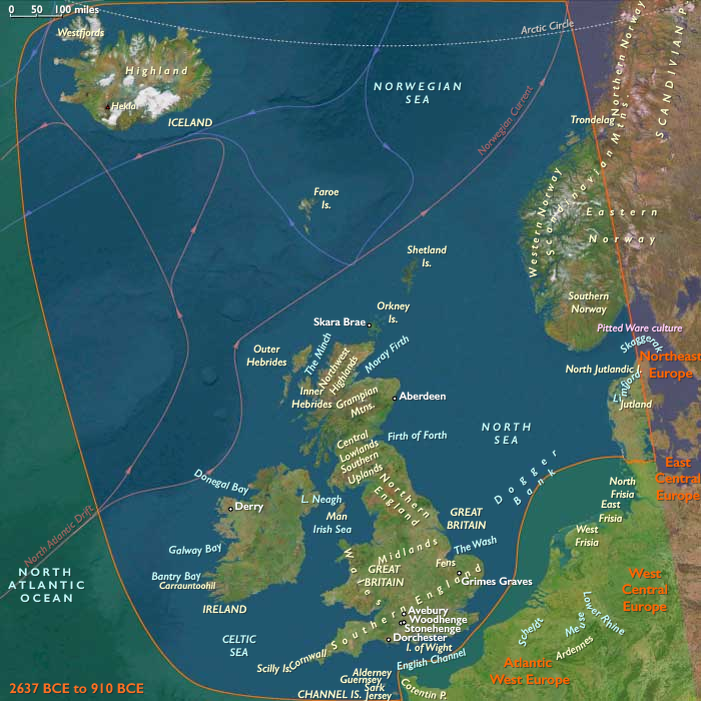
Northwest Europe (2637 – 910 BCE): Atlantic…
2637 BCE to 910 BCE
Northwest Europe (2637 – 910 BCE): Atlantic Isles and Northern Seaways
Geographic and Environmental Context
Northwest Europe—including Iceland, Ireland, the United Kingdom, western Norway, and western Denmark—was shaped by rugged coasts, high rainfall, and a cool maritime climate moderated by the North Atlantic Drift. The coastline featured deep fjords, rocky headlands, and sheltered bays, while inland landscapes ranged from mountain moors and upland pastures to fertile river valleys and lowland plains. Islands such as the Hebrides, Orkney, and Shetland were strategically located along maritime routes.
Subsistence and Settlement
By the mid–third millennium BCE, farming communities cultivated barley, emmer wheat, and pulses, often in small fields cleared from woodland. Cattle, sheep, and goats were herded in both lowlands and uplands, with transhumance practiced to maximize grazing. Coastal populations relied heavily on fishing, shellfish gathering, and seasonal harvests of seabirds and marine mammals. Inland hunting targeted red deer, wild boar, and smaller game. Settlements included timber roundhouses, stone-built structures in treeless zones, and temporary upland shelters.
Technological and Cultural Developments
Stone tool use continued alongside the adoption of copper and bronze for weapons, tools, and ornaments. Monumental architecture remained significant, with stone circles, henges, and chambered cairns serving as ceremonial centers. Pottery traditions varied from plain utilitarian wares to decorated beakers and urns, reflecting participation in the Beaker culture and regional identities. In Norway and Denmark, woodworking skills were advanced, producing plank-built boats and decorated wooden items.
Maritime and Overland Networks
Northwest Europe was deeply embedded in early Atlantic exchange systems. Obsidian, metal ores, jet, and amber moved along sea routes linking the British Isles, Scandinavia, and Atlantic continental Europe. Coastal and riverine transport allowed the movement of grain, livestock, and prestige goods. Fishing and whaling provided surplus for trade, and boat technology—including sewn-plank and logboats—facilitated open-water travel.
Cultural and Symbolic Expressions
Burials ranged from megalithic tombs to individual barrows and cists, often furnished with bronze daggers, beads, and decorated pottery. Rock carvings in Scandinavia depicted ships, warriors, animals, and solar symbols, suggesting a shared maritime cosmology. In the British Isles, ceremonial complexes such as Stonehenge reached their later phases, combining astronomical alignments with social gathering functions.
Environmental Adaptation and Resilience
Communities diversified subsistence by combining farming, herding, fishing, and foraging, reducing vulnerability to climate variability. Upland grazing, lowland crop cultivation, and exploitation of coastal resources ensured year-round food supply. In exposed island and coastal areas, settlement placement considered wind shelter and access to fresh water.
Transition to the Early First Millennium BCE
By 910 BCE, Northwest Europe was a mature agricultural and maritime cultural zone, well integrated into long-distance exchange networks across the Atlantic façade. Its enduring traditions of monument building, seafaring, and mixed farming set the stage for further cultural and technological development in the Late Bronze Age.
Groups
Topics
Commodities
Subjects
Regions
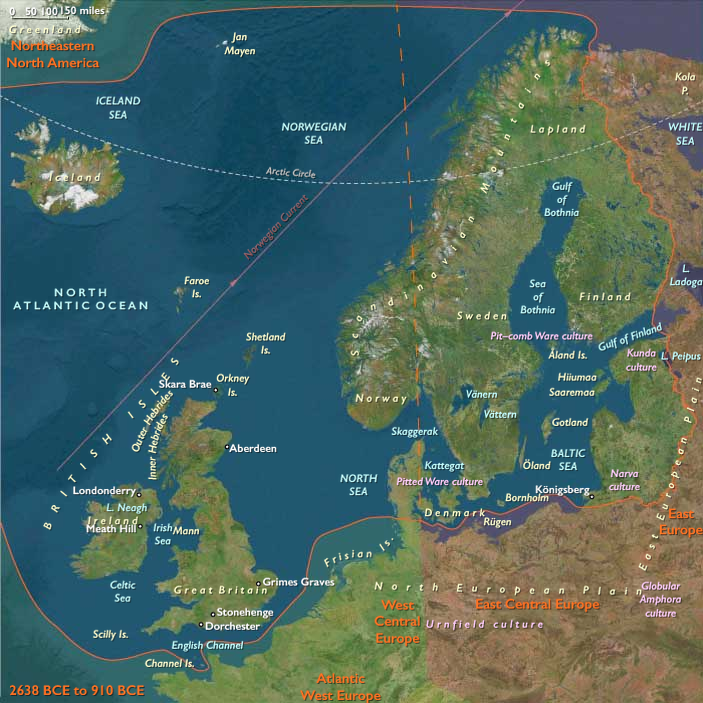
North Europe
View →Subregions