Northwestern North America (1108–1251 CE): Regional Exchange,…
1108 CE to 1251 CE
Northwestern North America (1108–1251 CE): Regional Exchange, Ceremonial Landscapes, and Expanding Cultural Networks
Geographic Parameters
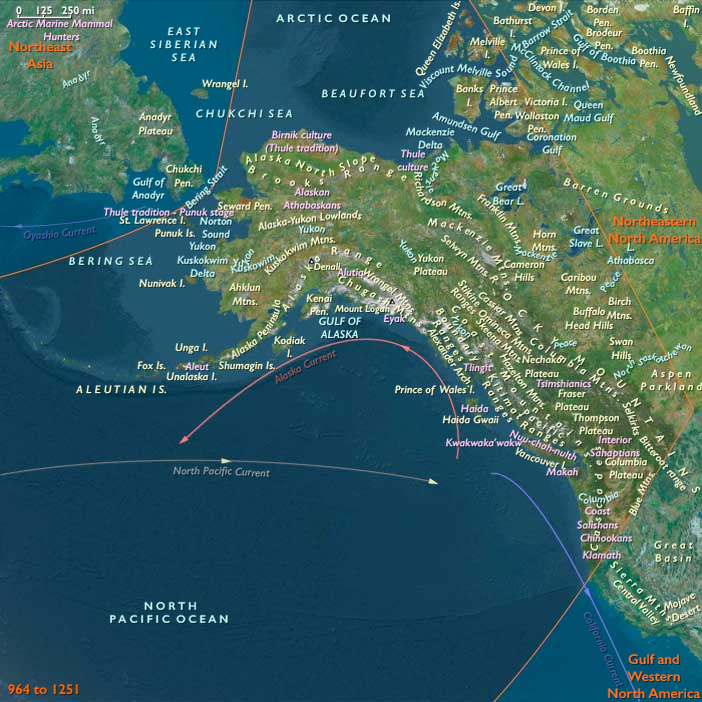
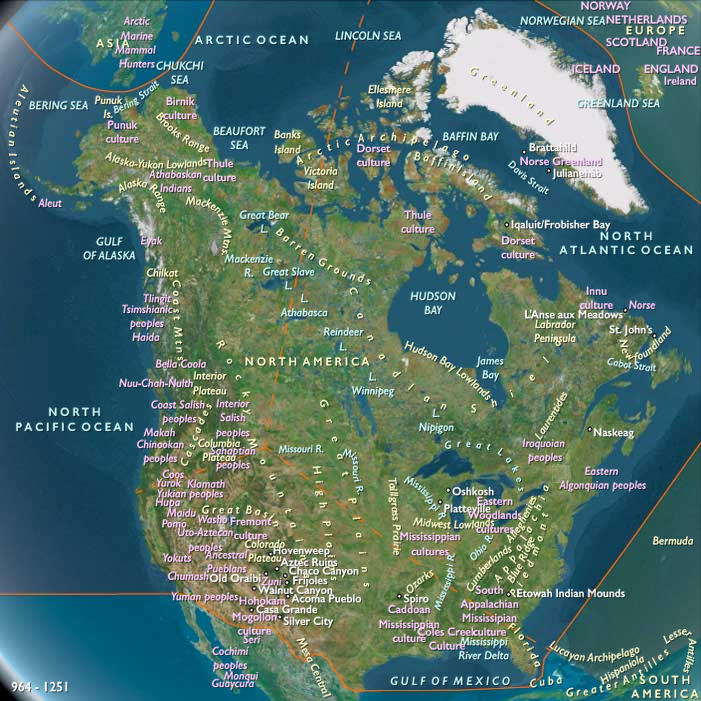
Northwestern North America comprised Alaska, the Yukon, British Columbia, Washington, northern Idaho, northwestern Montana, Oregon, and the far northern Pacific coast of California. The subregion encompassed the Gulf of Alaska, the Aleutian chain, the Alexander Archipelago, Haida Gwaii, Vancouver Island, the Salish Sea, the Fraser and Columbia river systems, the interior plateaus, the Coast and Cascade Mountains, and the western slopes of the Rockies.
Its interconnected network of fjords, rainforests, salmon rivers, mountain corridors, boreal forests, and Arctic coastlines continued to unite diverse societies within a remarkably stable ecological framework.
Environmental Continuity
The favorable conditions associated with the Medieval Warm Period continued across much of the subregion. Productive salmon watersheds, extensive cedar forests, rich marine ecosystems, and abundant interior game supported growing regional populations while preserving the long-established balance between coastal, interior, and Arctic environments.
Although individual fisheries and wildlife populations fluctuated naturally, communities continued adapting through diversified harvesting rather than dependence upon any single resource.
Human Adaptation
Communities further refined well-established seasonal economies that combined marine resources, river fisheries, hunting, root gathering, berry harvesting, and extensive food preservation.
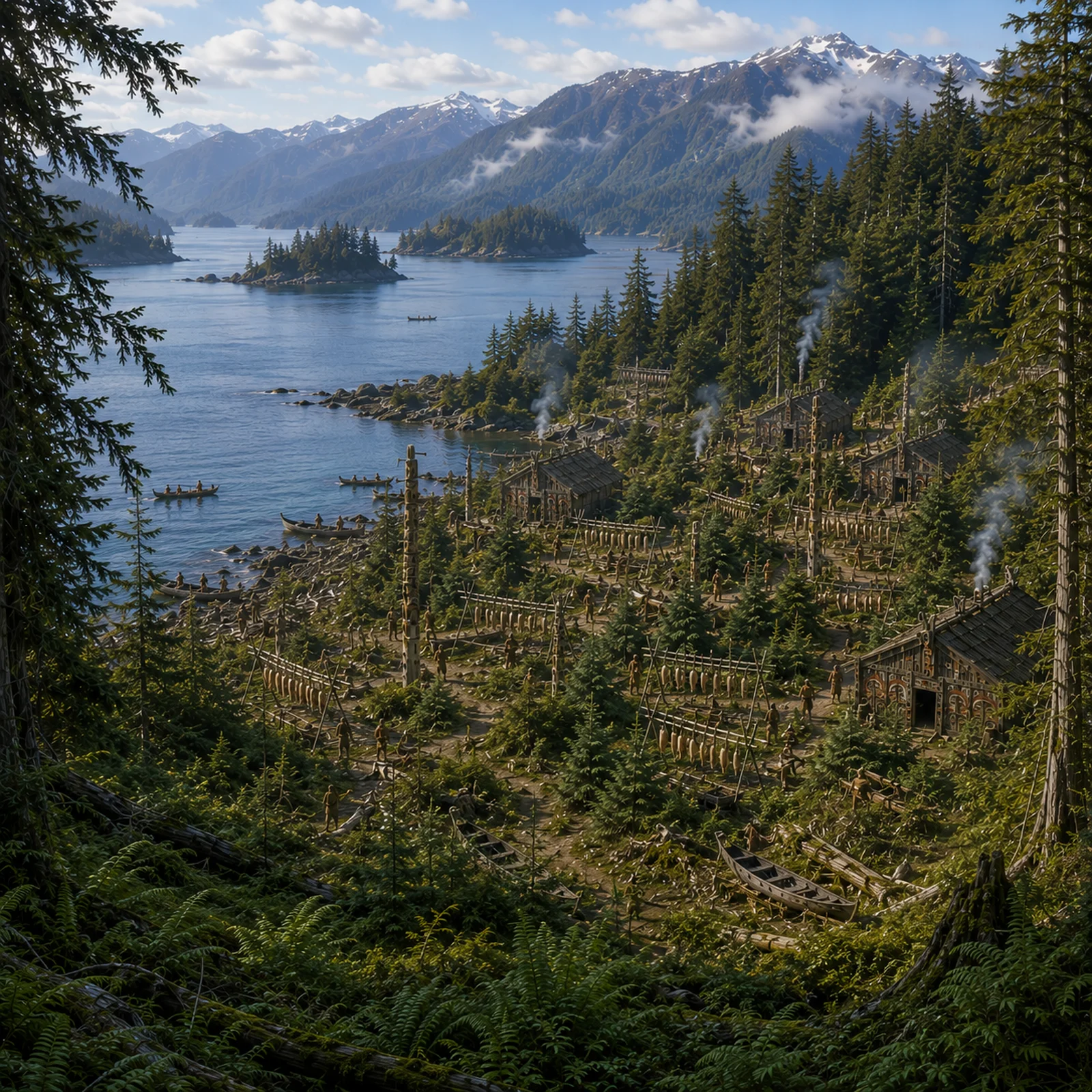
Permanent coastal villages grew gradually around major salmon rivers, sheltered inlets, and productive estuaries, while interior populations maintained seasonal mobility linking fisheries with upland hunting territories and gathering grounds. Arctic communities continued balancing whale, seal, walrus, fish, and caribou harvests through cooperative seasonal scheduling.
Across every ecological zone, resilience continued to depend upon maintaining access to multiple complementary environments.
Economic Organization
Regional exchange networks reached their greatest extent to date. Canoe traffic along the Inside Passage and river transport throughout the Fraser, Skeena, Columbia, Yukon, and Copper basins increasingly connected communities separated by great distances.
Grease trails carried eulachon oil deep into the interior, while native copper, obsidian, dentalium shells, carved cedar goods, hides, dried salmon, woven textiles, and marine products circulated widely among neighboring ecological regions.
Trade increasingly reinforced long-term partnerships rather than occasional exchange, creating durable relationships between coastal villages, plateau communities, subarctic bands, and Arctic settlements.
Institutions
House societies along the Pacific coast continued growing in organizational sophistication. Inherited rights to fisheries, forests, names, ceremonial privileges, and trade relationships became more clearly defined and publicly affirmed through increasingly elaborate ceremonial gatherings.
Gift exchange assumed broader social importance, reinforcing alliances, validating succession, resolving disputes, and confirming reciprocal obligations between communities. Rather than concentrating political power, ceremonial institutions strengthened cooperation across extensive kinship networks.
Artistic expression likewise flourished. Carved house architecture, ceremonial regalia, woven robes, bentwood containers, masks, and finely crafted canoes became increasingly refined expressions of lineage, history, and regional identity. Monumental carving became somewhat more common but remained integrated within inhabited settlements rather than dominating the broader landscape.
Interior Dene, Plateau, and Arctic societies preserved institutions emphasizing mobility, ecological knowledge, oral tradition, and flexible leadership suited to changing seasonal conditions.
Political Systems
Political organization remained regionally decentralized despite increasing institutional complexity. Coastal hereditary leaders exercised influence through stewardship of productive resources, ceremonial generosity, mediation, and established kinship relationships rather than territorial administration.
Interior communities continued organizing through seasonal family networks and respected leaders whose authority depended upon experience, generosity, and success in managing subsistence and travel.
Long-distance diplomacy expanded alongside trade, reducing conflict across many regions while allowing local competition over fisheries, hunting grounds, and transportation corridors to remain largely contained within established customary relationships.
Legacy of the Age
Between 1108 and 1251 CE, Northwestern North America reached a new level of regional integration while preserving its enduring ecological foundations. Expanding exchange networks, increasingly mature house societies, and more elaborate ceremonial institutions strengthened connections across coastal, interior, and Arctic environments without diminishing local autonomy.
The subregion remained fundamentally organized by salmon rivers, cedar forests, marine waterways, and seasonal mobility. Its growing cultural sophistication emerged through the continued refinement of long-established environmental relationships rather than through urbanization or centralized states, creating one of the most interconnected Indigenous landscapes in North America on the eve of the climatic adjustments that would accompany the later medieval centuries.
Images
Northwestern North America in the High Modern (Upper) Age
Groups
Commodities
Subjects
Regions
Northern North America
View →Subregions