The Cities Attacked by the Huns: Hagiographic…
May 451 CE
The Cities Attacked by the Huns: Hagiographic Accounts
The devastation wrought by Attila’s invasion of Gaul in 451 CE can be traced not only through Roman historical records but also through hagiographic vitae—biographies of Christian saints and bishops written to commemorate their deeds. These accounts often blend historical events with miraculous elements, illustrating the religious and cultural impact of the Hunnic onslaught.
The Sack of Rheims and the Martyrdom of Bishop Nicasius
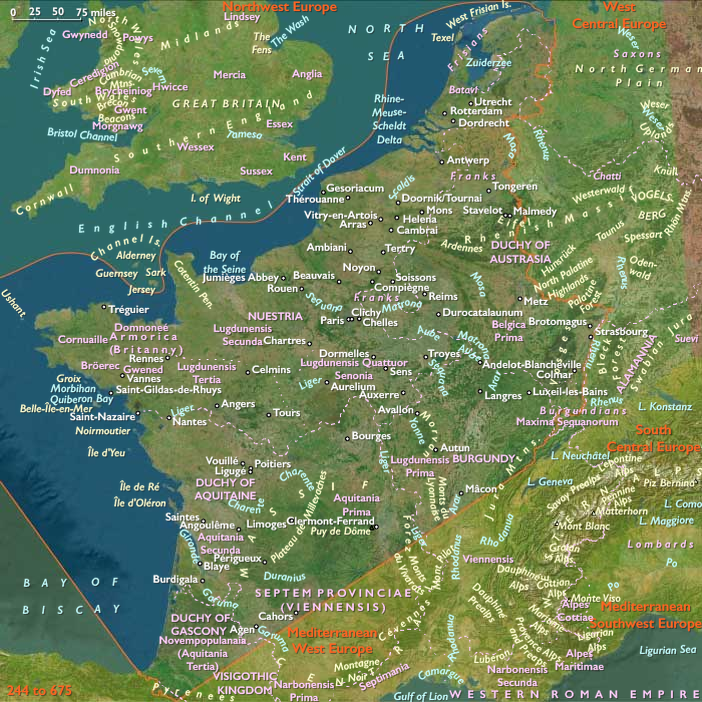
At Rheims, the Huns storm the city, slaughtering many of its inhabitants. According to tradition, Bishop Nicasius, rather than fleeing, chooses to face the invaders in his church, praying at the altar. He is beheaded before the altar, along with his sister Eutropia, his deacon Florens, and other clerics. His martyrdom is later commemorated in local Christian tradition, reinforcing the idea that the city, though ravaged, was spiritually defended.
Locations
Groups
Topics
Commodities
Subjects
Regions
West Europe
View →Subregions