Louis XI and the Order of Saint…
1468 CE to 1479 CE
Louis XI and the Order of Saint Michael (1469–1477)
On August 1, 1469, King Louis XI of France established the prestigious Order of Saint Michael, a knightly and chivalric institution designed explicitly as a counterweight to the powerful Order of the Golden Fleece, established earlier by his Burgundian rival, Philip the Good. By founding this exclusive order, Louis sought to reinforce royal authority, secure the loyalty of France’s highest nobility, and reaffirm the monarchy's primacy over competing feudal interests within the kingdom.
Political Context and Competitive Ambition
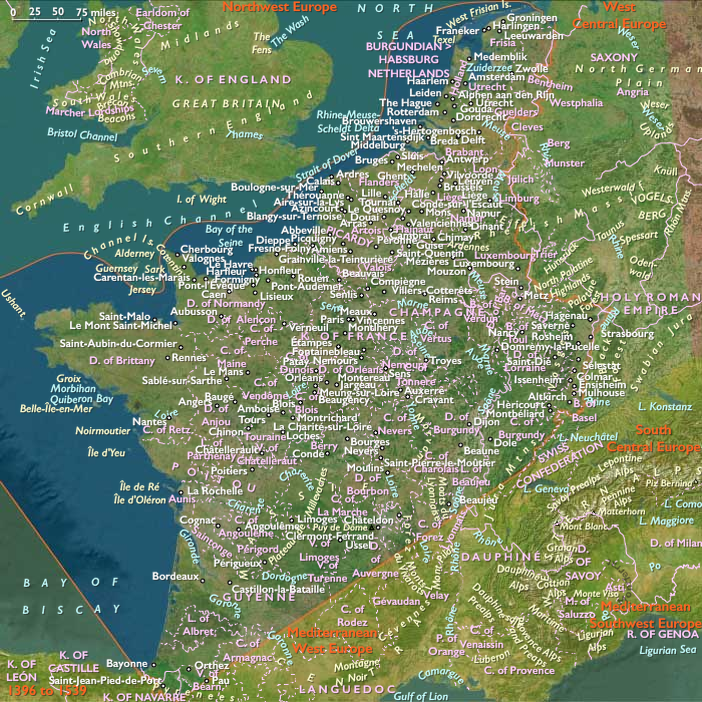
The creation of the Order of Saint Michael was fundamentally a political act—an assertion of Louis XI’s royal authority in direct competition with Burgundy, France’s greatest rival for influence over the major noble houses, particularly the Dukes of Orléans, Berry, and Brittany. Membership was intentionally limited, comprising initially just thirty-one knights, later expanded slightly to thirty-five companions plus the king himself, who served as the thirty-sixth. This exclusivity reflected Louis XI’s deliberate strategy to bind the most powerful nobles of France directly to himself, reducing their autonomy and ensuring their allegiance.
Economic and Administrative Reforms (1470–1477)
Alongside the establishment of the Order, Louis XI undertook extensive economic and administrative reforms, laying critical foundations for modern governance in France. In 1470, printed works first appeared in France, rapidly disseminating administrative and cultural information. By 1477, Louis had established a comprehensive network of mounted relay stations across the kingdom, dramatically enhancing communication and administrative efficiency, thus reinforcing royal oversight throughout his territories.
Louis XI’s rule emphasized partnership with an emerging class of bourgeois officials who helped implement bureaucratic centralization. He actively encouraged commercial expansion through sponsorship of trade fairs, maintenance and improvement of roads, and deliberate economic interventions aimed at strengthening royal revenue and national prosperity.
Diplomatic Maneuvering and Territorial Ambitions
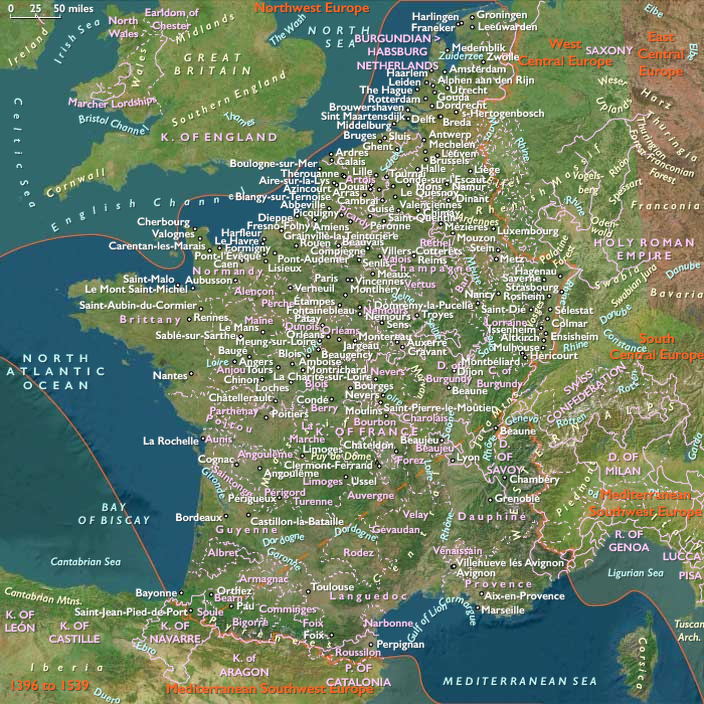
Throughout the 1470s, Louis XI conducted shrewd diplomatic campaigns to consolidate royal power and weaken his opponents. He cooperated strategically with the influential houses of Bourbon and Anjou, isolated Brittany diplomatically, suppressed rebellious Gascon lords, and sought to undermine the formidable power of Charles the Bold of Burgundy by financially supporting Charles's adversaries, notably the Swiss Confederation.
These calculated diplomatic maneuvers significantly weakened the Burgundian state, shifting the regional balance of power decisively in favor of the French crown.
Cultural and Personal Characteristics
Despite his pragmatic, modernizing governance, Louis XI was famously superstitious, maintaining astrologers at court and frequently relying on their advice. His keen personal interest in science occasionally intersected dramatically with royal justice—for instance, pardoning a condemned prisoner on the condition of submitting to experimental gallstone surgery. Such anecdotes highlight Louis’s blend of pragmatism, intellectual curiosity, and medieval superstition.
Long-Term Legacy
Louis XI’s reign, through institutions such as the Order of Saint Michael, marked a crucial transition toward centralized monarchy in France. His innovative administrative, economic, and diplomatic measures significantly undermined feudal autonomy and laid essential foundations for the bureaucratic, centralized governance structure that persisted until the French Revolution. The legacy of Louis XI, therefore, extended far beyond his lifetime, permanently shaping the political landscape and governmental structure of France and influencing the broader political evolution of Atlantic West Europe.
Locations
Groups
Commodities
Subjects
Regions
West Europe
View →Subregions