
The effects of Pontiac's War will be…
August 1766 CE
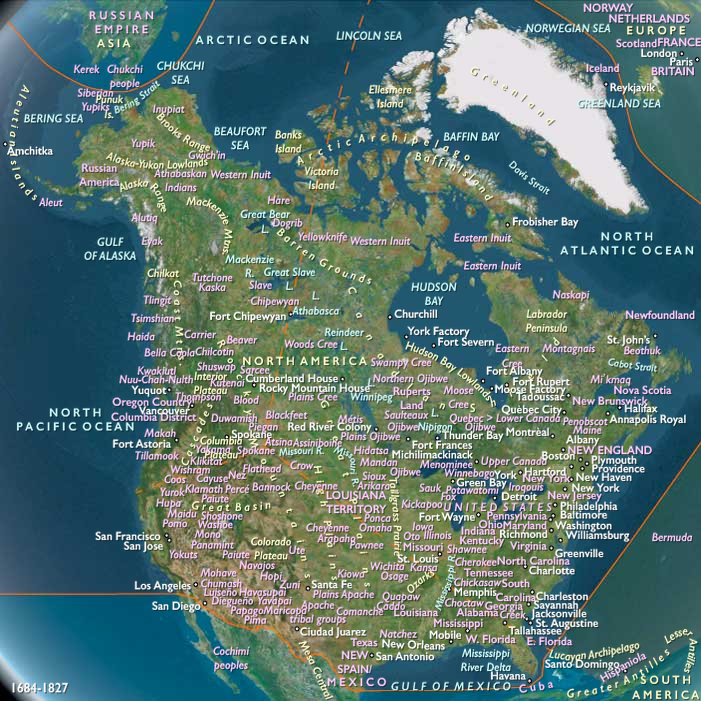
Because the Royal Proclamation of 1763 officially recognizes that indigenous people have certain rights to the lands they occupied, it has been called the natives' "Bill of Rights", and still informs the relationship between the Canadian government and First Nations.
For British colonists and land speculators, however, the Proclamation seems to deny them the fruits of victory—western lands—that had been won in the war with France.
The resentment which this creates undermines colonial attachment to the Empire, contributing to the coming of the American Revolution.
People
Alexander McGillivray
View →
Benjamin Lincoln
View →
Blue Jacket
View →
George Croghan
View →
George III of Great Britain
View →
Guyasuta
View →
Henry Louis Bouquet
View →
John Bradstreet
View →
Joseph Brant
View →
Neolin
View →
Pontiac (Ottawa leader)
View →
Thomas Gage
View →
William Johnson, 1st Baronet
View →
Groups
Iroquois (Haudenosaunee, also known as the League of Peace and Power, Five Nations, or Six Nations)
View →
Wyandot, or Wendat, or Huron people (Amerind tribe)
View →
Miami (Amerind tribe)
View →
Lenape or Lenni-Lenape (later named Delaware Indians by Europeans)
View →
Ojibwa, or Ojibwe, aka or Chippewa (Amerind tribe)
View →
Odawa, or Ottawa, people (Amerind tribe)
View →
Seneca (Amerind tribe)
View →
Susquehannock (Amerind tribe)
View →
Mascouten (Amerind tribe)
View →
Kickapoo people (Amerind tribe)
View →
Potawatomi (Amerind tribe)
View →
Wea (Amerind tribe)
View →
Piankeshaw (Amerind tribe)
View →
Shawnees, or Shawanos (Amerind tribe)
View →
Ohio Country
View →
Thirteen Colonies, The
View →
Illinois Country
View →
Britain, Kingdom of Great
View →
Mingo (Seneca-Cayuga Tribe of Oklahoma)
View →
Topics
Regions
Northern North America
View →Subregions
