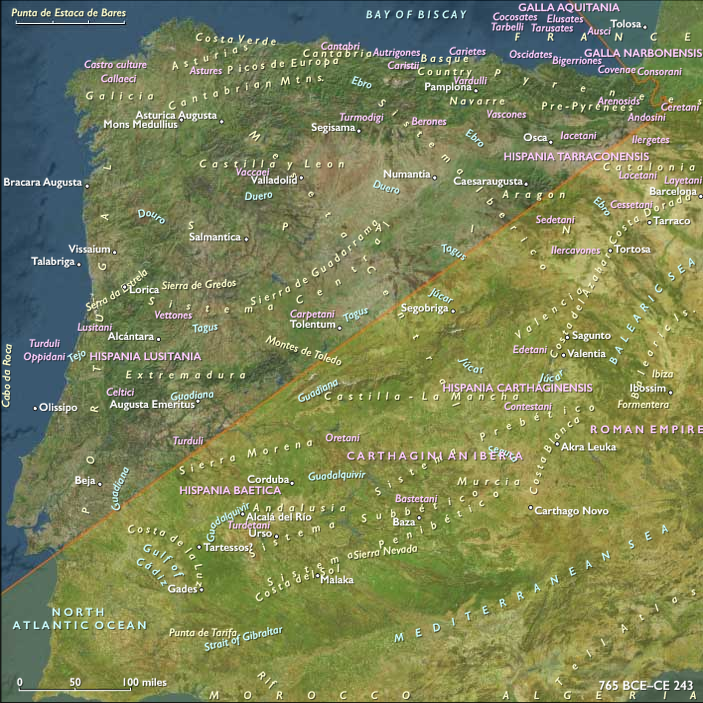
Atlantic Southwest Europe (45 BCE–99 CE): Roman…
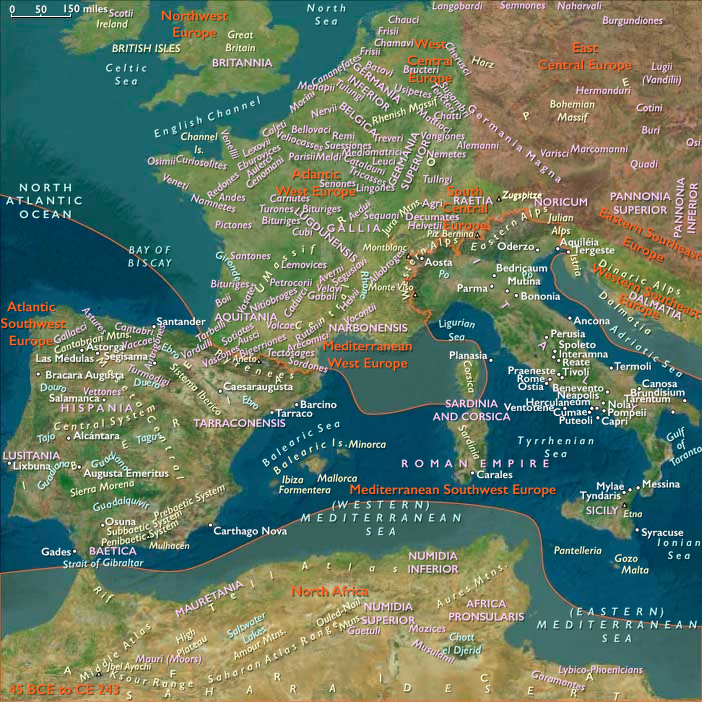
45 BCE to 99 CE
Atlantic Southwest Europe (45 BCE–99 CE): Roman Integration, Economic Prosperity, and Cultural Resilience
Between 45 BCE and 99 CE, Atlantic Southwest Europe—encompassing northern and central Portugal, Galicia, Asturias, Cantabria, and northern Spain south of the Franco-Spanish border (43.05548° N, 1.22924° W)—underwent profound transformations, transitioning from fiercely autonomous tribal societies to fully integrated and prosperous provinces of the Roman Empire. Marked by critical military campaigns, administrative consolidation, extensive economic integration, and cultural adaptations, this era decisively shaped the region’s long-term historical trajectory.
Political and Military Consolidation
Beginning with Roman efforts to complete the subjugation of Hispania under Julius Caesar and Augustus, the region experienced significant political and military changes. The Cantabrian Wars (29–19 BCE) represented a climactic struggle, culminating in the subjugation of fiercely resistant northern tribes—particularly the Gallaeci, Astures, and Cantabri. Subsequent provincial structures provided enduring political stability, supported by robust Roman military infrastructure, permanent fortifications, and extensive administrative towns.
Local tribal elites—among them Lusitanians, Vettones, Vaccaei, and the diplomatically cautious Vascones—strategically adapted to Roman governance, maintaining regional autonomy and internal stability through diplomatic cooperation.
Economic Integration and Technological Advancement
This period witnessed unprecedented economic prosperity through deep integration into Mediterranean trade networks. The region exported valuable resources—silver, copper, tin, salt, agricultural products, timber, textiles, livestock products, and notably slaves—while importing luxury items, ceramics, wine, olive oil, and sophisticated iron products from Mediterranean markets.
Slavery emerged as a central economic institution, extensively employed in mining operations, agriculture, artisanal production, and urban development, deeply embedding it within regional economic and social hierarchies.
Technological innovation, particularly advancements in iron metallurgy, dramatically enhanced productivity, artisanal craftsmanship, military efficiency, and infrastructure development. Roman infrastructure—including extensive road systems, aqueducts, fortified urban centers, bridges, and ports—supported efficient trade and governance.
Cultural Adaptation and Continuity
Despite extensive Roman integration, the indigenous cultures of Atlantic Southwest Europe displayed remarkable resilience. The era was characterized by a dynamic synthesis of indigenous Iberian, Celtic, and Roman cultural traditions. Material culture, such as intricate metalwork, decorative jewelry, pottery, ceremonial artifacts, and household items, underscored robust regional identities and continued cultural vibrancy.
Religious and ritual practices remained active, blending indigenous Iberian, Celtic, and Roman religious elements. Sacred landscapes, communal ceremonies, ancestral rites, and local festivals persisted, reinforcing communal cohesion, regional identity, and cultural continuity.
Key Tribal Groups and Adaptations
-
Lusitanians: Effectively integrated into Roman governance, maintaining local autonomy, economic prosperity, and cultural traditions.
-
Vettones and Vaccaei: Preserved regional stability and prosperity through diplomatic cooperation with Roman authorities.
-
Gallaeci, Astures, Cantabri: Initially resistant, later integrated into Roman provincial structures, preserving local cultural traditions.
-
Vascones: Maintained diplomatic neutrality, territorial autonomy, and distinct cultural identity within the provincial administration.
Presence of Diverse Communities
During the latter part of this era, small but influential Jewish communities also emerged along coastal trade routes, notably around major urban centers, contributing to regional economic vitality and cultural diversity.
Long-Term Historical Significance and Legacy
Between 45 BCE and 99 CE, Atlantic Southwest Europe:
-
Underwent profound Roman military conquest and provincial integration, establishing enduring political stability.
-
Achieved substantial economic prosperity through deep integration with Mediterranean trade networks, embedding slavery firmly into regional society and economy.
-
Demonstrated remarkable cultural resilience, dynamically adapting indigenous traditions within the stable, prosperous Roman provincial framework.
This transformative era decisively shaped Atlantic Southwest Europe, laying critical foundations for centuries of subsequent prosperity, regional identity, and cultural evolution within the Roman and later post-Roman contexts.
Groups
Topics
Commodities
Subjects
Regions
Southwest Europe
View →Subregions