The Origins of the Celtic Language Family…
765 BCE to 622 BCE
The Origins of the Celtic Language Family and Its Indo-European Roots
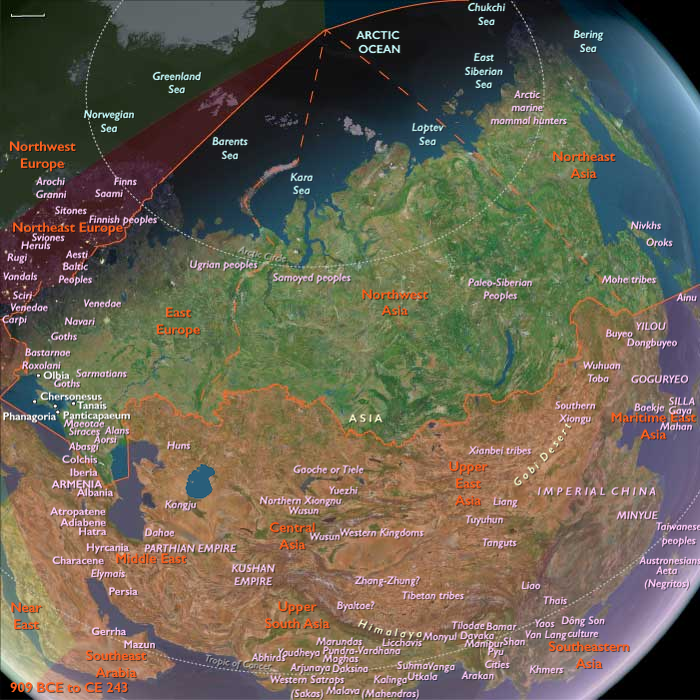
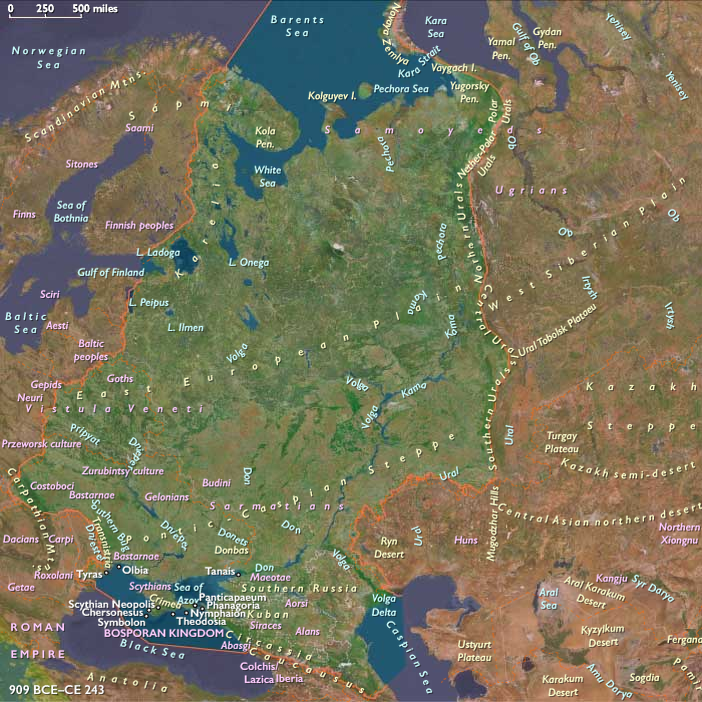
The Celtic language family is a branch of the Indo-European language family, leading some scholars to propose that the proto-Celtic language may have originated in the Pontic-Caspian steppes, aligning with the Kurgan hypothesis—which suggests that early Indo-European languages spread from the Eurasian steppes into Europe.
The Debate Over Early Celtic Differentiation
- Some scholars argue that proto-Celtic emerged early within the Indo-European expansion, possibly as migrating steppe groups moved westward during the Bronze Age.
- However, it is not generally accepted that Celtic became a distinct language family at such an early stage. Instead, most linguistic models suggest that Celtic gradually differentiated from other Indo-European branches during the late Bronze Age and early Iron Age.
Celtic Development and Spread
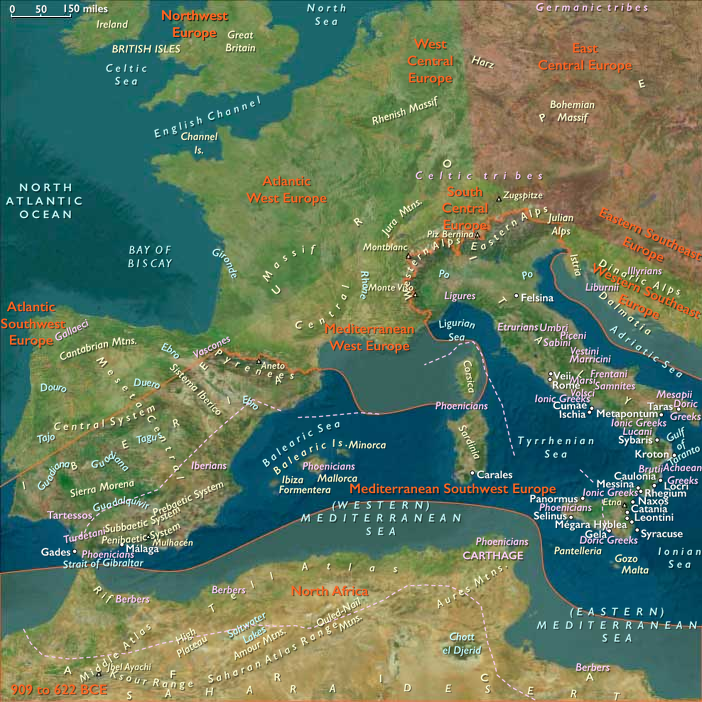
- The Hallstatt culture (c. 1200–500 BCE) and the later La Tène culture (c. 450–1 BCE) are commonly associated with the spread of Celtic languages and culture across Western and Central Europe.
- The earliest inscriptions in Celtic languages appear around the first millennium BCE, reinforcing the idea that proto-Celtic became distinct later in Indo-European history.
- The Celtic linguistic expansion influenced regions including Gaul (modern France), the Iberian Peninsula, the British Isles, and Central Europe.
Current Scholarly Consensus
- The Kurgan hypothesis provides a framework for the Indo-European expansion, but the idea that Celtic was already distinct in the early steppe migrations remains highly debated.
- Instead, Celtic likely developed as a Western Indo-European dialect continuum, diverging from Italo-Celtic or a broader Northwest Indo-European group during the late Bronze Age.
- The exact timeline and location of proto-Celtic’s emergence remain uncertain, though its linguistic traits suggest a gradual evolution rather than an early separation.
Thus, while Celtic languages are undoubtedly Indo-European, their differentiation and spread occurred later in prehistory, making their connection to the early Indo-European steppe migrations a subject of ongoing scholarly discussion.