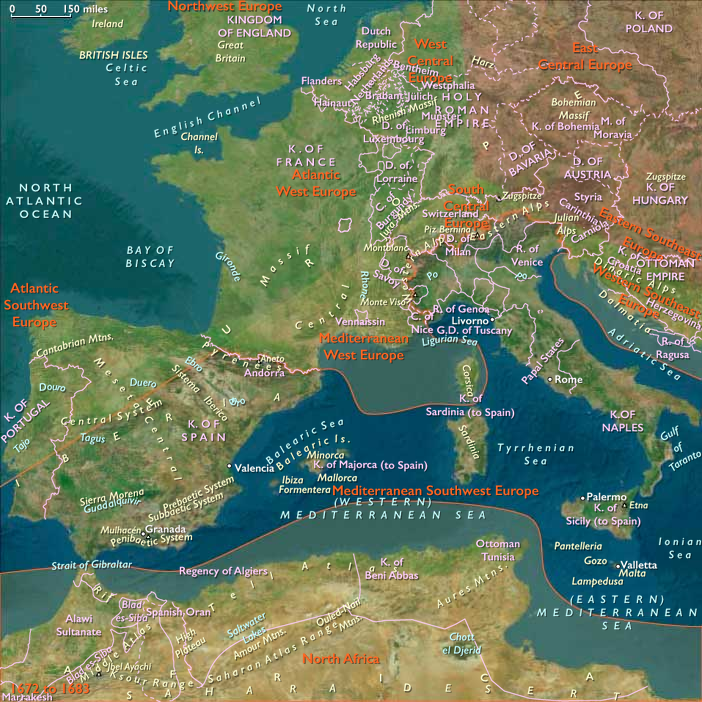
The seventeenth century in Spain is a…
1540 CE to 1683 CE
Neither Philip III (r. 1598- 1621) nor Philip IV (r. 1621-65) is competent to give the kind of clear direction that Philip II had provided.
Responsibility passes to aristocratic advisers.
Gaspar de Guzmán, count-duke of Olivares, attempts and fails to establish the centralized administration that his famous contemporary, Cardinal Richelieu, had introduced in France.
In reaction to Guzman's bureaucratic absolutism, Catalonia revolts and is virtually annexed by France.
Portugal, with English aid, reasserts its independence in 1640, and an attempt is made to separate Andalusia from Spain.
In 1648, at the Peace of Westphalia, Spain assents to the emperor's accommodation with the German Protestants, and in 1654 it recognizes the independence of the northern Netherlands.
Locations
People
Groups
Dutch people
View →
Christians, Roman Catholic
View →
Sardinia, Kingdom of
View →
Netherlands, Habsburg
View →
Naples, Kingdom of
View →
Spaniards (Latins)
View →
Spain, Habsburg Kingdom of
View →
Protestantism
View →
Pavia, (Spanish-ruled) Commune of
View →
Spain, Habsburg Kingdom of
View →
Iberian Union
View →
Portugal, Habsburg (Philippine) Kingdom of
View →
Netherlands, Southern (Spanish)
View →
Netherlands, United Provinces of the (Dutch Republic)
View →
France, (Bourbon) Kingdom of
View →
England, (Stuart) Kingdom of
View →
Portugal, Bragança Kingdom of
View →
Catalonia, Republic, or State, of
View →
Topics
Commodities
Regions
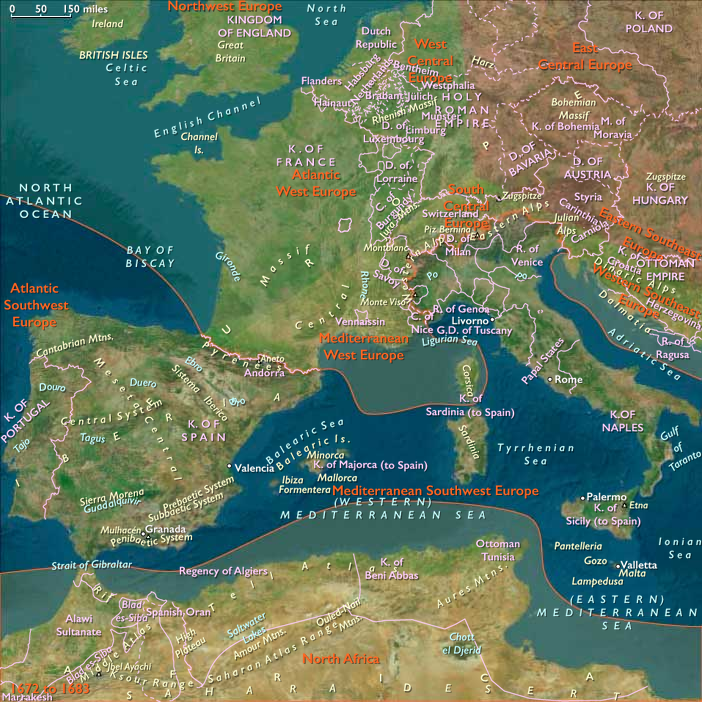
Southwest Europe
View →Subregions