
South Central Europe (1828–1971 CE): Alpine States, …
Years: 1828 - 1971
South Central Europe (1828–1971 CE): Alpine States, Neutralities, and the Rise of Finance and Tourism
Geography & Environmental Context
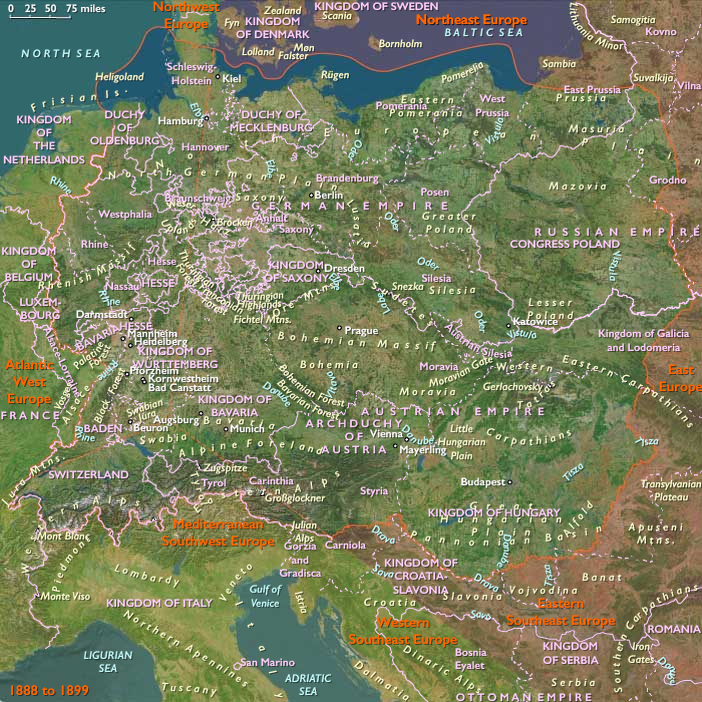
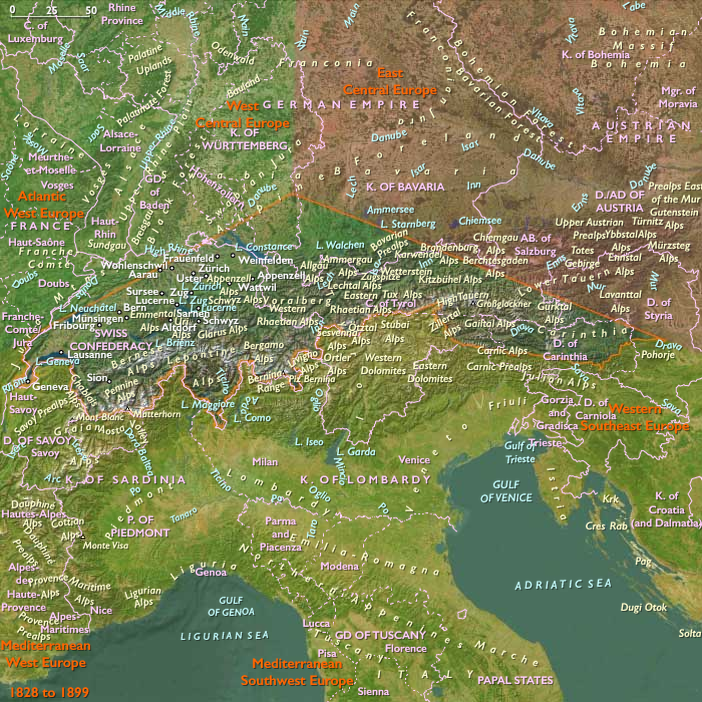
South Central Europe includes southern and western Austria (including Carinthia, but excluding Salzburg), Liechtenstein, extreme southwestern Germany, and Switzerland (including Geneva and Zurich, but excluding Basel and the northern Jura). Anchors include the Eastern and Central Alps (Vorarlberg, Tyrol, Carinthia, Grisons, Valais), the Lake Geneva basin, Lake Zurich, the Upper Rhine headwaters, and the Engadine and Ticino valleys. This was a landscape of rugged Alpine ranges, fertile river valleys, and urban nodes that linked the Mediterranean, Central Europe, and the Atlantic world.
Climate & Environmental Shifts
An alpine-temperate climate shaped life: snowy winters, late springs, and mild summers in valleys. The retreat of glaciers was recorded steadily from the mid-19th century onward, affecting tourism and river regimes. Floods (e.g., along the Inn, Rhine, and Ticino) and avalanches repeatedly destroyed villages, while new dams and hydroelectric reservoirs after 1900 stabilized both power supply and water management.
Subsistence & Settlement
-
Agriculture: Dairy farming dominated the Alps, producing cheese, butter, and milk for export. Vineyards lined the shores of Lake Geneva and Lake Zurich, while maize, rye, and potatoes fed valley communities.
-
Urbanization: Zurich and Geneva expanded as financial, commercial, and intellectual capitals; Innsbruck and Klagenfurt anchored Austrian Alpine provinces; Liechtenstein shifted from subsistence to export manufacturing after mid-century.
-
Industry: Textiles and machinery in Zurich, watchmaking in Neuchâtel and Geneva, precision tools and engineering in German-Swiss cantons, and aluminum smelting in Tyrol and Carinthia fueled regional growth.
Technology & Material Culture
-
Hydropower: Switzerland and Austria pioneered Alpine dams and hydroelectric plants, fueling chemical, aluminum, and railway industries.
-
Transport: The Gotthard (1882), Arlberg (1884), and Semmering railways linked valleys to Europe; motorways and tunnels after 1950 integrated the Alps into continental highways.
-
Tourism infrastructure: Grand hotels, cog railways (Rigi, Jungfrau), ski lifts, and later resorts transformed mountain valleys.
-
Everyday life: Stone farmhouses and chalets dominated rural culture; by the 20th century radios, sewing machines, and later household appliances entered Alpine households.
Movement & Interaction Corridors
-
Alpine passes: The Brenner, Gotthard, and Arlberg passes were strategic conduits for armies, merchants, and tourists.
-
Migration: Seasonal laborers from Tyrol and Grisons sought work abroad in the 19th century; post-1945, Italy and Yugoslavia sent guest workers into Austria and Switzerland.
-
Banking flows: Zurich and Geneva became international financial hubs, attracting deposits and investment, especially during periods of European instability.
-
Tourism: From British and German “grand tours” in the 19th century to mass ski tourism in the 20th, Alpine landscapes drew international visitors.
Cultural & Symbolic Expressions
-
Nationalism & state-building: Austrian provinces integrated into Habsburg rule until 1918, then became part of the Austrian Republic. Switzerland reinforced federal identity after 1848. Liechtenstein pivoted from Austrian dependence to Swiss alignment after 1919.
-
Religion: Catholicism dominated Tyrol, Carinthia, and much of Switzerland; Protestantism was strong in Zurich and other German-speaking cantons.
-
Arts & literature: Alpine romanticism (Turner, Byron in Switzerland), Swiss Realism (Gottfried Keller), Austrian modernism (Musil, Ingeborg Bachmann), and tourism imagery all framed the mountains as both sublime and habitable.
-
Cultural icons: Yodeling, alpine festivals, and Swiss watches became internationally recognized symbols; Zurich and Geneva universities drew global intellectuals.
Environmental Adaptation & Resilience
-
Alpine agriculture: Terracing, seasonal transhumance, and communal pasture rights maintained fragile ecosystems.
-
Disaster resilience: Avalanche barriers, reforestation projects, and river engineering protected communities.
-
Energy adaptation: Hydropower turned natural risks into resources, supplying electricity for domestic and export markets.
-
Tourism: Villages adapted to seasonal swings by diversifying into hotels, ski schools, and resorts, ensuring survival amid economic fluctuations.
Political & Military Shocks
-
1848 Revolutions: Shaped liberal reforms in Switzerland and Austria.
-
World War I: Austria’s Alpine fronts (Dolomites, Isonzo) devastated Tyrol and Carinthia; Switzerland and Liechtenstein remained neutral but mobilized defenses.
-
Interwar: Austria oscillated between authoritarian regimes; Switzerland reinforced neutrality and hosted exiles. Liechtenstein adopted Swiss currency (1921) to stabilize its economy.
-
World War II: Austria was annexed by Nazi Germany (1938–45); Tyrol and Carinthia were militarized. Switzerland defended neutrality with fortified borders and air defense. Liechtenstein, impoverished, leaned on Swiss trade.
-
Post-1945: Austria regained independence (1955) under permanent neutrality. Switzerland and Liechtenstein prospered as financial havens and tourist destinations.
Transition
Between 1828 and 1971, South Central Europe shifted from an agrarian, mountain-bound region into a hub of finance, hydropower, precision industry, and tourism. Dairy farms and vineyards endured, but Zurich and Geneva emerged as international financial capitals, Innsbruck and Tyrol as tourist magnets, and Liechtenstein as a tax haven. Wars scarred Austria, but neutrality after 1955 fostered stability. By 1971, South Central Europe epitomized Alpine resilience: a crossroads of mountain tradition, modern industry, and global finance that anchored both cultural identity and economic prosperity.
People
Groups
- Christians, Roman Catholic
- Austria, Archduchy of
- Liechtenstein, Principality of
- Switzerland
- Austrian Empire
- Bavaria, Kingdom of
- Baden, Grand Duchy of
- France, constitutional monarchy of
- German Confederation
- France, Second Republic of
- France, Second Empire of
- Austria-Hungary
- German Empire (“Second Reich”)
- France (French republic); the Third Republic
- Bavaria, Republic of
- Germany, Weimar Republic of
- Austria, (First) Republic of
- Bavaria, Free State of
- Germany, Third Reich
- France, German-occupied (Vichy)
- France, Free
- Austria, Allied-occupied
- Bavaria, U.S.-occupied
- France (French republic); the Fourth Republic
- Baden, French-occupied
- Germany, East (German Democratic Republic)
- Germany, West (Federal Republic of Germany)
- Baden-Württemberg, German Federal State of
- Bavaria, (German Federal) Free State of
- Austria, (Second) Republic of
- France (French republic); the Fifth Republic
Topics
- Little Ice Age (LIA)
- Little Ice Age, Warm Phase IV
- Sonderbund War
- World War, First (World War I)
- World War, Second (World War II)
- Cold War
Commodoties
Subjects
Regions
Subregions
Years: 1828 - 1971
People
Groups
- Christians, Roman Catholic
- Austria, Archduchy of
- Liechtenstein, Principality of
- Switzerland
- Austrian Empire
- Bavaria, Kingdom of
- Baden, Grand Duchy of
- France, constitutional monarchy of
- German Confederation
- France, Second Republic of
- France, Second Empire of
- Austria-Hungary
- German Empire (“Second Reich”)
- France (French republic); the Third Republic
- Bavaria, Republic of
- Germany, Weimar Republic of
- Austria, (First) Republic of
- Bavaria, Free State of
- Germany, Third Reich
- France, German-occupied (Vichy)
- France, Free
- Austria, Allied-occupied
- Bavaria, U.S.-occupied
- France (French republic); the Fourth Republic
- Baden, French-occupied
- Germany, East (German Democratic Republic)
- Germany, West (Federal Republic of Germany)
- Baden-Württemberg, German Federal State of
- Bavaria, (German Federal) Free State of
- Austria, (Second) Republic of
- France (French republic); the Fifth Republic
Topics
- Little Ice Age (LIA)
- Little Ice Age, Warm Phase IV
- Sonderbund War
- World War, First (World War I)
- World War, Second (World War II)
- Cold War
Commodoties
Subjects
Regions
Subregions