
Sundachina (477 BCE–243 CE) Irrigation Expansion and…
477 BCE to 243 CE
Sundachina (477 BCE–243 CE)
Irrigation Expansion and Regional Exchange Networks
Geographic and Environmental Context
Sundachina encompassed the river valleys, coastal lowlands, wetlands, forests, and island systems of mainland and maritime Southeast Asia, including the Mekong, Chao Phraya, Red River, Malay Peninsula, Java, Sumatra, Borneo, Sulawesi, and the Philippines. River valleys, deltas, floodplains, coastal estuaries, and island corridors became increasingly interconnected.
Societies and Political Developments
Chiefdoms grew larger and more stable.
Regional centers emerged around irrigation systems, trade corridors, and fertile agricultural landscapes.
Economy and Exchange
Rice surpluses increased.
Trade linked:
- Red River systems
- Mekong systems
- Chao Phraya systems
- Maritime Southeast Asia
Exchange networks expanded across both land and sea.
Technology and Material Culture
Iron tools became widespread.
Bronze ritual traditions continued.
Seagoing vessels improved.
Cultural Expression
Ritual authority became increasingly organized.
Bronze drums remained important symbols of prestige and diplomacy.
Long-Term Significance
By CE 243 Sundachina possessed increasingly integrated agricultural and exchange landscapes linking mainland and maritime worlds.
Images
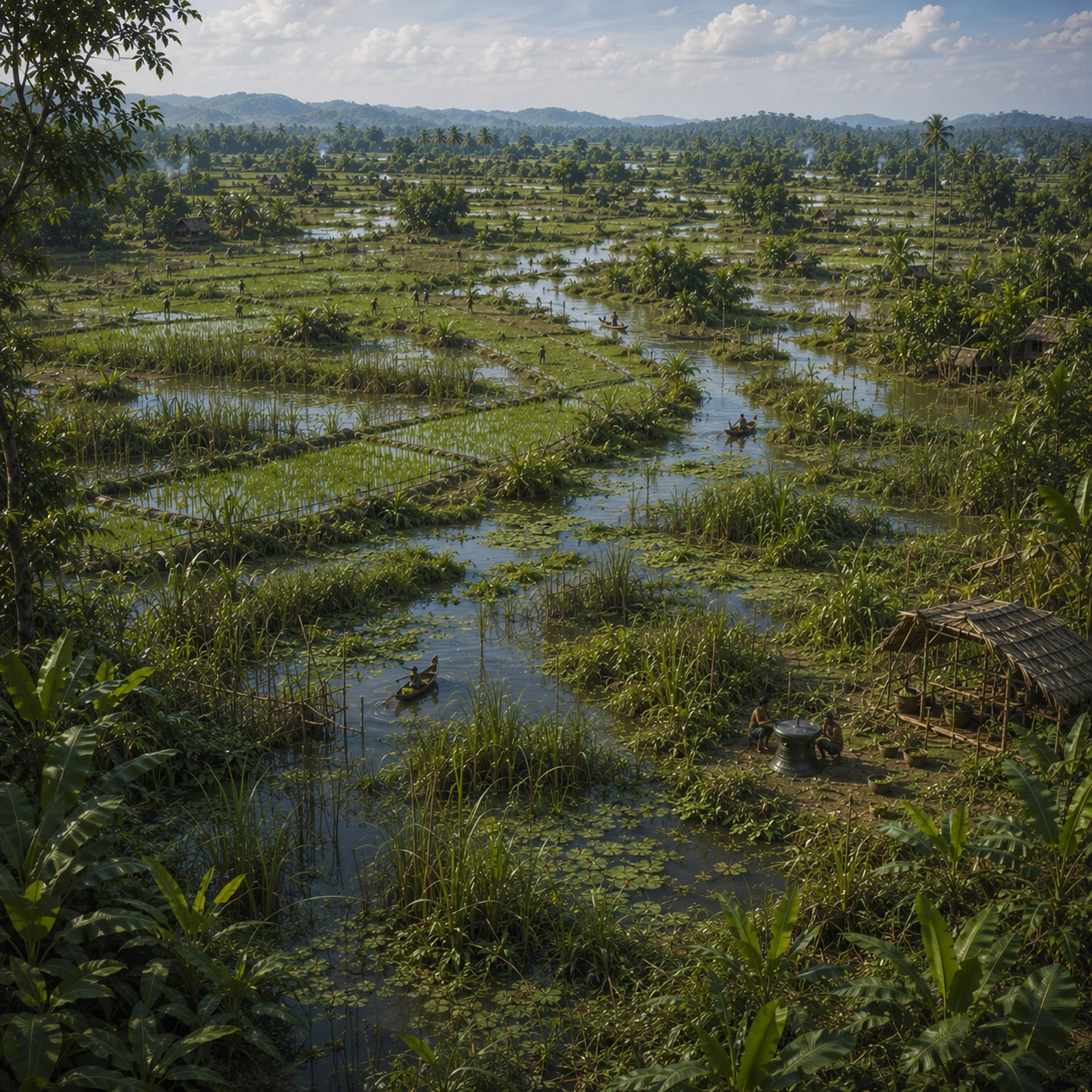
Southeastern Asia in Classical Antiquity
Groups
Commodities
Subjects
Regions

Southeast Asia
View →Subregions
