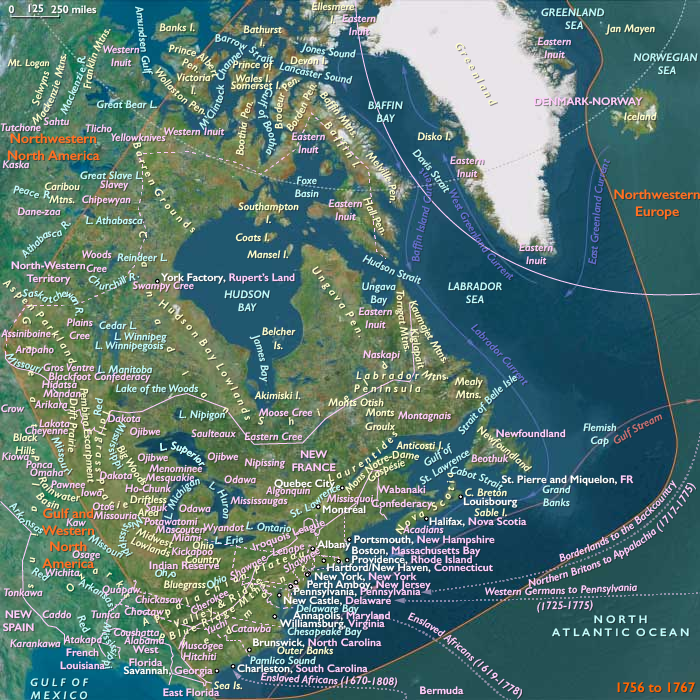
Bradstreet continues westward, as yet unaware that…
August 1764 CE
He reaches Fort Detroit on August 26, where he negotiates another treaty.
In an attempt to discredit Pontiac, who is not present, Bradstreet chops up a peace belt the Ottawa leader had sent to the meeting.
According to historian Richard White, "such an act, roughly equivalent to a European ambassador's urinating on a proposed treaty, had shocked and offended the gathered Indians."
Bradstreet also claims that the natives had accepted British sovereignty as a result of his negotiations, but Johnson believes that this has not been fully explained to the natives and that further councils will be needed.
Although Bradstreet has successfully reinforced and reoccupied British forts in the region, his diplomacy proves to be controversial and inconclusive.
People
Groups
Iroquois (Haudenosaunee, also known as the League of Peace and Power, Five Nations, or Six Nations)
View →
Wyandot, or Wendat, or Huron people (Amerind tribe)
View →
Miami (Amerind tribe)
View →
Lenape or Lenni-Lenape (later named Delaware Indians by Europeans)
View →
Ojibwa, or Ojibwe, aka or Chippewa (Amerind tribe)
View →
Odawa, or Ottawa, people (Amerind tribe)
View →
Seneca (Amerind tribe)
View →
Mascouten (Amerind tribe)
View →
Kickapoo people (Amerind tribe)
View →
Potawatomi (Amerind tribe)
View →
Wea (Amerind tribe)
View →
Piankeshaw (Amerind tribe)
View →
Susquehannock (Amerind tribe)
View →
Shawnees, or Shawanos (Amerind tribe)
View →
Ohio Country
View →
Illinois Country
View →
Britain, Kingdom of Great
View →
Mingo (Seneca-Cayuga Tribe of Oklahoma)
View →
Topics
Regions
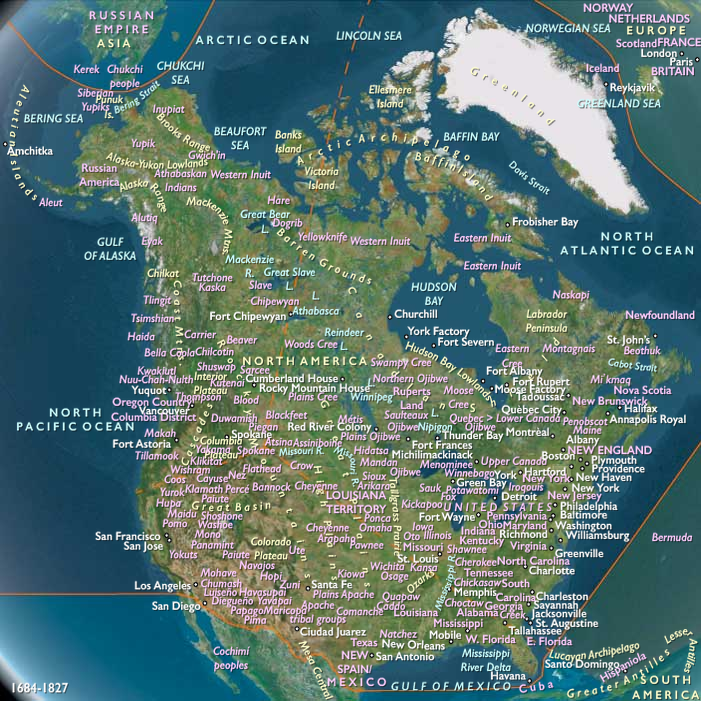
Northern North America
View →Subregions