
The anti-Habsburg rebellions reflect the rising tensions…
1540 CE to 1683 CE
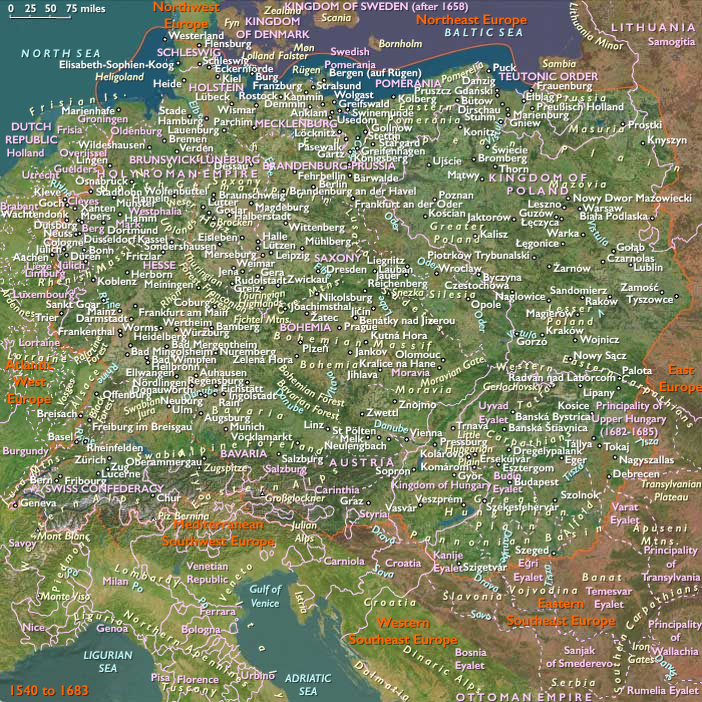
The anti-Habsburg rebellions reflect the rising tensions between Catholics and Protestants in the early 1600s.
Proponents of the Counter-Reformation, often operating under Habsburg protection, are reaping the fruits of a generation of work: monastic life is reviving, Catholic intellectual life is regaining confidence, and prominent figures are returning to the Catholic Church.
As a result, Protestants are increasingly on the defensive. The German princes split into two military camps based on religious affiliation: the Evangelical Union and the Catholic League.
Locations
Groups
Germans
View →
Hungarian people
View →
Dutch people
View →
Slavonia region
View →
Croats (South Slavs)
View →
Slovaks (West Slavs)
View →
Carinthia, Duchy of
View →
Czechs [formerly Bohemians] (West Slavs)
View →
Christians, Roman Catholic
View →
Dalmatia region
View →
Croatia, Kingdom of
View →
Tyrol, County of
View →
Austria, Archduchy of
View →
Styria, Duchy of
View →
Moravian Margravate
View →
Bohemia, Kingdom of
View →
Hungary, Kingdom of
View →
Slovenes (South Slavs)
View →
Holy Roman Empire
View →
Transylvania (Hungarian governate)
View →
Ottoman Empire
View →
Turkish people
View →
Lutheranism
View →
Protestantism
View →
Anabaptists
View →
Hungary, Royal
View →
Croatia, (Habsburg) Kingdom of
View →
Calvinists
View →
Hungary, Ottoman
View →
Hungary (Transylvania), Ottoman vassal Kingdom of
View →
Transylvania (Ottoman vassal), Principality of
View →
Hungary, Kingdom of
View →
Protestant League (League of Evangelical Union)
View →
Catholic League, the (German)
View →
Topics
Regions
Central Europe
View →Subregions
