
The crusaders learn on June 29 that …
Years: 1097 - 1097
June
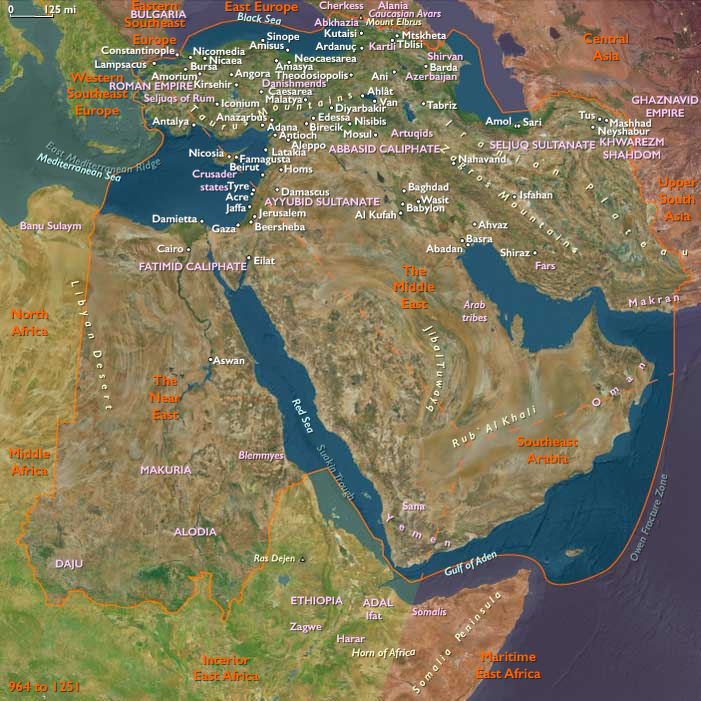
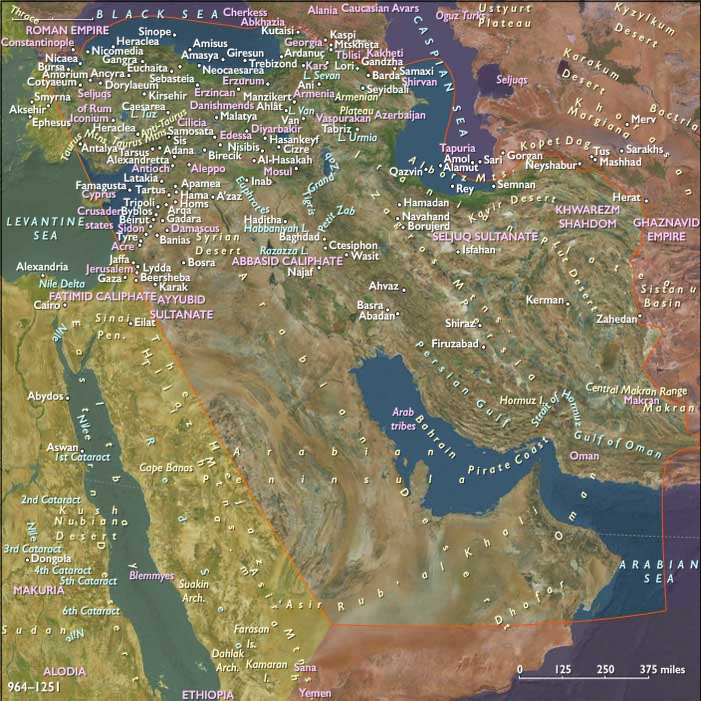
The crusaders learn on June 29 that the Turks are planning an ambush near Dorylaeum (Bohemond had noticed that his army is being shadowed by Turkish scouts).
The Turkish force, consisting of Kilij Arslan I and his ally Hasan of Cappadocia, along with help from the Danishmendids, led by the Turkish prince Ghazi ibn Danishmend, the Persians, and the Caucasian Albanians.
Contemporary figures place this number between twenty-five thousand and thirty thousand, more recent estimates are between six thousand to eight thousand men.
In addition to large numbers of noncombatants, Bohemond's force probably numbers about ten thousand, the majority on foot.
Military figures of the time often imply perhaps several men-at-arms per knight (i.e., a stated force of five hundred knights is assumed to contain perhaps fifteen hundred men-at-arms in addition), so it seems reasonable that Bohemond had with him approximately eight thousand men-at-arms and two thousand cavalry.
On the evening of June 30, after a three-day march, Bohemond's army makes camp in a meadow on the north bank of the river Thymbres, near the ruined town of Dorylaeum (Many scholars believe that this is the site of the modern city of Eskişehir).
Locations
People
- Adhemar of Le Puy
- Al-Afdal Shahanshah
- Alexios I Komnenos
- Baldwin I of Jerusalem
- Bohemond I of Antioch
- Constantine I
- Danishmend Gazi
- Eustace III
- Fakhr al-Mulk Radwan
- Godfrey of Bouillon
- Guglielmo Embriaco
- Hugh I
- Iftikhar al-Dawla
- Kerbogha
- Kilij Arslan I
- Manuel Boutoumites
- Peter the Hermit
- Pope Urban II
- Raymond IV
- Robert Curthose
- Robert II, Count of Flanders
- Stephen
- Tancred
- Tatikios
- Yaghi-Siyan
Groups
- Arab people
- Persian people
- Armenian people
- Jews
- Kurdish people
- Lombards (West Germanic tribe)
- Germans
- Christians, Armenian Apostolic Orthodox
- Christians, Maronite
- Christians, Miaphysite (Oriental Orthodox)
- Coptic Orthodox Church of Alexandria
- Greeks, Medieval (Byzantines)
- Islam
- Egypt in the Middle Ages
- Muslims, Sunni
- Muslims, Shi'a
- Syrian people
- Papal States (Republic of St. Peter)
- Toulouse, County of
- Flemish people
- Flanders, County of
- Abbasid Caliphate (Baghdad)
- Normandy, Duchy of
- Normans
- German, or Ottonian (Roman) Empire
- Turkmen people
- Cyprus, East Roman (Byzantine)
- Fatimid Caliphate
- French people (Latins)
- France, (Capetian) Kingdom of
- Hungary, Kingdom of
- Genoa, (Most Serene) Republic of
- Druze, or Druse, the
- Bulgaria, Theme of
- Lorraine (Lothier), Lower, (second) Duchy of
- Seljuq Empire (Isfahan)
- Christians, Roman Catholic
- Christians, Eastern Orthodox
- England, (Norman) Kingdom of
- Danishmends
- Rum, Sultanate of
- Apulia, Norman Duchy of
- Aleppo, Seljuq Emirate of
- Armenia, Baronry of Little, or Lesser
- Roman Empire, Eastern: Komnenos dynasty, restored
Topics
Commodoties
Subjects
Regions
Subregions
Years: 1097 - 1097
June
Locations
People
- Adhemar of Le Puy
- Al-Afdal Shahanshah
- Alexios I Komnenos
- Baldwin I of Jerusalem
- Bohemond I of Antioch
- Constantine I
- Danishmend Gazi
- Eustace III
- Fakhr al-Mulk Radwan
- Godfrey of Bouillon
- Guglielmo Embriaco
- Hugh I
- Iftikhar al-Dawla
- Kerbogha
- Kilij Arslan I
- Manuel Boutoumites
- Peter the Hermit
- Pope Urban II
- Raymond IV
- Robert Curthose
- Robert II, Count of Flanders
- Stephen
- Tancred
- Tatikios
- Yaghi-Siyan
Groups
- Arab people
- Persian people
- Armenian people
- Jews
- Kurdish people
- Lombards (West Germanic tribe)
- Germans
- Christians, Armenian Apostolic Orthodox
- Christians, Maronite
- Christians, Miaphysite (Oriental Orthodox)
- Coptic Orthodox Church of Alexandria
- Greeks, Medieval (Byzantines)
- Islam
- Egypt in the Middle Ages
- Muslims, Sunni
- Muslims, Shi'a
- Syrian people
- Papal States (Republic of St. Peter)
- Toulouse, County of
- Flemish people
- Flanders, County of
- Abbasid Caliphate (Baghdad)
- Normandy, Duchy of
- Normans
- German, or Ottonian (Roman) Empire
- Turkmen people
- Cyprus, East Roman (Byzantine)
- Fatimid Caliphate
- French people (Latins)
- France, (Capetian) Kingdom of
- Hungary, Kingdom of
- Genoa, (Most Serene) Republic of
- Druze, or Druse, the
- Bulgaria, Theme of
- Lorraine (Lothier), Lower, (second) Duchy of
- Seljuq Empire (Isfahan)
- Christians, Roman Catholic
- Christians, Eastern Orthodox
- England, (Norman) Kingdom of
- Danishmends
- Rum, Sultanate of
- Apulia, Norman Duchy of
- Aleppo, Seljuq Emirate of
- Armenia, Baronry of Little, or Lesser
- Roman Empire, Eastern: Komnenos dynasty, restored
Topics
Commodoties
Subjects
Regions
Subregions