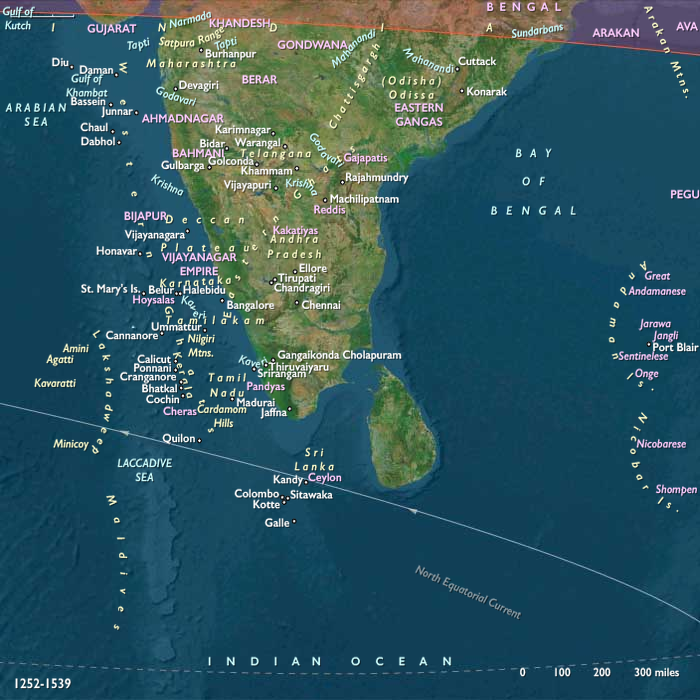
The factor Aires Correi, after two months…
December 1500 CE
The factor Aires Correi, after two months of operation, has only been able to buy enough spices to load two of the ships.
He complains to Cabral his suspicions that the guild of Arab merchants in Calicut have been colluding to shut out Portuguese purchasing agents from the city's spice markets.
This is not unlikely: Arab traders had reportedly used similar collusive tactics to drive out Chinese merchants earlier in the fifteenth century from various ports on the Malabar Coast.
Cabral presents the complaint to the Zamorin, and requests that he crack down on the Arab merchant guild or enforce Portuguese priority in the spice markets, but the Zamorin refuses to intervene in the matter—or rather makes only some vague promises, but disdains to become actively involved in the matter, as Cabral demands.
Frustrated by the Zamorin's inaction, Cabral decides to take matters into his own hands.
On the advice of Aires Correia, Cabral orders the seizure on December 17 of an Arab merchant ship from Jeddah that has been loading up with spices in Calicut harbor, claiming that as the Zamorin had promised the Portuguese priority in the spice markets, the cargo is rightfully theirs.
The Arab merchants around the quay, furious at this action, immediately raise a riot in Calicut and direct mobs to attack the Portuguese factory.
The Portuguese ships, anchored out in the harbor and unable to approach the docks, helplessly watch the unfolding massacre.
After three hours of fighting, some fifty-three (some accounts say seventy) Portuguese are slaughtered by the mobs—including the factor Aires Correia, the secretary Pêro Vaz de Caminha, and three (some accounts say five) of the Franciscan friars.
Around twenty Portuguese in the city manage to escape the riot by jumping into the harbor waters and swimming to the ships.
The survivors report to Cabral that the Zamorin's own Hindu guards had been seen either standing aside or actively helping the rioters.
At least one Portuguese, a man called Gonçalo Peixoto, survives the massacre, sheltered from the mob by a local merchant (whom the chronicles call "Coja Bequij").
In the aftermath, the wares in the Portuguese factory are impounded by the Calicut authorities.
Locations
People
Groups
Topics
Commodities
Subjects
Regions
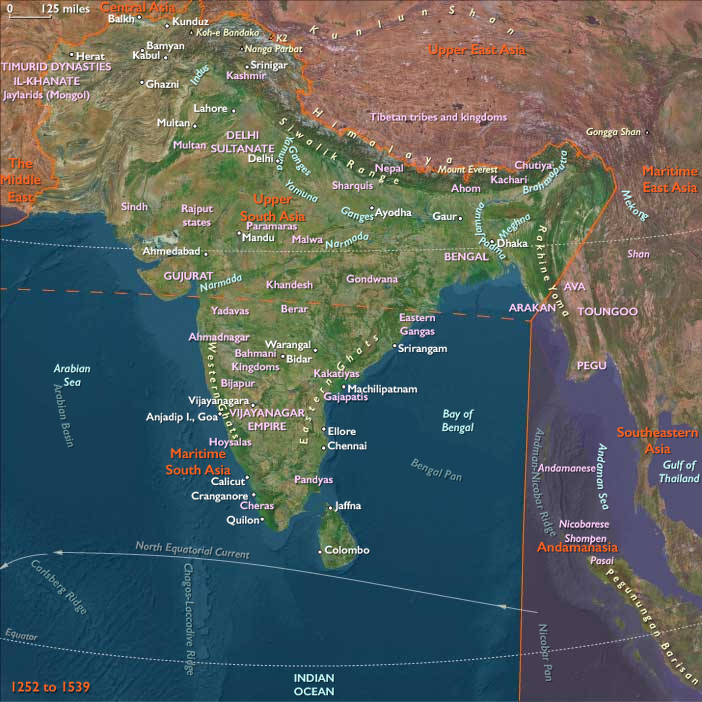
South Asia
View →Subregions