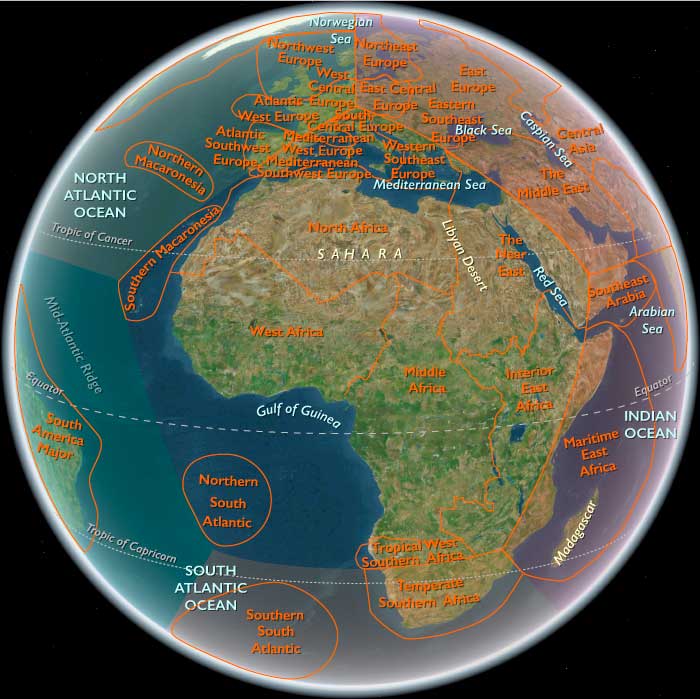
Event
The fifteenth century in Toulouse had begun…
The fifteenth century in Toulouse had begun with the creation of a parlement by Charles VII.
Promising exemption from taxes, the king reinforced his influence and defied the Capitouls, the ruling body of the city.
The center of Occitan literary culture, the city grew richer, active in the trade of Bordeaux wine, cereals and textiles with England.
Toulouse had a population of twenty-two thousand in 1405, but plague, fire, flood and the Hundred Years' War, in addition to the inquisition, have decimated the city.
Despite immigration the city's population declines by ten thousand in seventy years.
Many food shortages occur.
The roads are unreliable, and Toulouse had experienced a major fire in 1463; buildings between the current rue Alsace-Lorraine and the Garonne were destroyed.
The city's population has since increased, resulting in a housing shortage.
Beginning in 1463, the city’s trade in blue dye (woad) flourishes.
The dye chemical extracted from woad is indigo, the same dye extracted from "true indigo", Indigofera tinctoria, but in a lower concentration.
Woad is one of the three staples of the European dyeing industry, along with weld (yellow) and madder (red).
The three colors can be seen together in tapestries such as The Hunt of the Unicorn (1495–1505), though typically it is the dark blue of the woad that has lasted best.
The dye, known at this time as "pastel", has triggered a period of great prosperity in Toulouse.
The city uses its new wealth to build the homes and public buildings that are today the core of the old city.
The city's prosperity will be short-lived, however; woad will soon be eclipsed by indigo from India, which produces a darker, more-colorfast blue.
-
{# Image navigates to the detail page; the magnifying-glass chip is the only Fancybox lightbox trigger (kept a separate sibling — anchors can't nest). #}
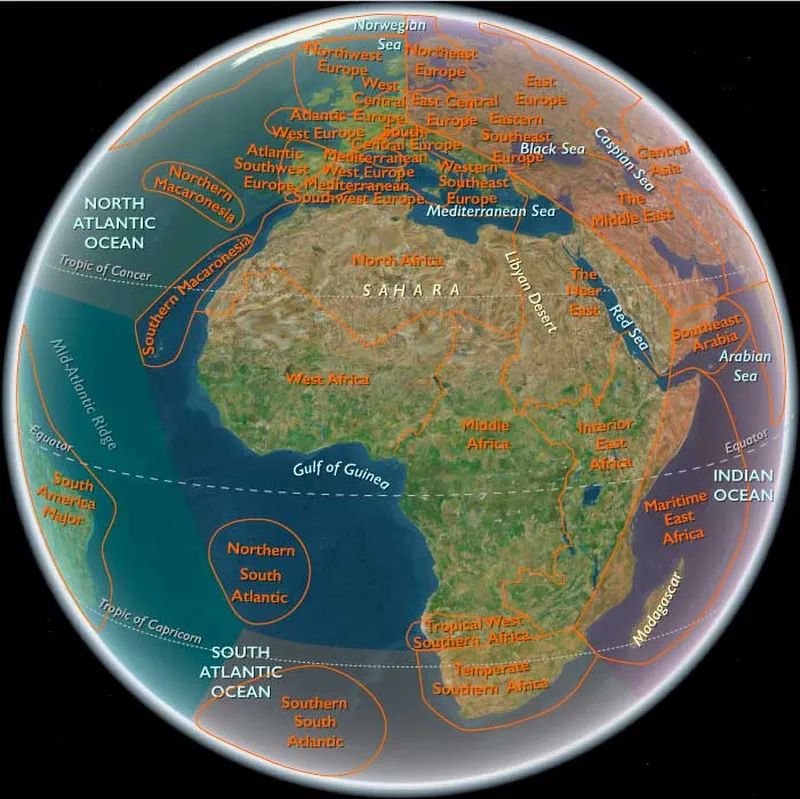 The Middle of The Earth
World
-
{# Image navigates to the detail page; the magnifying-glass chip is the only Fancybox lightbox trigger (kept a separate sibling — anchors can't nest). #}
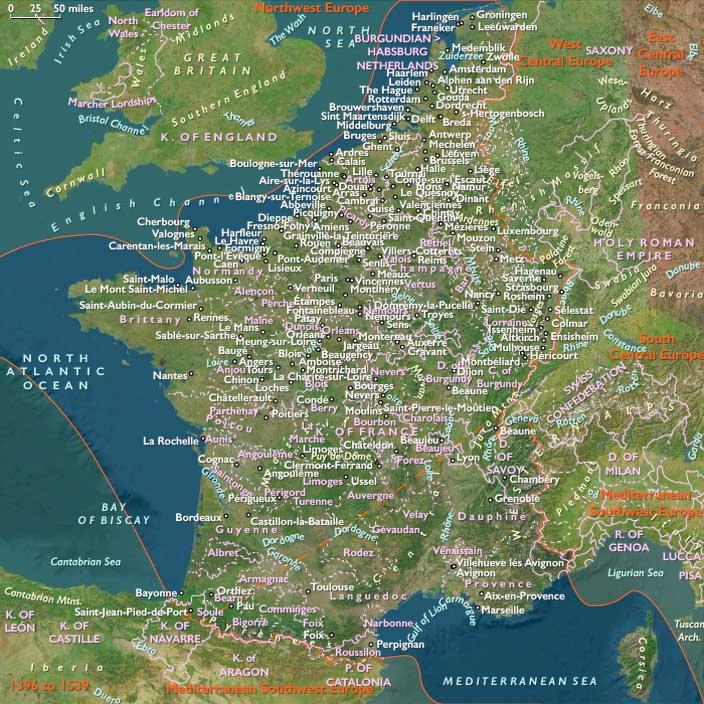 West Europe
Region
-
{# Image navigates to the detail page; the magnifying-glass chip is the only Fancybox lightbox trigger (kept a separate sibling — anchors can't nest). #}
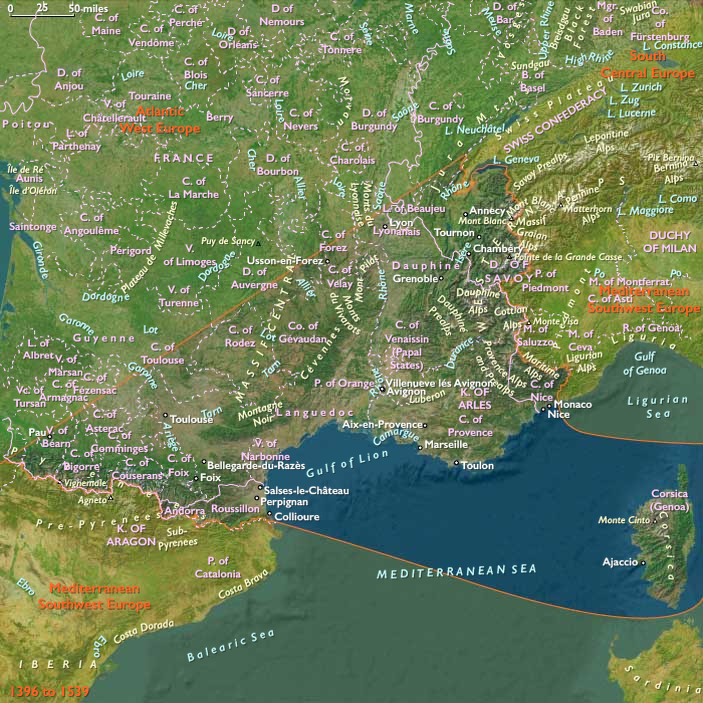 Mediterranean West Europe
Subregion