
The Latin crusaders consolidate their new empire…
1204 CE to 1215 CE
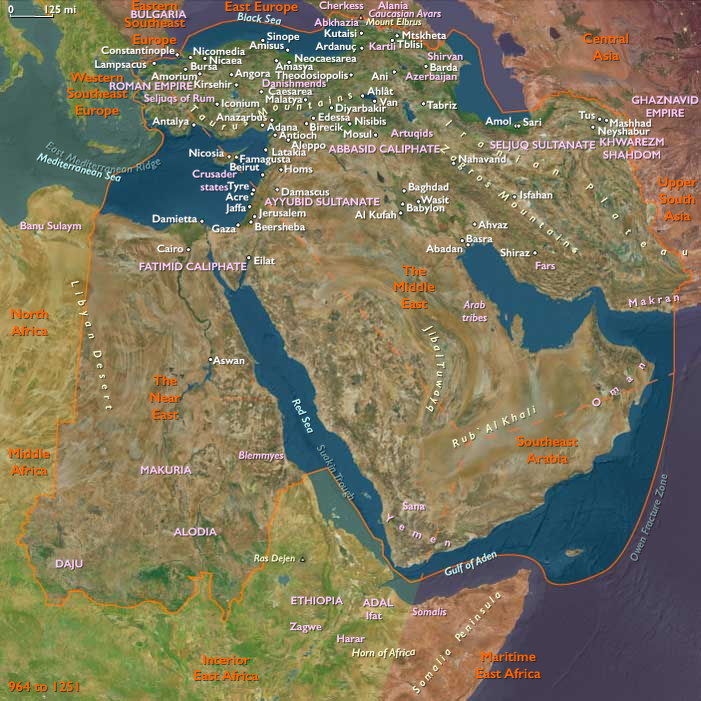
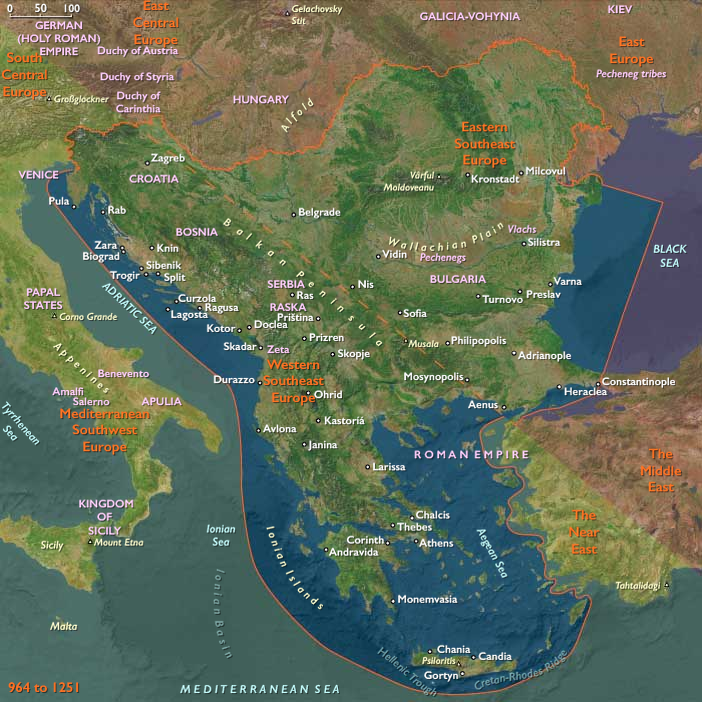
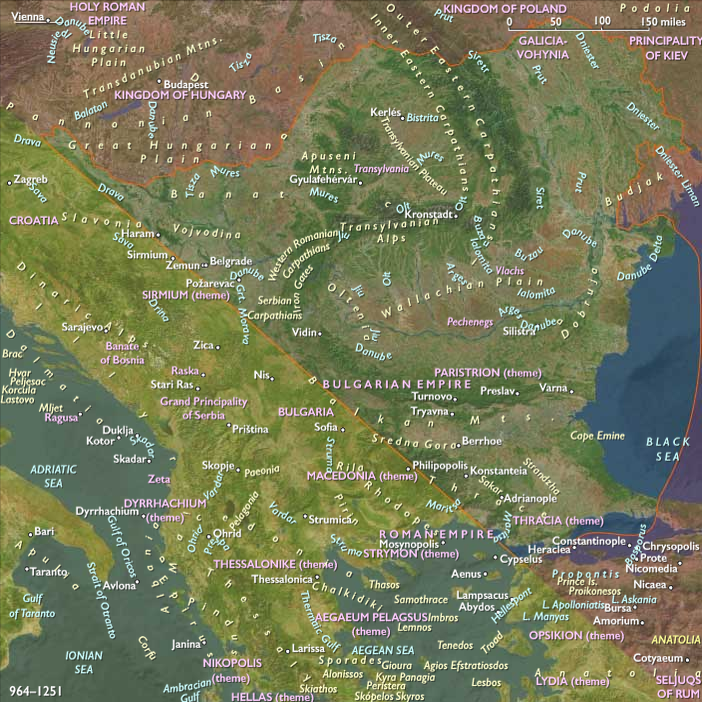
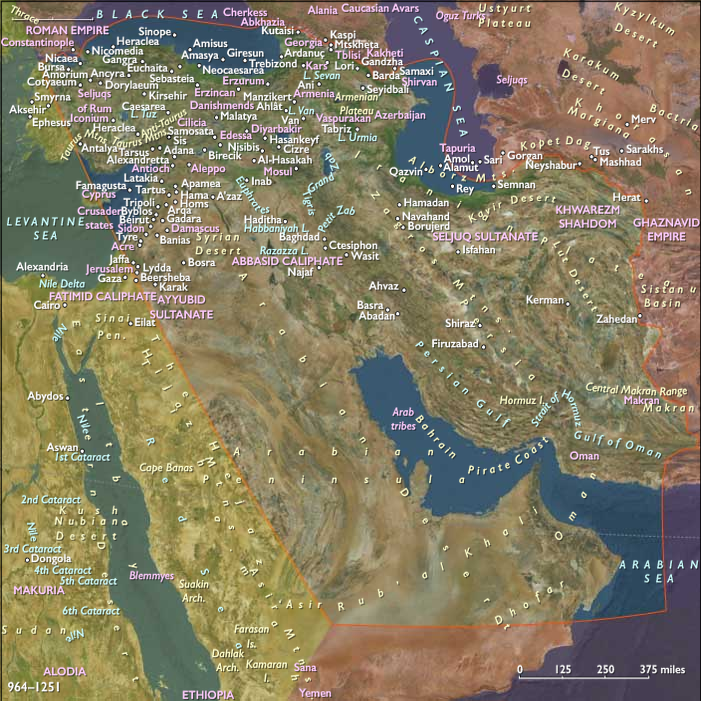
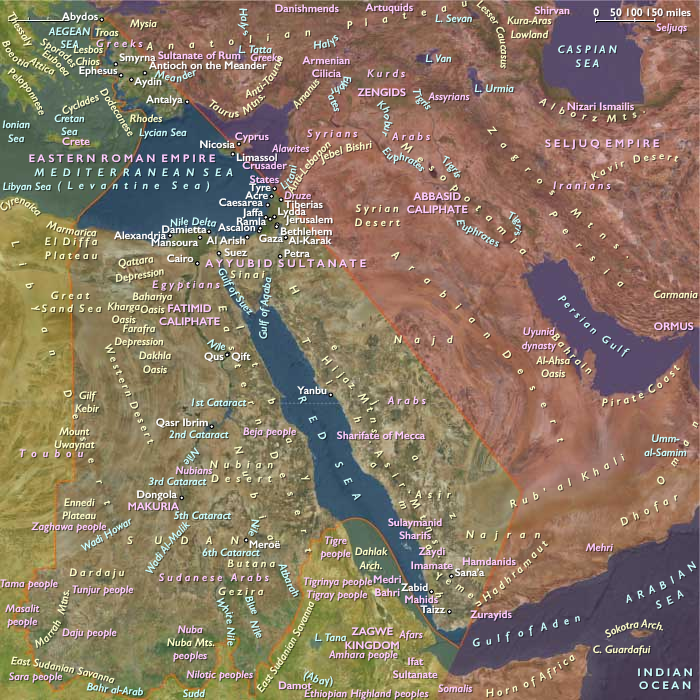
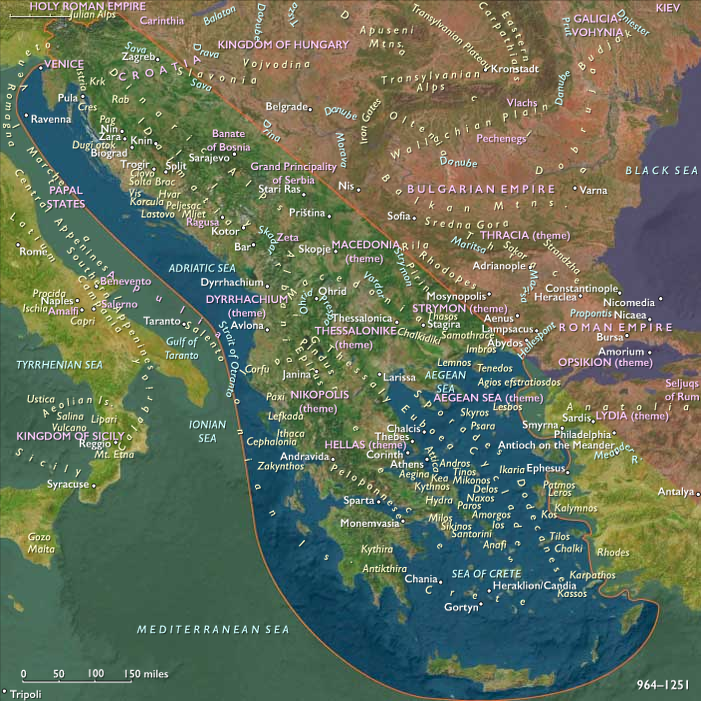
The Latin crusaders consolidate their new empire of Constantinople, which they call Romania, while Theodore Lascaris consolidates the remnants of Greek imperial power and erects a new empire centered upon Nicaea in Asia Minor, with Ionian and Balkan holdings.
People
Groups
Topics
Commodities
Subjects
Related Events
Showing 10 events out of 16 total
East Central Europe (1204–1215 CE): Andrew II’s Hungarian Ascendancy, Bohemian Royal Consolidation under Ottokar I, Polish Regional Power under Henry the Bearded, and Austria’s Stability under Leopold VI
Between 1204 and 1215 CE, East Central Europe—including modern-day Poland, Czechia, Slovakia, Hungary, and eastern regions of Germany and Austria east of 10°E and north of the defined southeastern boundary—experienced significant political realignments, territorial consolidation, and cultural developments. Hungary entered a vibrant era under King Andrew II, Bohemia solidified Přemyslid royal authority under Ottokar I, Poland’s fragmentation continued but saw growing regional strength under Henry the Bearded in Silesia, and Austria prospered under Leopold VI of the Babenberg dynasty. These developments significantly influenced regional stability, economic expansion, and cultural flourishing.
Political and Military Developments
Hungarian Stability and Expansion under Andrew II
-
In 1205, following King Emeric’s death, his brother Andrew II (r. 1205–1235) ascended Hungary’s throne, ushering in a politically active and culturally vibrant reign. Andrew pursued ambitious foreign and domestic policies, seeking greater political influence across East Central Europe and actively engaging in Crusades.
-
His governance significantly strengthened Hungary’s regional standing, despite occasional internal disputes and aristocratic challenges.
Bohemian Royal Authority Strengthened under Ottokar I
-
King Ottokar I Přemysl (r. 1197–1230) reinforced royal authority, stabilizing Bohemia after previous dynastic conflicts. His strong leadership earned recognition of hereditary royal status from the Holy Roman Empire in the Golden Bull of Sicily (1212), enhancing Přemyslid autonomy and political prestige.
-
Ottokar’s reign marked significant administrative reform, territorial consolidation, and increased Bohemian political influence within imperial affairs.
Polish Fragmentation and Silesian Power under Henry the Bearded
-
Poland’s political fragmentation persisted with principalities operating autonomously. The most prominent was Silesia under Duke Henry I the Bearded (r. 1201–1238), who consolidated power, enhanced economic prosperity, and fostered diplomatic alliances.
-
Henry’s leadership elevated Silesia as the strongest of Poland’s regional duchies, significantly influencing broader Polish and Central European politics.
Austrian Stability and Prosperity under Leopold VI
-
Duke Leopold VI of Austria (r. 1198–1230) ensured political stability, territorial security, and economic prosperity within Austria. His rule strengthened urban centers, fortified regional influence, and reinforced Austria’s prominence in the Holy Roman Empire.
-
Leopold VI actively supported crusading efforts, fostering diplomatic relations across Europe and enhancing Austria’s international prestige.
Imperial Authority under Otto IV and Frederick II
-
The period featured contested imperial succession between Otto IV (r. 1198–1215) and Frederick II (r. 1212–1250), affecting regional politics. East Central European rulers navigated shifting imperial alliances, notably Bohemia under Ottokar I, whose support for Frederick II strengthened his position and royal autonomy.
Economic and Technological Developments
Prosperous Regional Economies and Expanded Trade
-
Economic prosperity continued through robust trade networks connecting Baltic, Western Europe, and Mediterranean markets. Major urban centers—Prague, Vienna, Esztergom, Kraków, and Wrocław—thrived commercially, becoming vital hubs of regional trade.
Agricultural Innovations and Population Growth
-
Agricultural productivity increased due to widespread adoption of advanced techniques, such as improved plows, crop rotation, and land management practices, supporting significant urbanization and population expansion.
Cultural and Artistic Developments
Hungarian Cultural and Artistic Flourishing under Andrew II
-
Andrew II patronized extensive ecclesiastical foundations, artistic endeavors, and intellectual developments, greatly enhancing Hungarian cultural life. Manuscript production, ecclesiastical architecture, and scholarly activities flourished, influenced by Western European and Byzantine traditions.
Bohemian Intellectual and Cultural Revival under Ottokar I
-
Bohemia’s cultural prominence significantly increased, particularly in Prague, driven by royal patronage of monastic scholarship, manuscript illumination, and architectural projects. Prague became an influential cultural and intellectual center within Central Europe.
Silesian Cultural and Economic Vitality under Henry the Bearded
-
Duke Henry the Bearded fostered cultural and economic vitality in Silesia, promoting monasteries, urban development, and artistic patronage. His support solidified Silesia’s role as a prominent cultural and commercial region within fragmented Poland.
Settlement and Urban Development
Urban Expansion in Hungary under Andrew II
-
Hungarian urban centers, notably Esztergom and Buda, expanded significantly, benefiting from improved fortifications, administrative organization, and flourishing commerce. This urban development reflected Andrew’s effective governance and economic policies.
Bohemian Town Consolidation and Growth
-
Under Ottokar I, Prague and other Bohemian urban centers experienced notable growth, infrastructure improvements, and commercial expansion. Prague’s prominence as a regional economic and administrative center was significantly enhanced.
Austrian Urban Prosperity and Infrastructure Development
-
Austria’s towns, particularly Vienna, experienced considerable prosperity under Leopold VI, supported by infrastructure enhancements, fortified settlements, and growing regional trade connections, reinforcing Austria’s economic strength and political influence.
Social and Religious Developments
Expansion and Strengthening of Ecclesiastical Structures
-
Ecclesiastical institutions expanded significantly, shaping regional governance, education, and cultural identities. Monasteries and bishoprics played critical roles in societal cohesion, intellectual development, and cultural continuity across East Central Europe.
Dynastic and Aristocratic Governance Structures
-
Aristocratic authority and dynastic leadership remained pivotal. Hungarian royal strength under Andrew II, Přemyslid consolidation in Bohemia, Austrian stability under Leopold VI, and Silesian prominence under Henry the Bearded emphasized the critical role of nobility and dynastic influence in regional governance.
Long-Term Consequences and Historical Significance
The era 1204–1215 CE represented a decisive period of regional consolidation and political realignment in East Central Europe. Andrew II’s reign solidified Hungarian regional prominence, Ottokar I secured lasting Přemyslid royal authority and autonomy in Bohemia, Henry the Bearded elevated Silesia within fragmented Poland, and Austria prospered under Leopold VI’s strong rule. These developments significantly shaped regional political identities, economic patterns, and cultural traditions, profoundly influencing East Central Europe’s medieval trajectory and future historical developments.
East Central Europe (1216–1227 CE): Golden Bull of Hungary, Bohemian Consolidation, Polish Regional Rivalries, and Babenberg Influence in Austria
Between 1216 and 1227 CE, East Central Europe—encompassing modern-day Poland, Czechia, Slovakia, Hungary, and the eastern regions of Germany and Austria east of 10°E and north of the defined southeastern boundary—witnessed pivotal political and institutional developments. Hungary under Andrew II saw profound social and political change through the Golden Bull of 1222, Bohemia further solidified royal authority under Ottokar I Přemysl, Polish territories experienced intensified regional rivalry, and Austria flourished culturally and politically under Duke Leopold VI of the Babenberg dynasty. Collectively, these events significantly shaped regional governance, social structures, and cultural dynamics.
Political and Military Developments
Hungary’s Golden Bull and Aristocratic Power under Andrew II
-
In 1222, King Andrew II (r. 1205–1235) issued the Golden Bull of Hungary, a landmark charter limiting royal power, guaranteeing noble privileges, and establishing foundational political rights. This document significantly reshaped Hungarian governance by solidifying aristocratic authority and curbing royal absolutism, echoing England’s Magna Carta (1215).
-
Andrew’s rule, though marked by occasional internal conflict, significantly expanded Hungarian regional influence, notably in frontier regions such as Transylvania and along the Adriatic coast.
Consolidation of Bohemian Royal Authority under Ottokar I
-
Under Ottokar I Přemysl (r. 1197–1230), Bohemia saw significant political stability and institutional development. The Golden Bull of Sicily (1212) continued to define his reign, confirming hereditary royal authority and enhancing Přemyslid autonomy within the Holy Roman Empire.
-
Ottokar’s effective governance and diplomatic skill solidified Bohemian territorial integrity and political stability, elevating Prague as a crucial regional political and cultural hub.
Intensified Polish Regional Rivalries and Silesian Strength
-
Poland remained deeply fragmented, with autonomous Piast duchies increasingly competing for dominance. Henry I the Bearded of Silesia (r. 1201–1238) emerged prominently, expanding influence over neighboring territories and elevating Silesia as a major power center within fragmented Poland.
-
Despite Henry’s successes, regional rivalry and persistent dynastic disputes among Polish duchies continued to limit centralized royal authority.
Austria’s Continued Prosperity under Leopold VI
-
Duke Leopold VI of Austria (r. 1198–1230) maintained stability, prosperity, and cultural vibrancy within Austria. His reign was characterized by effective administration, territorial security, economic flourishing, and active participation in European crusading politics.
-
Leopold significantly strengthened Austria’s territorial integrity, enhancing Vienna’s political prominence within East Central Europe.
Imperial Influence of Frederick II
-
Emperor Frederick II (r. 1212–1250) expanded his political influence across East Central Europe, notably affecting Bohemia, Hungary, and Austria. Regional rulers navigated shifting alliances, with imperial relations significantly impacting regional stability and governance.
Economic and Technological Developments
Regional Economic Expansion and Commercial Vitality
-
East Central Europe experienced robust economic expansion driven by thriving trade networks connecting Baltic, Mediterranean, Byzantine, and Western European markets. Major urban centers, including Prague, Vienna, Esztergom, Kraków, and Wrocław, flourished as prosperous trade hubs.
Agricultural Productivity and Technological Advancements
-
Continued adoption of advanced agricultural techniques—improved plowing methods, systematic crop rotation, and enhanced livestock management—significantly increased productivity, supporting urbanization, population growth, and economic prosperity.
Cultural and Artistic Developments
Cultural Flourishing in Hungary under Andrew II
-
Andrew II strongly supported ecclesiastical and cultural institutions, fostering extensive manuscript production, architectural projects, and scholarly activities. The artistic and intellectual vibrancy of Hungary notably increased, influenced by Western European and Byzantine traditions.
Bohemian Cultural and Ecclesiastical Vitality under Ottokar I
-
Bohemia, particularly Prague, experienced a cultural revival through royal patronage of monasteries, manuscript illumination, architectural development, and scholarly activities, establishing it as a significant intellectual and cultural center.
Silesian Cultural and Artistic Prominence under Henry the Bearded
-
Silesia under Henry I the Bearded emerged as a leading cultural center within fragmented Poland, marked by substantial monastic foundations, artistic patronage, manuscript production, and urban development, significantly influencing broader Polish culture.
Settlement and Urban Development
Hungarian Urban Growth under Andrew II
-
Hungarian towns such as Esztergom, Székesfehérvár, and Buda continued to expand significantly, supported by stable governance, fortified infrastructure, thriving commerce, and active royal patronage.
Bohemian Urban Consolidation and Expansion
-
Under Ottokar I, Prague and other Bohemian cities saw significant infrastructure improvements, commercial expansion, and strengthened administrative structures, reinforcing their roles as vital regional economic and political hubs.
Austrian Urban Prosperity under Leopold VI
-
Austria’s urban centers, notably Vienna, flourished economically and politically under Leopold VI’s effective governance, enhanced fortifications, administrative efficiency, and expanded trade networks, significantly influencing regional economic stability.
Social and Religious Developments
Ecclesiastical Institutional Expansion and Influence
-
The region experienced extensive ecclesiastical institutional growth, shaping social organization, governance, and education. Monasteries, bishoprics, and religious orders played central roles in regional cultural continuity, intellectual development, and societal cohesion.
Aristocratic Dominance and Dynastic Governance
-
Aristocratic power continued to influence governance significantly. The Golden Bull in Hungary explicitly strengthened noble rights and power. Bohemia under Ottokar, Austria under Leopold, and Silesia under Henry highlighted the pivotal role of dynastic and aristocratic leadership in regional governance structures.
Long-Term Consequences and Historical Significance
The era 1216–1227 CE significantly influenced East Central Europe’s political institutions, economic prosperity, and cultural vitality. Hungary’s Golden Bull of 1222 established lasting legal precedents that profoundly shaped Hungarian politics. Bohemia’s consolidation under Ottokar I, Silesia’s regional prominence under Henry the Bearded amid persistent Polish fragmentation, and Austria’s stable prosperity under Leopold VI significantly impacted regional stability, governance, and identity. Collectively, these developments formed enduring foundations for the political, economic, and cultural landscapes characterizing East Central Europe throughout the subsequent medieval period.
East Central Europe (1228–1239 CE): Mongol Threat Emerges, Hungarian Aristocratic Tensions, Bohemian Stability under Wenceslaus I, and Polish Unity Efforts under Henry I
Between 1228 and 1239 CE, East Central Europe—including modern-day Poland, Czechia, Slovakia, Hungary, and eastern parts of Germany and Austria east of 10°E and north of the defined southeastern boundary—entered a critical era of growing external threats, internal aristocratic struggles, and further consolidation of regional identities. The looming threat of the Mongol Empire began to influence regional dynamics profoundly, Hungarian politics saw intensified tensions between Andrew II and powerful aristocrats, Bohemia remained stable under Wenceslaus I, Poland saw renewed unity efforts under Silesian Duke Henry I the Bearded, and Austria’s Babenberg dynasty maintained steady governance. Collectively, these developments significantly impacted regional political stability, defense strategies, and cultural landscapes.
Political and Military Developments
Emergence of the Mongol Threat
-
By the late 1220s and into the 1230s, news of the Mongol invasions into Russia and Eastern Europe caused growing anxiety among regional rulers. Hungary and Poland especially began preparations for potential Mongol attacks, marking a significant shift toward defensive policies and military organization.
Hungarian Aristocratic Struggles under Andrew II and Béla IV
-
King Andrew II (r. 1205–1235) continued to face significant aristocratic challenges, intensified by the rights granted to the nobility under the Golden Bull of 1222. His final years were marked by increased internal tensions, weakening royal central authority.
-
His successor, Béla IV (r. 1235–1270), sought to restore royal power and consolidate central authority, though faced immediate opposition and considerable aristocratic resistance, complicating Hungary’s internal political situation amid growing external threats.
Stability in Bohemia under Wenceslaus I
-
Wenceslaus I Přemysl (r. 1230–1253) succeeded Ottokar I, providing continued political stability, territorial security, and cultural flourishing. His reign consolidated royal authority, strengthened administrative reforms, and maintained Bohemia’s prominent position within the Holy Roman Empire.
-
Prague’s political and cultural prestige notably increased, further solidifying Bohemia’s regional influence.
Polish Unity Efforts under Henry I the Bearded
-
In Poland, Henry I the Bearded of Silesia (r. 1201–1238) intensified his efforts to reunify fragmented Polish territories. His strategic alliances and political diplomacy gradually consolidated greater parts of Poland under Silesian leadership, significantly elevating Silesia’s regional prominence.
-
Henry’s governance laid essential groundwork for future efforts toward broader Polish unification and stability.
Continued Austrian Stability under Frederick II the Quarrelsome
-
Austria under Duke Frederick II the Quarrelsome (r. 1230–1246) of the Babenberg dynasty maintained political stability and territorial integrity. Despite his contentious personality, Frederick preserved Austria’s status as a significant regional power within the Holy Roman Empire, contributing to sustained economic and cultural development.
Imperial Influence under Frederick II
-
Emperor Frederick II (r. 1212–1250) continued to influence East Central Europe significantly. His diplomacy, military campaigns, and administrative strategies shaped political alliances and governance structures, particularly impacting Bohemia, Austria, and neighboring regions.
Economic and Technological Developments
Regional Economic Prosperity Amid Growing Uncertainty
-
Despite rising external threats, East Central Europe maintained economic prosperity through active trade networks connecting Baltic, Mediterranean, Byzantine, and Western European markets. Urban centers like Prague, Vienna, Kraków, Wrocław, Esztergom, and Buda continued to flourish commercially.
Agricultural Productivity and Technological Advances
-
Agricultural productivity further increased through widespread adoption of advanced farming techniques, improved metal plows, crop rotation, and livestock management, enabling significant population growth and supporting urbanization and regional economic stability.
Cultural and Artistic Developments
Bohemian Cultural Flourishing under Wenceslaus I
-
Under Wenceslaus I, Bohemia—particularly Prague—saw extensive cultural patronage, including ecclesiastical architecture, manuscript production, and artistic endeavors. This period significantly elevated Prague’s cultural prestige and intellectual influence within Central Europe.
Hungarian Cultural Continuity amid Internal Tensions
-
Despite internal political tensions, Hungary maintained robust cultural and ecclesiastical activity. Manuscript illumination, ecclesiastical architecture, and scholarly pursuits continued, supported by religious institutions and aristocratic patrons.
Silesian Cultural and Scholarly Activity under Henry the Bearded
-
Henry I’s patronage significantly enhanced Silesian cultural vitality, supporting monasteries, scholarly institutions, manuscript production, and urban development. These efforts reinforced Silesia’s prominence within fragmented Poland and across East Central Europe.
Settlement and Urban Development
Urban Fortifications and Expansion amid Mongol Threat
-
Growing awareness of Mongol threats encouraged fortification improvements and urban defensive strategies across Hungary, Poland, and neighboring regions. Major cities enhanced their defensive walls, towers, and military infrastructure, notably in Hungary and Poland.
Bohemian Urban Stability and Expansion under Wenceslaus I
-
Prague and other Bohemian urban centers maintained growth and development, benefiting from stable royal governance, infrastructural improvements, and flourishing commerce. Prague’s prominence as a regional cultural, economic, and political hub was further reinforced.
Austrian Urban Prosperity and Territorial Cohesion
-
Austrian towns, particularly Vienna, continued prospering economically and administratively under Frederick II the Quarrelsome. Urban fortifications and infrastructure developed substantially, bolstering Austria’s stability and regional influence.
Social and Religious Developments
Expansion and Strengthening of Ecclesiastical Institutions
-
Ecclesiastical institutions continued to expand their influence, significantly shaping governance, education, and cultural identity. Monasteries, bishoprics, and religious orders reinforced societal cohesion and intellectual development.
Aristocratic Power and Governance
-
Aristocratic authority strongly influenced regional governance. In Hungary, aristocratic tensions heightened, limiting royal authority. Conversely, Bohemia, Austria, and Silesia saw stable aristocratic support for strong dynastic governance, highlighting varied aristocratic roles across the region.
Long-Term Consequences and Historical Significance
The era 1228–1239 CE critically shaped East Central Europe’s medieval trajectory. The emergence of the Mongol threat profoundly influenced regional defense strategies. Hungary faced significant aristocratic struggles under Andrew II and Béla IV, complicating internal governance amid external threats. Bohemia’s stability under Wenceslaus I provided vital regional continuity, while Henry the Bearded’s efforts enhanced Polish unity and Silesian prominence. Austria under Frederick II the Quarrelsome maintained political stability and economic growth. Collectively, these developments laid crucial foundations for the significant challenges and transformations characterizing the subsequent decades, particularly the imminent Mongol invasions that would dramatically reshape the region.
East Central Europe (1240–1251 CE): Mongol Invasion and Aftermath, Rebuilding under Béla IV, Polish Fragmentation after Legnica, Bohemian Stability, and Austria’s Babenberg Decline
Between 1240 and 1251 CE, East Central Europe—including modern-day Poland, Czechia, Slovakia, Hungary, and eastern regions of Germany and Austria east of 10°E and north of the defined southeastern boundary—experienced unprecedented turmoil, upheaval, and profound transformation due to the devastating Mongol invasion (1241–1242). The invasion dramatically reshaped regional power dynamics, political structures, and demographic landscapes. Hungary and Poland bore the brunt of Mongol destruction but subsequently entered phases of rebuilding and political realignment. Bohemia remained relatively stable under Wenceslaus I Přemysl, while Austria faced significant instability and dynastic decline following the end of the Babenberg dynasty. These developments had profound, lasting effects on regional governance, settlement patterns, and cultural identities.
Political and Military Developments
Devastating Mongol Invasion (1241–1242)
-
In 1241, Batu Khan’s Mongol armies swept across East Central Europe, causing catastrophic destruction. Major battles included the decisive defeats at Legnica (Poland) and Mohi (Hungary) in 1241, leading to mass casualties, widespread destruction, and significant territorial devastation.
-
Poland’s fragmented duchies suffered severely, notably in Silesia, where Duke Henry II the Pious fell at Legnica. Hungarian forces under King Béla IV (r. 1235–1270) were decisively defeated at Mohi, resulting in temporary royal exile and massive demographic losses.
Hungarian Reconstruction under Béla IV
-
Following the Mongol withdrawal in 1242, Béla IV initiated extensive reconstruction, fortification programs, and administrative reforms to rebuild Hungary’s political stability and security. He fostered new fortified towns and encouraged immigration and settlement to replenish population losses.
-
Béla IV’s recovery efforts fundamentally reshaped Hungary’s political structures, significantly increasing urban fortification and royal administrative reforms.
Polish Fragmentation Intensifies after Legnica
-
After the Battle of Legnica (1241) and the death of Henry II the Pious, Poland’s political fragmentation intensified. Silesia splintered further among Henry’s heirs, exacerbating regional rivalry and undermining previous unity efforts.
-
Silesian duchies, Greater Poland, Masovia, and Lesser Poland operated independently, deepening political decentralization and reducing unified governance.
Continued Stability in Bohemia under Wenceslaus I
-
Bohemia, under King Wenceslaus I (r. 1230–1253), managed to avoid direct Mongol devastation. Wenceslaus capitalized on this stability, continuing territorial consolidation, strengthening administrative governance, and maintaining regional political influence within the Holy Roman Empire.
Austrian Babenberg Dynasty Ends
-
In 1246, the Babenberg dynasty ended abruptly with the death of Duke Frederick II the Quarrelsome in battle. Austria plunged into dynastic uncertainty and instability, triggering a prolonged succession crisis that would reshape the duchy’s future within Central Europe.
Imperial Influence and Regional Instability
-
Emperor Frederick II’s (r. 1212–1250) declining authority in his final years contributed to regional instability, affecting political alliances and complicating dynastic succession disputes, notably in Austria and neighboring regions.
Economic and Technological Developments
Devastation and Economic Disruption from Mongol Invasions
-
The Mongol invasions caused severe economic disruption, widespread destruction of trade networks, agricultural devastation, and depopulation, especially in Hungary and Poland. Recovery efforts gradually restored commerce, though long-term impacts remained significant.
Reconstruction, Settlement, and Technological Advances
-
Post-invasion recovery saw significant rebuilding, settlement initiatives, and urban fortifications. Agricultural productivity and technological innovations—including improved fortification methods—played crucial roles in regional reconstruction.
Cultural and Artistic Developments
Hungarian Cultural Resilience and Reconstruction
-
Despite severe destruction, Béla IV strongly supported cultural restoration. Ecclesiastical architecture, manuscript illumination, and scholarly institutions gradually revived, reflecting Hungary’s resilient cultural identity and intellectual traditions.
Polish Cultural Continuity amid Fragmentation
-
Poland maintained significant cultural resilience, with monasteries and ecclesiastical institutions preserving cultural continuity, scholarship, and artistic traditions despite intensified fragmentation and political decentralization.
Bohemian Cultural Flourishing under Wenceslaus I
-
Bohemia, unaffected directly by the Mongol invasion, continued cultural and artistic development under Wenceslaus I. Prague’s significance as a center of manuscript production, ecclesiastical architecture, and scholarly activity notably increased.
Settlement and Urban Development
Hungarian Reconstruction and Urban Fortification under Béla IV
-
Béla IV initiated extensive rebuilding and urban fortification programs. New and existing towns, including Buda, Esztergom, and Visegrád, were substantially fortified, transforming Hungary’s urban landscape to better resist future invasions.
Continued Bohemian Urban Stability and Expansion
-
Bohemia’s urban centers, particularly Prague, remained stable, prospering commercially and culturally. Fortifications were reinforced strategically, and urban infrastructure continued developing, further enhancing regional prominence.
Austrian Instability and Urban Uncertainty
-
Following the Babenberg dynasty’s end (1246), Austrian urban growth temporarily slowed due to political uncertainty and dynastic instability. However, key centers like Vienna maintained essential administrative and economic functions, preserving continuity despite challenges.
Social and Religious Developments
Ecclesiastical Institutional Strength and Reconstruction
-
Ecclesiastical institutions played crucial roles in post-Mongol reconstruction, societal cohesion, and intellectual revival. Monasteries, bishoprics, and religious orders significantly influenced governance, education, and social recovery across East Central Europe.
Aristocratic Power, Social Transformation, and Urban Fortification
-
Aristocratic influence intensified due to the weakened royal authority from the Mongol invasion’s devastation. Nobility and local aristocrats played prominent roles in rebuilding, fortification, and regional governance, reshaping social and political structures.
Long-Term Consequences and Historical Significance
The era 1240–1251 CE was a transformative period for East Central Europe, marked by catastrophic destruction from the Mongol invasions and significant political realignments. Hungary under Béla IV undertook substantial reconstruction efforts, significantly altering its defensive strategies and urban landscapes. Poland faced deepened fragmentation following Legnica, hindering unified governance. Bohemia maintained political stability under Wenceslaus I, emerging with enhanced regional prominence. Austria’s Babenberg dynasty’s end introduced prolonged dynastic uncertainty. Collectively, these developments profoundly reshaped regional political, economic, social, and cultural structures, laying foundations for future medieval identities, governance patterns, and enduring legacies.
Flemish composer Roland de Lassus, chapelmaster at the Munich court of Duke Albrecht V of Bavaria, completes his expressive setting of the Seven Penitential Psalms in 1570.
The Ottomans after conquering Bulgaria had excluded a number of key regions, towns and villages from the Ottoman administrative system, leaving these to be governed by the Old Bulgarian administration for practical reasons.
Some of these towns guard the Balkan passes, others are important ore extraction areas, like the village of Chiprovtsi, where the Christian Bulgarian aristocracy seems to have retained most of its authority.
Chiprovtsi during the sixteenth century had become a has (a permanent possession) of the sultan's family and later a valide hanım (estate of the sultan's mother).
Christian Bulgarians had possibly inherited the rights of self-government from the Second Bulgarian Empire and adapted these to the Ottoman military feudal system, but the Sublime Porte has curtailed these rights significantly in the previous and current centuries.
Concurrent with the mid-century Counter-Reformation in Western Europe, the circle of the pro-Western Chiprovtsi nobility develop the idea of using Catholicism as a way to restore the Bulgarian state with the aid of the Catholic West.
To this end, Petar Parchevich, a highly educated Bulgarian Catholic cleric and diplomat, has undertaken a large-scale diplomatic campaign among the Christian rulers of Central Europe between 1630 and 1645.
Together with Petar Bogdan and Franchesko Soymirovich, Parchevich has visited Austrian monarch Ferdinand II, the king of the Polish-Lithuanian Commonwealth Sigismund III Vasa, and his heir, Wladyslaw IV Vasa, as well as the Wallachian voivode, Matei Basarab.
The Ottomans around 1647 withdraw almost entirely from northwestern Bulgaria in relation to their war with Venice for Crete.
The Swedes and Transylvanians had allied in 1644, declaring a war on the Habsburgs, which begins in 1645 with a renewed Swedish invasion of Bohemia, the Swedish defeat of an Austrian army and Bavarian cavalry at Jankau (March 6, 1645) and a Transylvanian advance into Upper Austria.
Rákóczi’s forces march north, endangering Vienna itself.
The combined Swedish and Transylvanian forces, aided by French and Hessian troops, trounce the Imperial (Austro-Bavarian) army at the Battle of Allerheim (or Nördlingen) in Bavaria on August 3, 1645, during which the courageous imperial commander, baron Franz von Mercy, is killed.
The Peace of Linz, signed on December 16, 1645, wins religious freedom for Hungary and gains Transylvania more territory.
Charles V is the younger brother of Ferdinand Philip of Lorraine, who had died at twenty years of age in 1659, and with whose demise Charles had inherited his aunt's Duchy of Bar.
Charles has been the titular Duke of Lorraine from 1675.
Lorraine being occupied by France, Charles had found refuge with the Habsburgs, in whose service he has had a notable military career.
He was supposed to have married Marie Jeanne of Savoy (a cousin via Maria Jeanne's grandmother).
Despite a marriage contract being signed, Charles had backed out of the union, which is seen as void due to not having been consummated.
Marie Jeanne had instead married Charles Emmanuel II, Duke of Savoy, in 1665.
The Habsburg connection had been cemented in 1678 by the marriage of Charles to Eleonora Maria Josefa, Archduchess of Austria, daughter of Ferdinand III, Holy Roman Emperor and Eleonore Gonzaga.
She is also the widow of Michael Korybut Wiśniowiecki, King of Poland, and will pass to her heirs the inheritance of the Gonzaga of Mantua.
In the Imperial service, Charles had first distinguished himself at the battle of August 1, 1664, fighting among Imperial forces against the Turks, and had campaigned in Hungary with general Johann Sporck in 1671.
He had been in command at the siege of Murau in the Steiermark.
The following year he was in command of Imperial cavalry under Raimondo Montecuccoli.
At Seneffe in 1674, he had received a head wound; in 1676 he had been present at the siege of Philipsburg.
Finally, named generalissimo of the Imperial army in April 1683, he will aid the king of Poland at the imminent Battle of Vienna.