
The Fall of Bordeaux and the End…
July 1453 CE
The Fall of Bordeaux and the End of the Hundred Years’ War (1453)
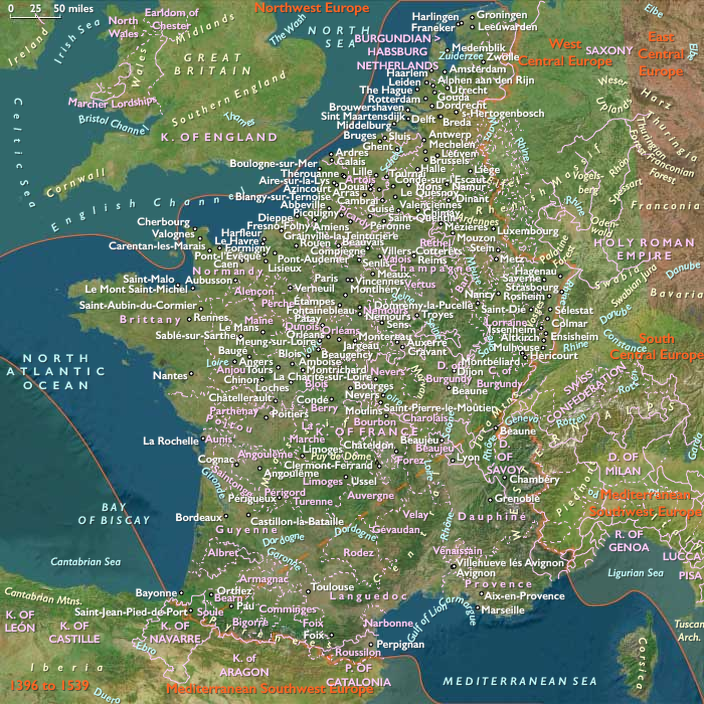
In the spring of 1453, French forces under King Charles VII launched a decisive siege to recapture Bordeaux, the last major English-held city in Gascony. After having temporarily retaken Bordeaux in late 1452, English defenders found themselves surrounded by French forces controlling the entire Bordelais region. The city, economically vital and historically loyal to English rule, ultimately fell to the French army, marking a decisive turning point.
The fall of Bordeaux in 1453 effectively concluded the prolonged Anglo-French conflict, later known as the Hundred Years’ War. Although no formal peace treaty was signed at the time, this event marked the definitive end of sustained English territorial ambitions in France, leaving England in possession only of the fortified enclave of Calais.
The French victory demonstrated the success of Charles VII's extensive military and administrative reforms, especially the sophisticated use of artillery led by Jean and Gaspard Bureau. Strategically and symbolically, Bordeaux’s capture signified the restoration of French royal sovereignty across almost all historical French territories, dramatically reshaping the geopolitical landscape of Atlantic West Europe and ushering in a new era of centralized royal authority.
Locations
People
Groups
Topics
Commodities
Subjects
Regions
West Europe
View →Subregions
