The Great Schism of 1378, initiated by…
1386 CE
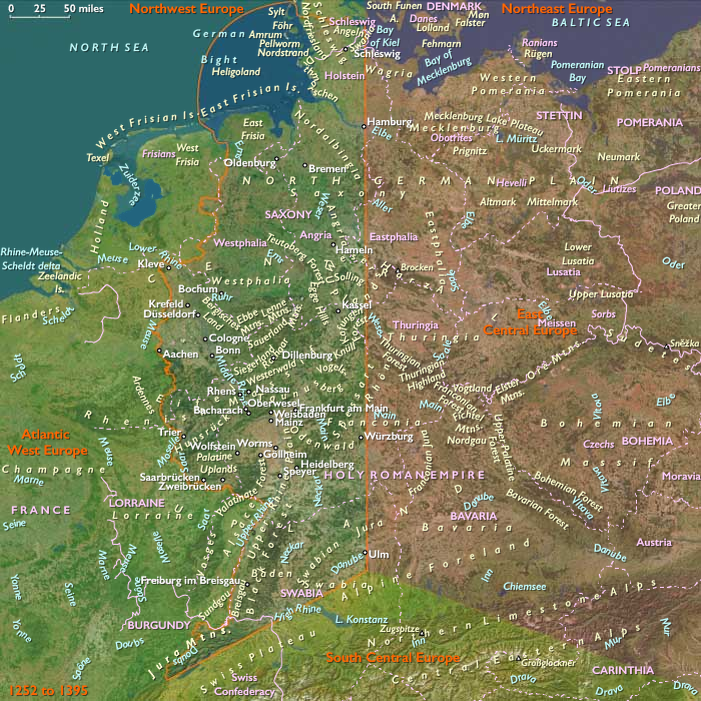
The Great Schism of 1378, initiated by the election of two popes after the death of Pope Gregory XI in the same year, has made it possible for Heidelberg, a relatively small city and capital of the Electorate of the Palatinate, to gain its own university.
One successor resides in Avignon (elected by the French) and the other in Rome (elected by the Italian cardinals).
The German secular and spiritual leaders had voiced their support for the successor in Rome, which has far-reaching consequences for the German students and teachers in Paris: they had lost their stipends and had had to leave.
Rupert I, Count Palatine of the Rhine, had recognized the opportunity and initiated talks with the Curia, which ultimately led to a Papal Bull for foundation of a university.
After having received, on October 23, 1385, permission from Pope Urban VI to create a school of general studies (Latin: studium generale), the final decision to found the university is taken on June 26, 1386 at the behest of Rupert I.
As specified in the papal charter, the university is modeled after University of Paris and includes four faculties: philosophy, theology, jurisprudence, and medicine.
A special Pontifical High Mass celebrated on On October 18, 1386, in the Heiliggeistkirche is the ceremony that establishes the university.
The first lecture is held on October 19, 1386, making Heidelberg the oldest university in Germany.
Marsilius of Inghen is in November 1386 elected first rector of the university.
The rector seal motto is semper apertus—i.e., "the book of learning is always open".
Groups
Topics
Regions
Central Europe
View →Subregions