
The island of Socotra has long been…
November 1503 CE
The island of Socotra has long been known to eastern merchants—Socotra aloe is a highly valued balm in the markets of Arabia and India—but is is unknown to the Portuguese.
Diogo Fernandes, rounding Cape Guardafui, stumbles on the island of Socotra sometime in late 1503.
Fernandes is also surprised to encounter a strong Syriac Christian community on the island, as this is a predominantly Muslim region.
A local tradition holds that the inhabitants were converted to Christianity by Thomas the Apostle in 52.
In the tenth century, the Arab geographer Abu Muhammad al-Hasan al-Hamdani stated that in his time most of the inhabitants were Christians.
Socotra is also mentioned in The Travels of Marco Polo; Marco Polo did not pass anywhere near the island but recorded a report that "the inhabitants are baptized Christians and have an 'archbishop'" who, it is further explained, "has nothing to do with the Pope in Rome, but is subject to an archbishop who lives at Baghdad".
They were Nestorians but also practiced ancient magic rituals despite the warnings of their archbishop Fernandes will spend the winter in Socotra.
Locations
People
Groups
Topics
Commodities
Subjects
Regions
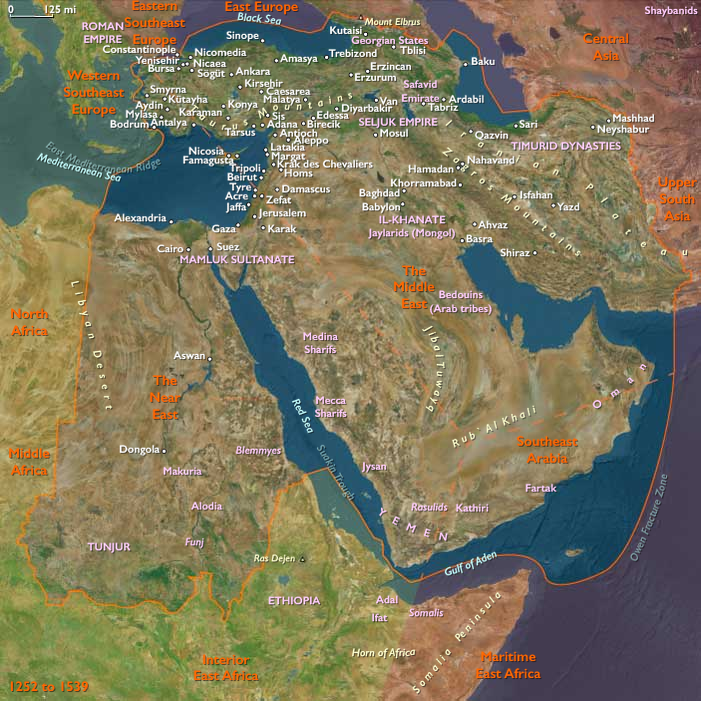
The Near and Middle East
View →Subregions
