
The Construction of the Jerónimos Monastery: A…
1502 CE
The Construction of the Jerónimos Monastery: A Monument to Portugal’s Maritime Empire (1501–1601)
On January 6, 1501, construction began on the Jerónimos Monastery (Mosteiro dos Jerónimos) in Belém, Portugal, to commemorate the opening of the sea route to India. This grand religious and architectural project symbolized Portugal’s maritime power, wealth, and religious devotion, becoming one of the finest examples of Manueline architecture.
Funding and Financial Sources
- King Manuel I funded the project using revenues from Portugal’s spice trade, particularly the Vintena da Pimenta, a 5% tax on commerce from Africa and the Orient.
- This tax generated the equivalent of 150 pounds (70 kg) of gold per year, with separate revenue from the importation of pepper, cinnamon, and cloves going directly to the Crown.
- Given Portugal’s vast wealth from overseas exploration, architects were not limited by budget constraints, allowing for a monumental design.
Redirection of Resources from Batalha to Belém
- The Aviz pantheon, originally designated for the Monastery of Batalha, was moved to Belém, reinforcing the monastery’s dynastic and national importance.
- This marked a shift in royal patronage, reflecting Portugal’s maritime ambitions and newfound global status.
Architectural Design and the Manueline Style
- The monastery and church of Santa Maria, also built in Belém, were designed to rise to a height of 80 feet (24.4 meters) with limited buttressing, emphasizing grandeur and openness.
- The Manueline style, pioneered by Diogo de Boitaca, was a flamboyant and highly ornate architectural movement, incorporating:
- Maritime and naval motifs, including ropes, anchors, and sea creatures.
- Symbolic elements representing Portugal’s discoveries, such as exotic plants and animals.
- Complex sculptural reliefs, carved in gold-colored limestone (calcário de lioz) from local quarries.
Role of the Hieronymite Monks
- King Manuel I chose the Hieronymite order (Order of Saint Jerome) to occupy the monastery.
- Their responsibilities included:
- Praying for the eternal soul of the King.
- Providing spiritual assistance to sailors and navigators departing from Restelo, the port from which Vasco da Gama had set sail in 1497.
Construction Timeline and Legacy
- Although initiated in 1501, the monastery took 100 years to complete, reflecting its massive scale and intricate detailing.
- The Jerónimos Monastery remains one of Portugal’s greatest architectural masterpieces, symbolizing the country’s Age of Exploration.
- Today, it is a UNESCO World Heritage Site, standing as a testament to Portugal’s maritime empire, artistic ambition, and religious devotion.
The Jerónimos Monastery was not just a royal pantheon or religious house—it was Portugal’s grandest statement of its golden age, commemorating the explorers and wealth that had transformed the nation into a global power.
Locations
Groups
Commodities
Subjects
Regions
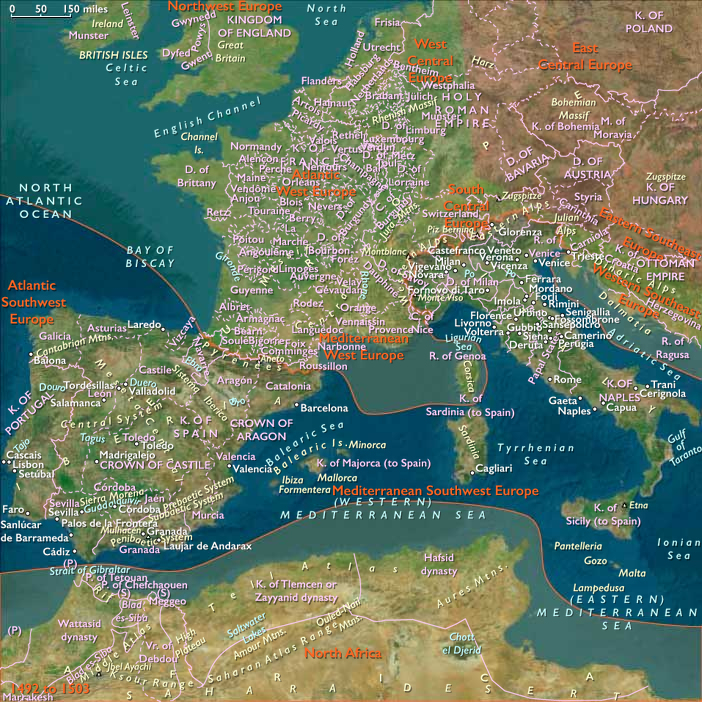
Southwest Europe
View →Subregions
