The Lombards believe the voices, which had…
November 1237 CE
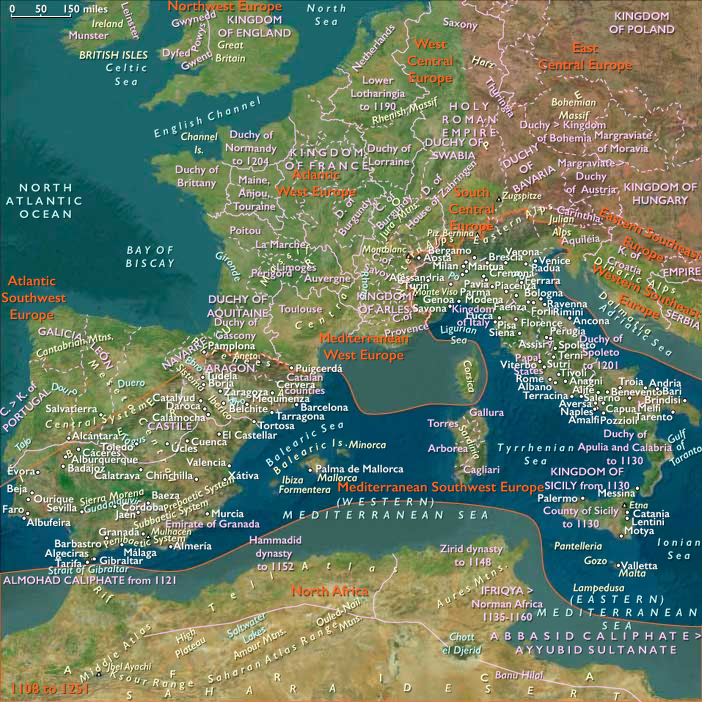
The Lombards believe the voices, which had been skillfully spread by the emperor, that he is retreating to Cremona to spend the winter there.
Therefore, they also leave the field, returning to their quarters.
Frederick has, however, attested a contingent from Bergamo at Cividate al Piano, which informs him of the Lombard retreat through smoke signals.
When the Lombard army has completed its crossing of Oglio at Pontoglio and Palazzolo, the imperial troops see large smoke clouds and moved to Cortenuova, which is eighteen kilometers from their current positions.
The imperial vanguard includes Saracens and horsemen, which are the first units to attack the Lombard units, followed by the infantry.
Taken by surprise, the Milanese and Piacentines are unable to form a defense line, and flee to Cortenuova.
When Frederick and his main force reach the battlefield, it is scattered with knights, slain or wounded and his passage blocked by riderless horses.
At Cortenuova, other Milanese and troops from Alessandria have amassed around their Carroccio (a four-wheeled war altar, mounting a large vexillum standard, drawn by oxen), where the Lombards fight valiantly under the Saracen arrows and the Teutonic charges.
A column of men from Milanese noble families, despite the arrival of other Bergamo troops, is able to protect the rest of the army's retreat to Cortenuova until nightfall.
To keep the army's morale as high as possible, Frederick orders his troop to sleep in their armor, and to attack at the first light of dawn.
On the other side, the podestà of Milan, recognizing that the troops cannot withstand another battle, orders to abandon the town together with the Carroccio and the rest of the baggage.
The imperial forces attack at dawn on November 28, and the hastily retreating Lombards who fall with nearly no resistance.
Many drown in the Oglio, which is in flood.
In the end, some five thousand Lombards are captured, casualties amounting to some other thousands killed.
The Milanese alone lose twenty-five hundred soldiers.
Locations
People
Groups
Topics
Commodities
Subjects
Regions
Southwest Europe
View →Subregions