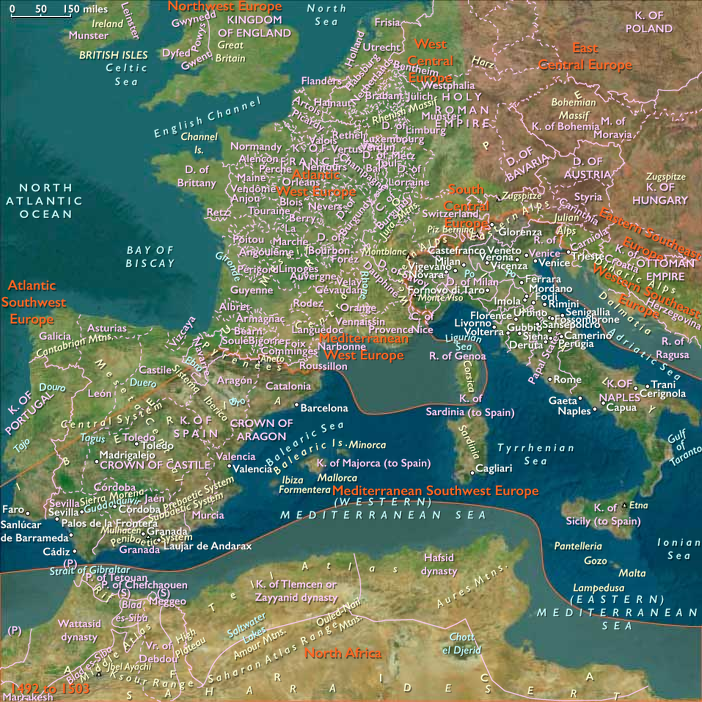
Once Islamic Spain has ceased to exist,…
1492 CE to 1503 CE
"Spanish society drove itself," historian J. H. Elliot writes, "on a ruthless, ultimately self-defeating quest for an unattainable purity."
Everywhere in sixteenth-century Europe, it is assumed that religious unity is necessary for political unity, but only in Spain is there such a sense of urgency in enforcing religious conformity.
Spain's population is more heterogeneous than that of any other European nation, and it contains significant non-Christian communities.
Several of these communities, including in particular some in Granada, harbor a significant element of doubtful loyalty.
Moriscos (Granadan Muslims) are given the choice of voluntary exile or conversion to Christianity.
Many Jews convert to Christianity, and some of these conversos will fill important government and ecclesiastical posts in Castile and in Aragon for more than a hundred years.
Many marry or purchase their way into the nobility.
Muslims in reconquered territory, called Mudejars, also will live quietly for generations as peasant farmers and skilled craftsmen.
Locations
Groups
Arab people
View →
Berber people (also called Amazigh people or Imazighen, "free men", singular Amazigh)
View →
Jews
View →
Islam
View →
Castillian people
View →
Christians, Roman Catholic
View →
Aragón, Kingdom of
View →
Aragon, Crown of
View →
Valencia, Kingdom of
View →
Naples, Angevin Kingdom of
View →
Sicily, Aragonese Kingdom of
View →
Catalonia, Principality of
View →
Portugal, Avizan (Joannine) Kingdom of
View →
Moriscos
View →
Christians, New
View →
Regions
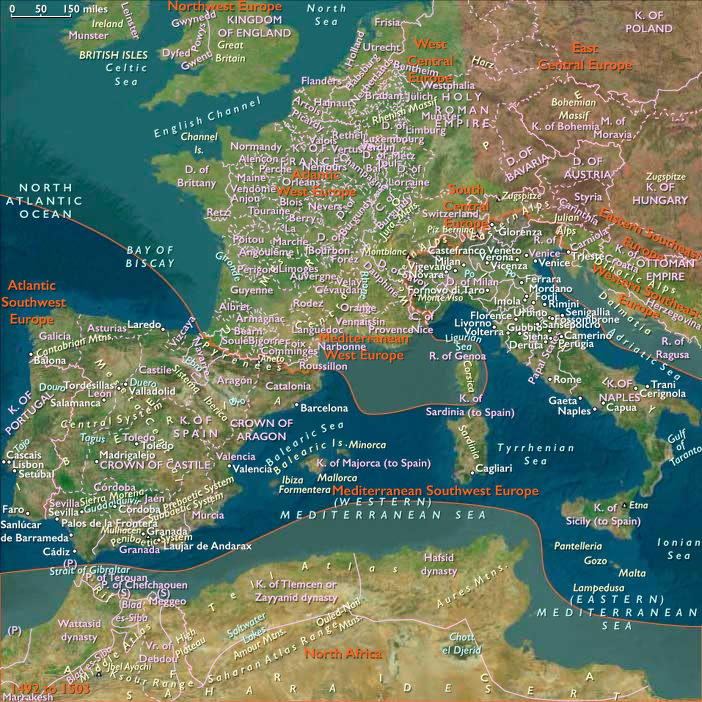
Southwest Europe
View →Subregions