
The Middle East: 2061–1918 BCE Invasions, …
Years: 2061BCE - 1918BCE
The Middle East: 2061–1918 BCE
Invasions, Cultural Synthesis, and Urban Transformation
Collapse of Ur III and the Rise of Elam
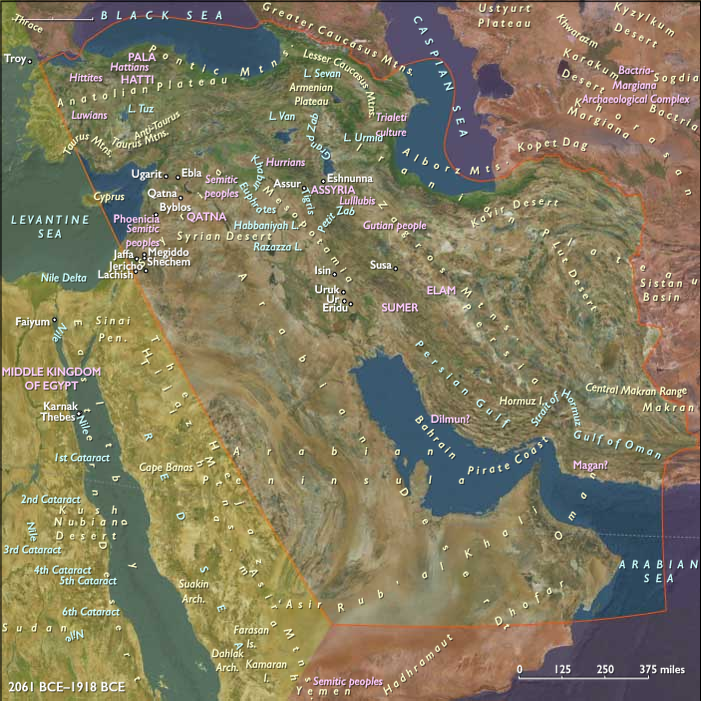
Between 2061 and 1918 BCE, the Middle East witnessed pivotal transformations. The combined attacks of the Amorites, Semitic peoples from the west, and the Elamites, originating from southwestern Iran, culminated in the fall of the Third Dynasty of Ur by around 2000 BCE. Despite their military victory, these invaders carried forward the Sumero-Akkadian cultural legacy. By 2000 BCE, Elam had achieved sufficient unity and strength to sack Ur, marking the beginning of a rapid cultural ascent and regional influence.
Amorite Expansion and Cultural Integration
The Amorite migration, triggered by drought conditions in the late third millennium BCE, significantly reshaped the demographic landscape. Large numbers of these Semitic-speaking nomads entered and dominated regions including Canaan and Mesopotamia. Their influx into Babylonia, the mid-Euphrates, and Syria-Palestine resulted in numerous small kingdoms that integrated and sustained Sumero-Akkadian traditions. This period set the stage for powerful Amorite kingdoms, eventually culminating in the prominence of Babylon under Hammurabi.
Amorite Identity and Settlement Patterns
The Amorites, or Mar.tu, featured prominently in early Sumerian texts, initially associated with western territories including Syria and Canaan, though their original homeland remains debated—ranging from the broad expanse between the Euphrates and Mediterranean to more limited areas such as Jebel Bishri in modern Syria. Their culture notably incorporated worship of the moon-god Sin and the deity Amurru.
Urban Flourishing and Interaction with Egypt
Bronze Age urban centers thrived, maintaining active trade networks that extended to Egypt, which held a dominant presence in the Jordan Valley. This urban prosperity declined after 2000 BCE due to Amorite migrations. In Syria and Canaan, Amorite culture blended closely with indigenous Hurrian populations, creating a vibrant, interconnected civilization. Early diplomatic and trade contacts between Ugaritic cities and Egypt date specifically to the reign of Pharaoh Senusret I (1971–1926 BCE), evidenced by archaeological finds such as a distinctive carnelian bead.
Commercial and Legal Developments
The city-state of Eshnunna flourished as a key commercial hub due to its strategic location on major trade routes connecting Mesopotamia with Elam. Exotic goods, including horses from northern regions and precious metals and stones, flowed through this gateway city. Notably, early codifications of law such as the Code of Ur-Nammu (circa 2050 BCE) and the Code of Eshnunna (circa 1930 BCE) formalized economic relationships, introducing monetary fines, compensation standards, and regulated interest rates.
The Enigma of Dilmun
Dilmun, an important maritime trade center described in Sumerian texts as "the Land of the Living," retained its significance into the early second millennium BCE. Despite its prominence in ancient literature—including the Epic of Gilgamesh—archaeological evidence for Dilmun’s exact location during this period remains uncertain. Various proposals situate Dilmun around modern Bahrain, Failaka, or possibly an unidentified location near the Shat al-Arab, aligning better with ancient descriptions.
Urban and Religious Developments
Mesopotamian cities, notably Ur, became architectural marvels. Ur, housing approximately sixty-five thousand people around 2030–1980 BCE, surpassed Lagash as the largest urban center. It featured elaborately designed ziggurats dedicated to lunar deities, built with vibrant glazed bricks. Concurrently, Gilgamesh, legendary king of Uruk, was immortalized in humanity's first great poem, the Epic of Gilgamesh, composed around 2000 BCE.
Assyria: Emergence of a New Power
In northern Mesopotamia, the cities of Assur, Nineveh, and Irbil defined early Assyria. Although initially under Akkadian and later Sumerian influence, Assyria gained independence in the late twenty-first century BCE. Early kings, such as Tudiya—who interacted diplomatically with Ebla—transitioned from nomadic to urban leadership, establishing a stable monarchy by about 1930 BCE under Ushpia, contemporaneous with Ishbi-Erra of Larsa.
Majan and Wider Trade Networks
The kingdom of Majan (likely modern Oman) was integral to interregional trade, supplying valuable copper and diorite. Trade relations, disrupted during Gutian domination, resumed vigorously under the Ur III dynasty, reinforcing Mesopotamia's commercial links with distant lands such as Zanzibar and South Asia.
This era, thus, represents a transformative period marked by cultural integration, extensive trade networks, urban sophistication, and the emergence of enduring civilizations across the Middle East.
People
Groups
- Polytheism (“paganism”)
- Eridu, City-state of
- Sumer
- Nippur, city-state of
- Mari, City-State of
- Susa, City-state of
- Uruk, city-state of
- Ur, city-state of
- Larsa, city-state of
- Kish, City-state of
- Jemdet Nasr period
- Dilmun (Bahrain?)
- Umma, city-state of
- Lagash, 1st Dynasty of
- Elam, (Old) Kingdom of
- Canaanite culture, ancient
- Hurrians
- Isin, city-state of
- Amorites
- Hattians
- Majan (Civilization)
- Ebla, Kingdom of
- Akkadian Empire
- Erbil (Arbil, Irbil), city-state of
- Gutians
- Nineveh, city-state of
- Ur, Third Dynasty of (Neo-Sumerian Empire)
Commodoties
- Weapons
- Hides and feathers
- Glass
- Domestic animals
- Grains and produce
- Ceramics
- Strategic metals
- Beer, wine, and spirits
Subjects
- Commerce
- Writing
- Architecture
- Sculpture
- Painting and Drawing
- Environment
- Decorative arts
- Conflict
- Mayhem
- Faith
- Government
- Custom and Law
- Technology
- Metallurgy
Regions
Subregions
Years: 2061BCE - 1918BCE
People
Groups
- Polytheism (“paganism”)
- Eridu, City-state of
- Sumer
- Nippur, city-state of
- Mari, City-State of
- Susa, City-state of
- Uruk, city-state of
- Ur, city-state of
- Larsa, city-state of
- Kish, City-state of
- Jemdet Nasr period
- Dilmun (Bahrain?)
- Umma, city-state of
- Lagash, 1st Dynasty of
- Elam, (Old) Kingdom of
- Canaanite culture, ancient
- Hurrians
- Isin, city-state of
- Amorites
- Hattians
- Majan (Civilization)
- Ebla, Kingdom of
- Akkadian Empire
- Erbil (Arbil, Irbil), city-state of
- Gutians
- Nineveh, city-state of
- Ur, Third Dynasty of (Neo-Sumerian Empire)
Commodoties
- Weapons
- Hides and feathers
- Glass
- Domestic animals
- Grains and produce
- Ceramics
- Strategic metals
- Beer, wine, and spirits
Subjects
- Commerce
- Writing
- Architecture
- Sculpture
- Painting and Drawing
- Environment
- Decorative arts
- Conflict
- Mayhem
- Faith
- Government
- Custom and Law
- Technology
- Metallurgy
Regions
Subregions