
The Renaissance of the Twelfth Century: Intellectual …
Years: 1108 - 1251
The Renaissance of the Twelfth Century: Intellectual and Cultural Transformation
The Renaissance of the Twelfth Century was a period of profound intellectual, social, and cultural revival that reshaped Western Europe, laying the foundations for later medieval and early modern advancements. Unlike the 15th-century Renaissance, which emphasized literary and artistic humanism, the 12th-century intellectual revival was centered on the translation, study, and synthesis of ancient Greek, Arabic, and Hebrew knowledge, particularly in natural science, philosophy, and mathematics.
Translation and Knowledge Exchange
A key feature of this period was the renewed access to classical learning, facilitated by increased contact with the Islamic world and Byzantine scholarship. Unlike earlier centuries, when Latin scholars had limited access to Greek and Arabic texts, the 12th century saw a systematic effort to recover and assimilate this knowledge through translation movements in:
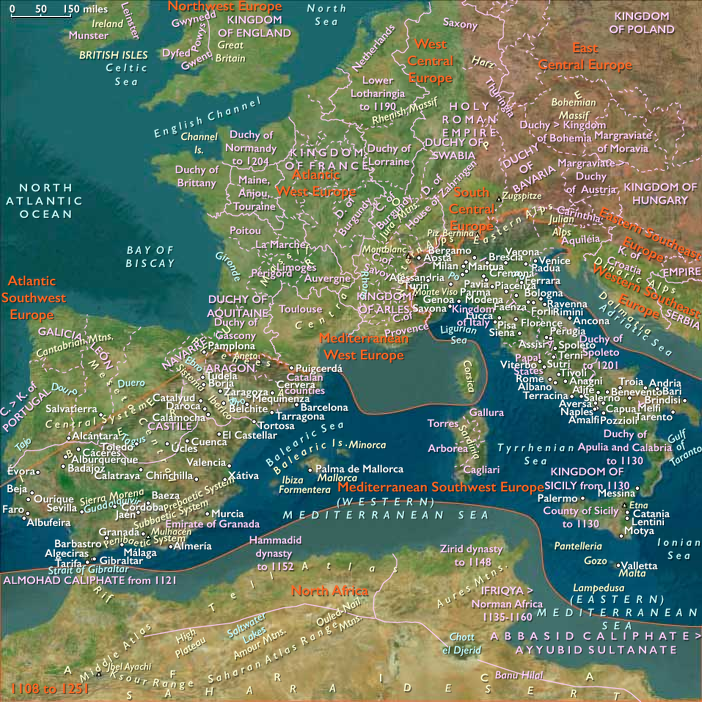
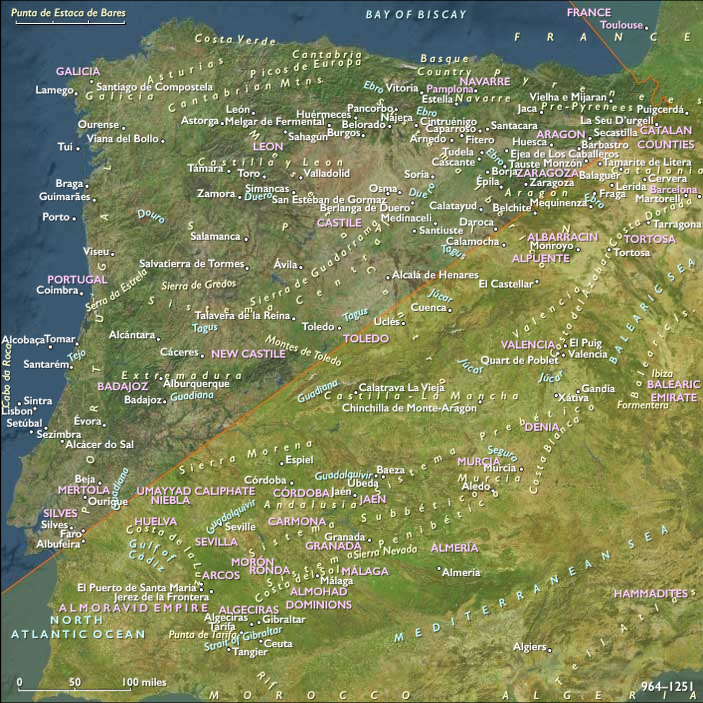
- Islamic Spain (Al-Andalus) – Scholars in Toledo, Seville, and Córdoba translated Greek and Arabic texts into Latin, often with the help of Jewish intermediaries. The Toledo School of Translators, led by figures like Gerard of Cremona, played a key role in transmitting works of Aristotle, Avicenna (Ibn Sina), Averroes (Ibn Rushd), and Alhazen (Ibn al-Haytham) to Latin Europe.
- Sicily and Southern Italy – Under Norman rule, centers such as Palermo became melting pots of Greek, Arabic, and Latin scholarship, fostering translation efforts that brought Ptolemaic astronomy, Euclidean geometry, and Hippocratic medicine into European learning.
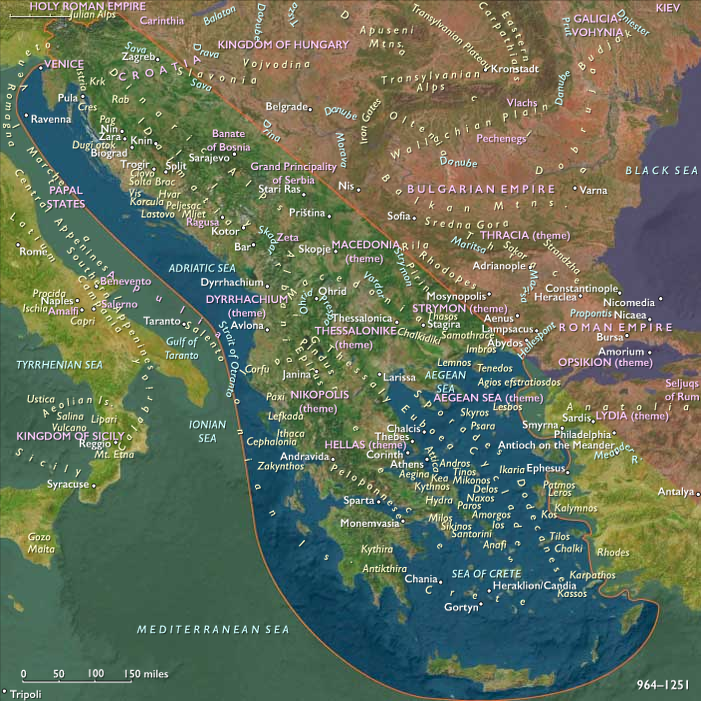
- Constantinople and the Crusader States – The Byzantine Empire, particularly during the Comnenian Renaissance, preserved a vast corpus of Greek philosophical and scientific works, which entered Western Europe through crusaders, merchants, and scholars.
Through these exchanges, European scholars gained access to critical scientific and philosophical texts, many of which had been lost to the Latin West for centuries.
The Rise of Scholasticism and the Role of Universities
The rediscovery of Aristotle was particularly transformative, influencing the development of Scholasticism, a method of critical inquiry and logical analysis that sought to reconcile reason and faith. This intellectual movement dominated medieval theological and philosophical thought, shaping the intellectual framework of universities and the Church.
At the same time, the emergence of medieval universities—such as Paris, Bologna, Oxford, and Salamanca—provided a structured environment for the study and dissemination of ancient and Islamic knowledge. These institutions:
- Standardized academic disciplines, formalizing studies in philosophy, theology, medicine, law, and natural sciences.
- Fostered intellectual communities, where scholars such as Peter Abelard, Albertus Magnus, and Thomas Aquinas debated and refined ideas that would influence later medieval thought.
- Promoted systematic translation efforts, ensuring that the works of Plato, Aristotle, Galen, and Ptolemyremained integral to European intellectual traditions.
Impact and Legacy
The Renaissance of the Twelfth Century served as a crucial bridge between the ancient and modern worlds, leading to:
- The revival of classical learning, which strengthened logical reasoning, scientific inquiry, and legal theory.
- The foundation for later scientific advancements, particularly in astronomy, optics, and medicine, which would continue into the Renaissance and Early Modern periods.
- The intellectual maturation of medieval Europe, fostering an academic culture that would eventually lead to humanism, the printing revolution, and the Scientific Revolution.
By restoring and synthesizing Greek, Arabic, and Latin knowledge, the 12th-century intellectual revival set the stage for the great transformations of the later Middle Ages, making it one of the most significant turning points in European history.
Groups
- Holy Roman Empire
- Fatimid Caliphate
- Sicily, Kingdom of
- Egypt, Ayyubid Sultanate of
- Sicily, Hohenstaufen Kingdom of
Topics
Subjects
Regions
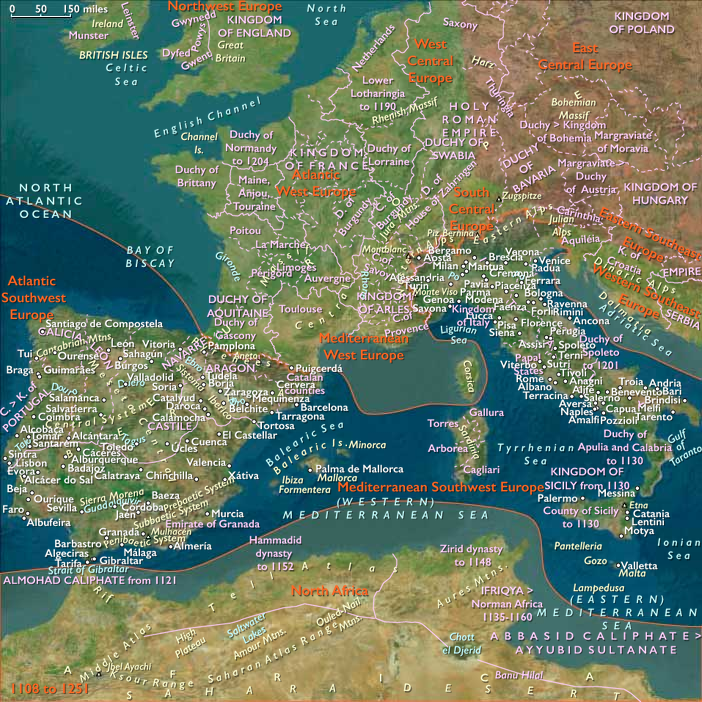
Subregions
- Northeast Europe
- East Central Europe
- Eastern Southeast Europe
- Western Southeast Europe
- South Central Europe
- Mediterranean West Europe
- Mediterranean Southwest Europe
- Atlantic Southwest Europe
- Atlantic West Europe
- West Central Europe
- Northwest Europe
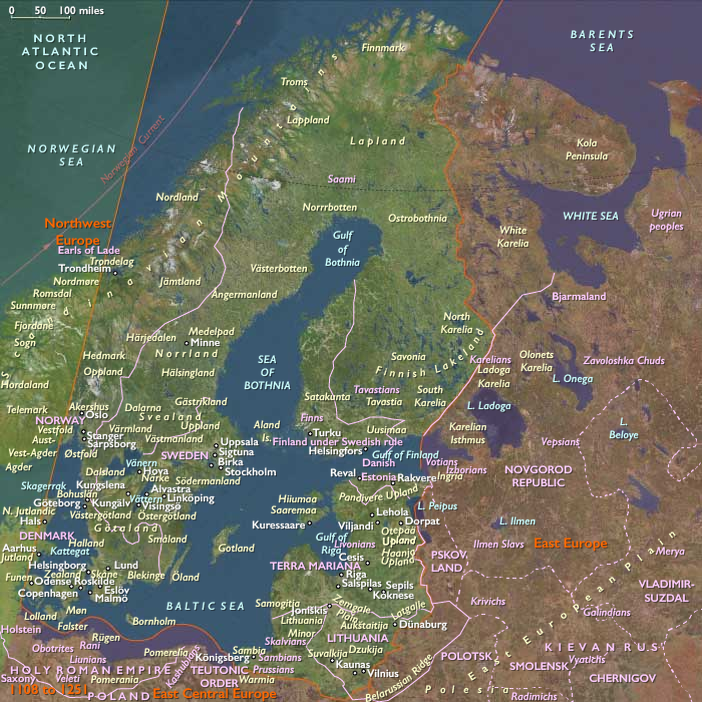
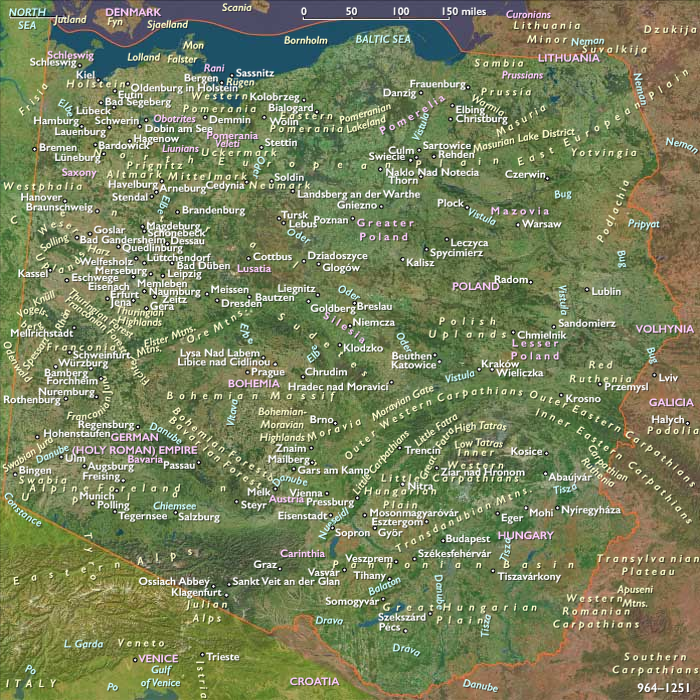
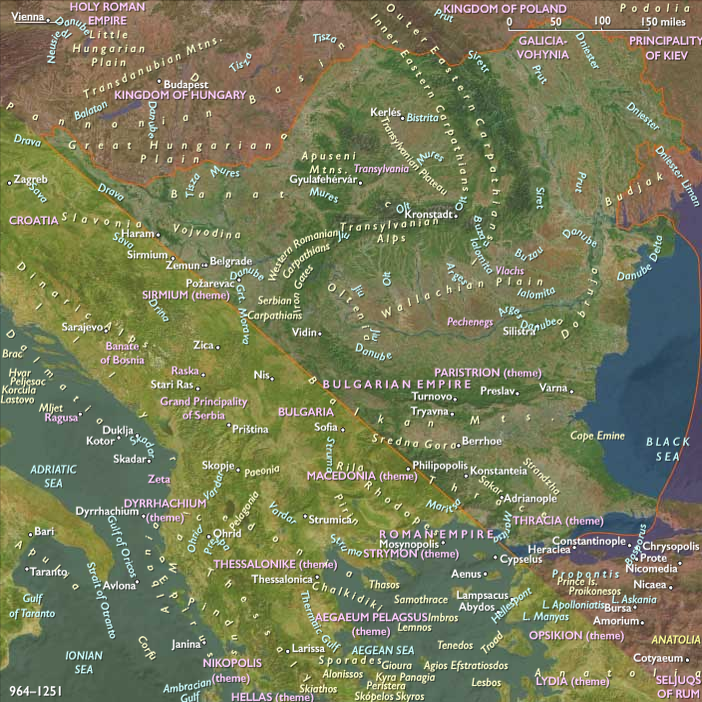

Related Events
Showing 10 events out of 49873 total
Years: 1108 - 1251
Groups
- Holy Roman Empire
- Fatimid Caliphate
- Sicily, Kingdom of
- Egypt, Ayyubid Sultanate of
- Sicily, Hohenstaufen Kingdom of
Topics
Subjects
Regions
Subregions
- Northeast Europe
- East Central Europe
- Eastern Southeast Europe
- Western Southeast Europe
- South Central Europe
- Mediterranean West Europe
- Mediterranean Southwest Europe
- Atlantic Southwest Europe
- Atlantic West Europe
- West Central Europe
- Northwest Europe