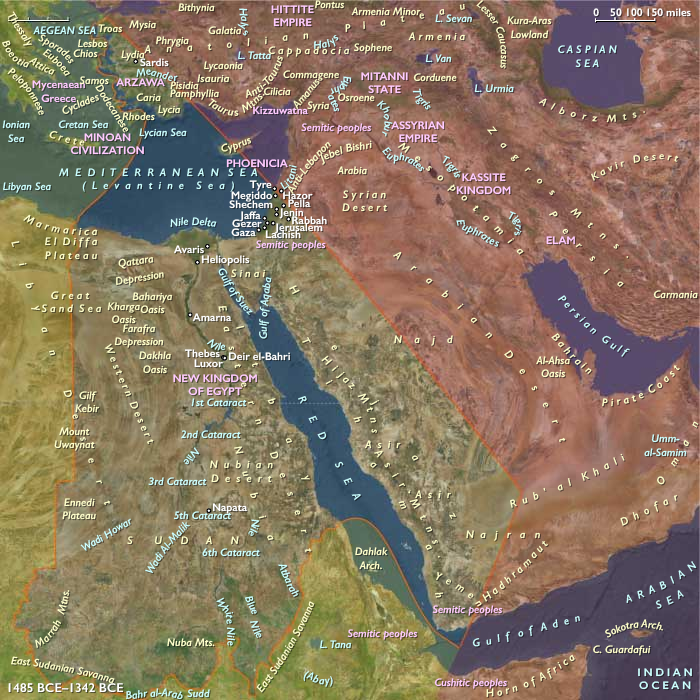
The Near East (1485–1342 BCE): Egyptian Dominance,…
1485 BCE to 1342 BCE
The Near East (1485–1342 BCE): Egyptian Dominance, Cultural Renaissance, and Regional Diplomacy
Expansion and Consolidation of Egyptian Power
Under Pharaoh Thutmose III (1490–1436 BCE), Egypt reaches the peak of its imperial expansion, solidifying control over Palestine, Syria, and parts of Mesopotamia. The vigorous military campaigns of Thutmose III secure the allegiance of regional princes and spur Assyria, Babylonia, and the Hittites to send tributes to Egypt. Egyptian military dominance extends deep into Nubia, beyond the Fourth Cataract, establishing unprecedented control over western Asia and northeastern Africa. These territories are managed efficiently through viceroys, heavy tribute requirements, and the practice of raising local princes at the Egyptian court.
Architectural and Artistic Innovations
One of the greatest Egyptian architectural achievements of this period is the temple complex of Pharaoh Amenhotep III at Thebes. Notably, the enormous Colossi of Memnon mark the entrance to his funerary temple. Additionally, under Queen Hatshepsut, the construction of monumental temples, such as the grand mortuary temple at Dayr al Bahri, becomes a significant cultural practice, showcasing elaborate religious devotion, especially to the god Amun.
Egyptian art and architecture reach new heights of elegance, precision, and detail during the New Kingdom. Artisans demonstrate fine craftsmanship, particularly in precious materials such as gold, silver, and gemstones, employing techniques like filigree and inlay.
Religious Reforms and the Cult of Aten
Pharaoh Akhenaten (Amenhotep IV, 1364–1347 BCE) introduces radical religious reforms, establishing the monotheistic worship of Aten, the sun-disc deity. Akhenaten suppresses traditional gods, dismantles their temples, and relocates the capital to a newly built city called Akhetaten (modern-day Tell al Amarna). His queen, Nefertiti, actively supports these religious reforms. This short-lived monotheistic experiment profoundly impacts Egyptian culture and politics.
Literary, Scientific, and Technological Advancements
Egyptian literature flourishes with works such as the Book of the Dead, evolving from the earlier Coffin Texts into detailed guides for the afterlife, richly illustrated on papyrus scrolls. Technological innovations include the water clock, precisely documented around 1400 BCE and employed in religious and administrative contexts. Additionally, Egyptians produce early property maps to aid in taxation and administration.
Kushite Cultural Integration
Following the firm establishment of Egyptian rule, the region of Kush undergoes significant cultural integration. Egyptian language and religious practices, particularly worship of the sun god Amon, are widely adopted. Egyptian administrative presence transforms Kushite elite identity, positioning them as protectors of traditional Egyptian religious and cultural values.
Regional Trade and Diplomacy
Egypt maintains strong diplomatic ties and extensive trade networks with regions such as Punt, Babylonia, Assyria, the Hittites, and the Mycenaean Greeks. These interactions facilitate cultural exchanges and economic prosperity. Artifacts from these exchanges are evident throughout the Near East, reflecting the extent of Egyptian influence.
Urban Development and Conflict in Canaan
Canaanite cities like Gezer, Hazor, and Gaza undergo significant developments and face conflicts during this period. Gezer becomes heavily fortified but is eventually destroyed by Pharaoh Thutmose III. Hazor reaches its cultural zenith, constructing elaborate temples with rich international trade goods. Gaza serves as Egypt's administrative center in Canaan until its destruction at the end of the Bronze Age. Jericho, previously fortified, suffers destruction linked to regional upheavals, potentially related to Egyptian military campaigns or seismic activity.
Influence of the Habiru and Regional Turmoil
Incursions by marauding groups known as the Habiru affect many Near Eastern regions. Originating as nomadic invaders, the Habiru significantly disrupt local power structures, particularly in Canaan, following Egypt's expulsion of the Hyksos. The ongoing turbulence reshapes political dynamics, though many areas maintain their cultural integrity despite military pressures.
Emergence and Development of Luwian Culture
In Anatolia, the distinct Luwian language emerges, documented extensively by the fourteenth century BCE. Closely related to the Hittite language, Luwian represents significant cultural and linguistic developments, influencing the broader region and potentially connected to the inhabitants of Troy.
Conclusion
Between 1485 and 1342 BCE, the Near East witnesses a period of remarkable Egyptian dominance characterized by territorial expansion, cultural and religious innovation, diplomatic complexities, and significant urban developments. This era sets enduring patterns in governance, religion, and international relations, influencing regional dynamics for centuries to follow.
Groups
Commodities
Subjects
Regions
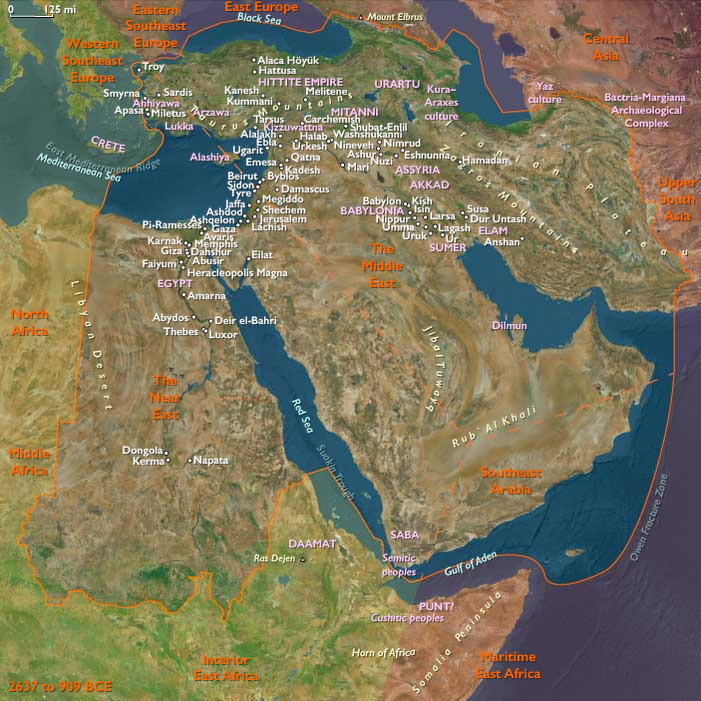
The Near and Middle East
View →Subregions