The Protestant armies, despite their best efforts,…
September 1634 CE
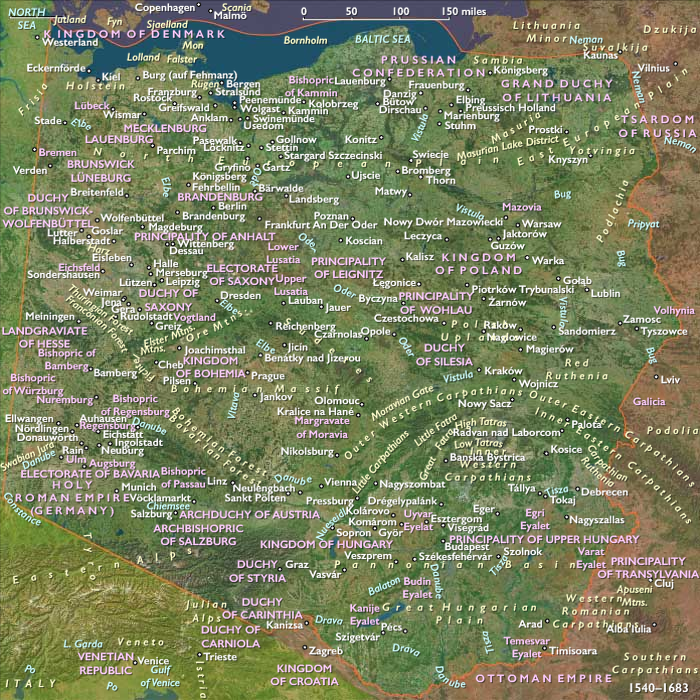
The Protestant armies, despite their best efforts, are still behind when Ferdinand and the Imperials besiege the town of Nordlingen in Swabia and await the Cardinal-Infante, who arrives before the city on the 2nd September—three days before the Protestants.
After the failure of the tercio system in the first Battle of Breitenfeld in 1631, the professional Spanish troops deployed at Nördlingen prove the tercio system can still contend with the deployment improvements devised by Maurice of Orange and the late Gustavus Adolphus of Sweden.
The Catholic Imperial army, bolstered by eighteen thousand Spanish and Italian soldiers, wins a great victory in the battle over the combined Protestant armies of Sweden and their German-Protestant allies (the Heilbronn Alliance).
Gustav Horn af Björneborg is captured, his army is destroyed, and the remainder of the Protestants who successfully flee to Heilbronn are only a remnant of those engaged.
The two Ferdinands (Cardinal-Infante Ferdinand of Spain and Ferdinand of Hungary) have achieved a great military victory.
The battle is one of the most crushing defeats the Protestants sustain during the war.
The Swedish army in Germany is crippled by the defeat and the battle marks the end of the Swedish attempts to dominate Germany.
Meanwhile, the victory leads most of the Protestant princes of Germany to seek a separate peace with the Emperor, which will be achieved by the Peace of Prague in 1635.
Maximilian finally regains his realm, depopulated and devastated by the years of warfare.
Locations
People
Groups
Topics
Commodities
Subjects
Regions

Central Europe
View →Subregions