
The Fragmentation of the Suebi Kingdom (456–460…
March 460 CE
The Fragmentation of the Suebi Kingdom (456–460 CE)
With the execution of Rechiar by the Visigoths, the royal bloodline of Hermeric comes to an end, along with the traditional mechanism of Suebi leadership.
In 456 CE, a leader named Aioulf emerges as ruler of the Suebi, though his origins remain uncertain. According to Hydatius, Aioulf was a Gothic deserter, while Jordanes claims he was a Warni appointed by Theodoric II to govern Gallaecia, only to be persuaded by the Suebi to join their cause. Regardless of his background, Aioulf’s rule is short-lived—he is killed in Porto in June 457. However, his rebellion, along with the military campaigns of Majorian against the Visigoths, temporarily relieves pressure on the Suebi.
Schism and Conflict Among the Suebi
In 456 CE, the same year as Rechiar’s death, Hydatius records that the Suebi elect Maldras as their king, suggesting that the Suebi people themselves may have played a role in selecting their new ruler.
However, Maldras' rise leads to a schism among the Suebi, as another faction follows Framta, who dies just a year later. Both rival groups eventually seek peace with the local Galicians.
In 458 CE, the Visigoths send another army into Hispania, reaching Baetica in July and depriving the Suebi of the province. This field army remains in Iberia for several years, further limiting Suebi expansion.
The Fall of Maldras and the Rise of Rechimund
Maldras, who rules for four years, is assassinated in 460 CE after plundering both Suebi and Roman territories in Lusitania and the southern reaches of Gallaecia along the Douro River.
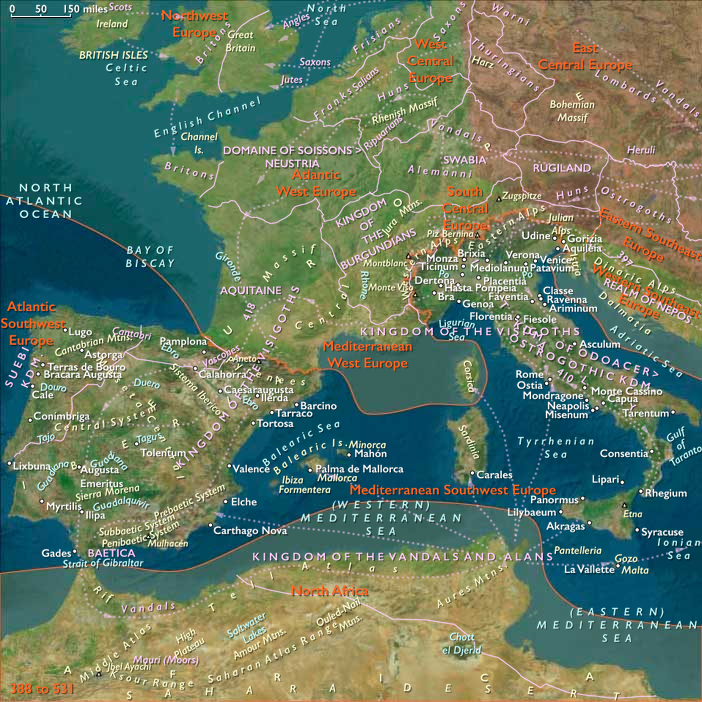
Meanwhile, in the north, another Suebi leader, Rechimund, rises to power. In 459 and 460 CE, his forces ravage Galicia, culminating in the capture of Lucus Augusti (modern Lugo) on the night of March 27, 460. The city, still under Roman administration, falls to the Suebi, marking a major shift in power.
Lugo Becomes a Suebi Stronghold
In response to the fall of Lugo, the Visigoths send an army to punish the Suebi in the surrounding region. However, local inhabitants reveal the campaign’s details to the Suebi, whom Hydatius condemns as traitors.
From this moment forward, Lugo becomes a key stronghold for the Suebi kingdom, serving as the capital under Rechimund.
Locations
Groups
Topics
Commodities
Subjects
Regions
Southwest Europe
View →Subregions
