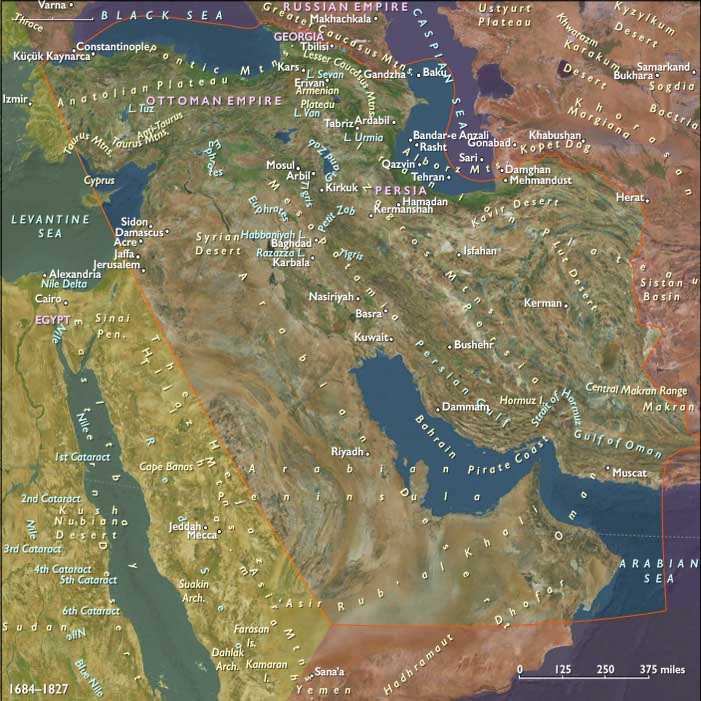
Imperial Russia had just sworn in a…
October 1812 CE
A few years previously in Persia, Fath Ali Shah Qajar had also become the new shah after the assassination of his uncle, Agha Mohammad Khan Qajar in 1797.
Agha Mohammad Khan had, during his reign, defeated and re-subordinated all of his enemies and former Afsharid/Safavid vassals and subjects in the regions of present-day Georgia, Armenia, southern Dagestan, and Azerbaijan, and claimed the areas as rightfully belonging to Persia.
By the events prior, during, and after the Battle of Krtsanisi of 1795, he had regained full control over Eastern Georgia, Dagestan, Armenia, and Azerbaijan.
Several years later, after Agha Mohammad Khan was assassinated in Shusha and Erekle II had died as well, Russia had stepped in and capitalized on the moment to annex eastern Georgia, allowing unrestricted travel and trade between the regions and Russia, furthering its public claim on the land.
Persia had been trying to align with France in 1801 to better position itself in case of war with Russia, yet those attempts had fallen through.
Ironically, as both Russia and Britain were currently engaged in the Napoleonic wars, Fath Ali Shah had instead brokered a deal with Britain that provided Persia with military support from British troops in exchange for preventing any European country from entering India.
With the alliance, Persia had entered into the first Russo-Persian War against a militarily preoccupied Russia, which was heavily invested in the Napoleonic Wars.
Although Persia had entered the war mainly for the goal of reasserting its control over Georgia and to ensure the protection of the rest of its northwestern borders, Fath Ali Shah had heard about the atrocities being committed by Russian Commanders in Georgia.
Numerically, Persian forces have a considerable advantage during the war: a ratio of five to one over their Russian adversaries.
However, the Persian forces are technologically backward and poorly trained—a problem that the Persian government does not recognize until a far later juncture.
Despite these crippling disadvantages, fighting had continued in northern Persia, Azerbaijan and in regions of Georgia.
Persia is so enraged at Russia as to have declared a jihad upon them, demanding that its people unite to fight the war against them.
Persia was actually losing the war and had asked for military and financial aid from France’s Napoleon (with whom they had signed a France-Persian Alliance), who had promised to deliver French support regarding Iran's ambitions to regain its recently lost territory of Georgia, yet France's relations with Russia had become more important to them after the two countries signed the Treaty of Tilsit in 1807, resulting in France leaving Persia unassisted.
The Battle of Aslanduz on October 31, 1812, is the turning point in the war, which leads to the complete destruction of the Persian army, thus leaving Fath Ali Shah with no other option but to conclude a peace with Russia.
Locations
Groups
Regions
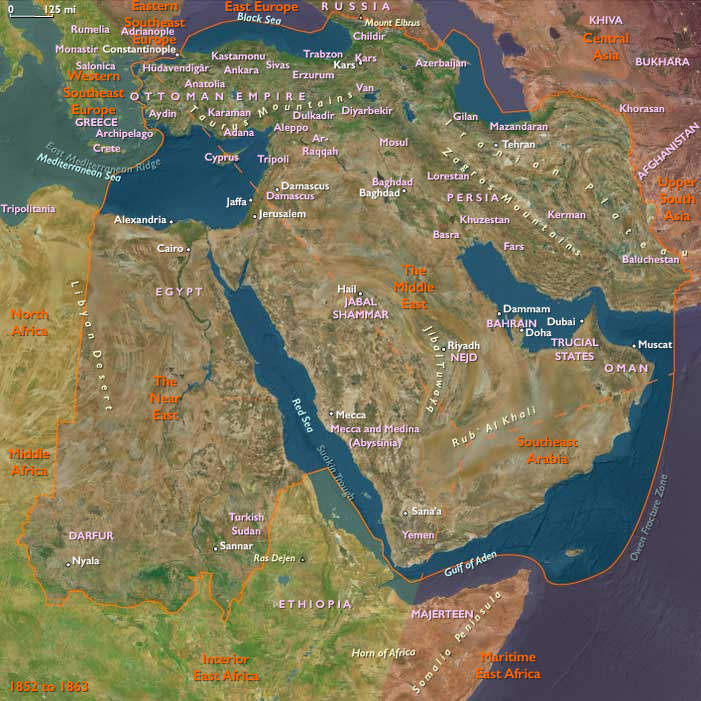
The Near and Middle East
View →Subregions