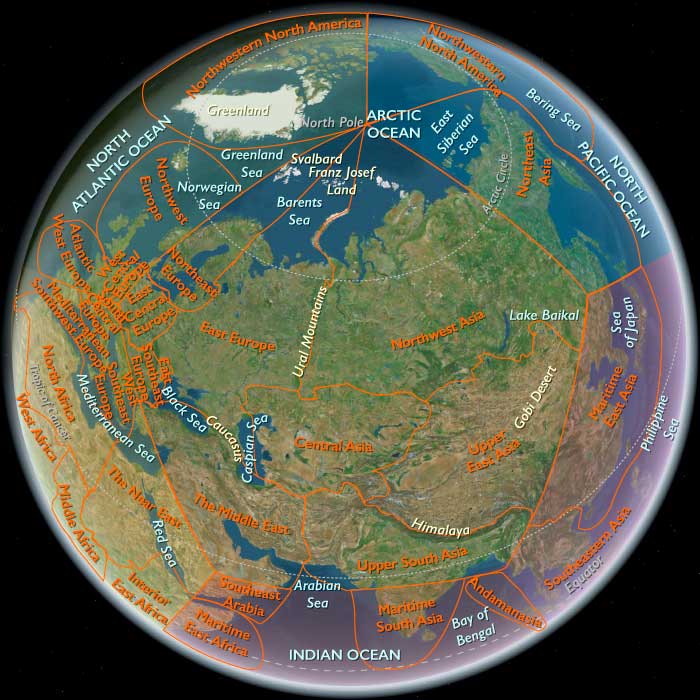
Event
The seven years' reign of ar-Radi, son…
The seven years' reign of ar-Radi, son of al-Muqtadir, has been a succession of misfortuns.
Praised for his piety, he has become the mere tool of the chief minister of the day.
The authority of the Caliph extends hardly beyond the region of the city.
After one Vizier had been imprisoned by his enemies, and another had defected in disgrace, ar-Radi, being without resources, had fallen into the hands of an able but cruel, de facto ruling minister, Ibn Raik, for whom he had created the post of amir al-umara, 'Amir of the Amirs', who holds so absolutely the reins of government that his name is conjoined with the Caliph's in the public prayers.
Around this period, the Hanbalis, supported by popular sentiment, had become dominant.
Forcing their way into private dwellings, they overthrow everything not in strict conformity with their tenets, empty vessels of wine wherever found, break in pieces musical instruments, pry into the details of trade and commerce, and set up in fact a kind of 'Sunni inquisition'.
Thus, a professor of the Shi'a creed had been killed for performing pilgrimage.
A famous doctor also had been badly handled for affirming some various readings of the Qur'an, of no apparent moment in themselves; and, notwithstanding that he submitted written recantation, had had to flee Baghdad for fear of death.
Ar-Radi is commonly spoken of as the last of the real Caliphs: the last to deliver orations at the Friday service, to hold assemblies to discuss with philosophers and discuss the questions of the day, or to take counsel on the affairs of State; the last to distribute largess among the needy, or to interpose to temper the severity of cruel officers.
Yet, with all this, ar-Radi is the mere dependent of another.
Beyond the shadow of the vizier, there is little of the Abbasid Empire left at home, and even less abroad.
The East is gone; Africa and Egypt also, with a great part of Syria and Mesopotamia; Mosul is independent; Arabia is held by Qarmatians and native chieftains; even Basra and Wasit are in revolt.
The advance of the 'Greeks' (Constantinople) is stayed only by the brave Hamdanid prince who is deservedly styled Sayf al-Daula, 'Sword of the Nation'.
Of such little importance has the Caliphate become by now that when ar-Radi dies, Bajkam, amir al-umara (Amir of Amirs), contents himself with dispatching to Baghdad his secretary, who assembles the chief men to elect a successor.
The choice falls on the deceased Caliph's brother al-Muttaqi, who assumes the office after it had been some days vacant; and whose first act is to send a banner and dress of honor to Bajkam, a needless confirmation of his rank.
-
{# Image navigates to the detail page; the magnifying-glass chip is the only Fancybox lightbox trigger (kept a separate sibling — anchors can't nest). #}
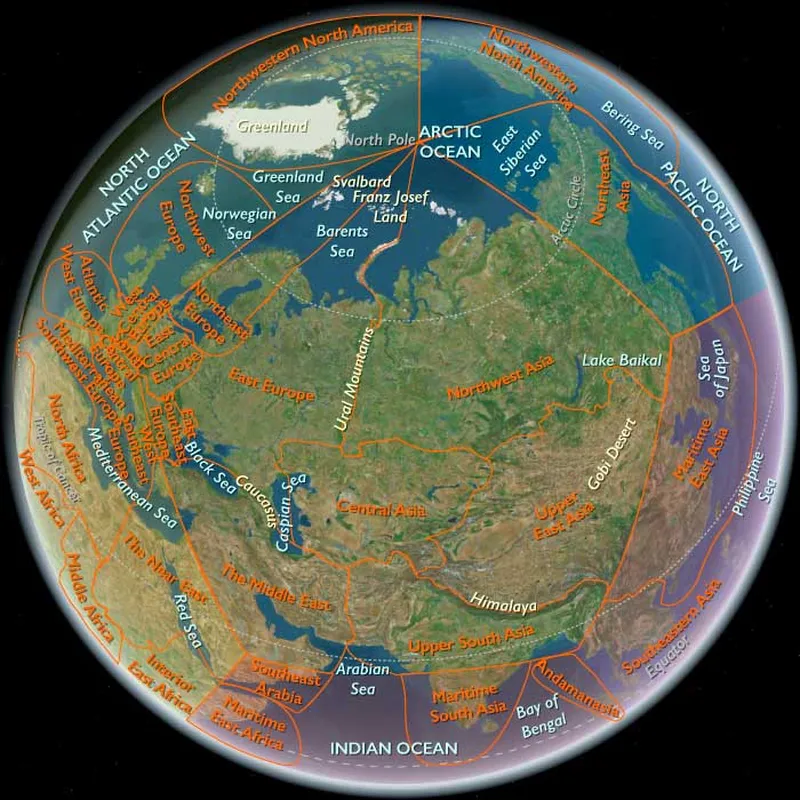 The Great Crossroads
World
The Great Crossroads
World
-
{# Image navigates to the detail page; the magnifying-glass chip is the only Fancybox lightbox trigger (kept a separate sibling — anchors can't nest). #}
 The Near and Middle East
Region
The Near and Middle East
Region
-
{# Image navigates to the detail page; the magnifying-glass chip is the only Fancybox lightbox trigger (kept a separate sibling — anchors can't nest). #}
 Middle East
Subregion
Middle East
Subregion