Event
Native canoes of the the Micronesian island…
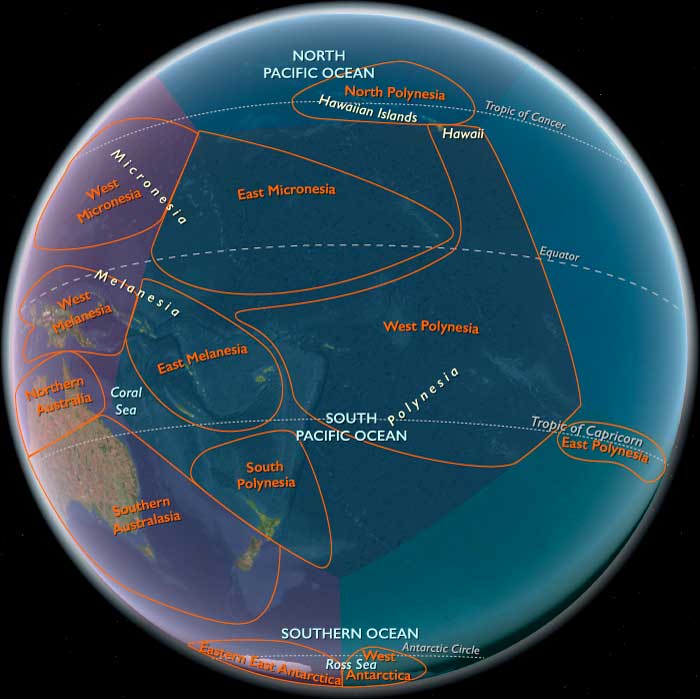
Native canoes of the the Micronesian island of Pohnpei had chased off Australian sailor John Henry Rowe in his barque John Bull on September 10, 1825.
The first lengthy description of the island and its inhabitants is presented by the Russian explorer Fyodor Litke, whose ship Senyavin gives the island group of Pohnpei, Ant and Pakin its name.
From January 14 to 19, 1828, his boats attempt to land but cannot due to the hostility shown by the islanders,; natives then come aboard his ship, "some trading occurred, a short vocabulary was compiled, and a map made."
F.H. von Kittlitz, a member of the Litke expedition, makes a further descriptive account, including the offshore ruins of Nan Madol, and the two reports together provide the first real knowledge of Pohnpei.
It is not clear who the next visitors were; however, when Capt. J.H. Eagleston of the barque Peru sights the island on January 3, 1832, it is already on his charts as "Ascension Island;" Riesenberg writes that it is uncertain who first called it Ascension Island, but the name becomes established until the Spanish period.
From this time onward whaling and trading vessels come in increasing numbers.
Very soon a "large colony of beachcombers, escaped convicts, and ship's deserters became established ashore," identified as "chiefly bad characters," according to the log of the Swedish frigate Eugenie.
The first missionary to arrive is Father Louis Désiré Maigret, a Roman Catholic priest.
He had sailed from Honolulu on the schooner Notre Dame de Paix and begins his efforts in December 1837, but he departs on July 29, 1838, for Valparaíso after seven unsuccessful months.
In his company had been "several Mangarevans and Tahitians," some of whom remain on Pohnpei and will leave descendants.
-
{# Image navigates to the detail page; the magnifying-glass chip is the only Fancybox lightbox trigger (kept a separate sibling — anchors can't nest). #}
 Central Oceania
World
-
{# Image navigates to the detail page; the magnifying-glass chip is the only Fancybox lightbox trigger (kept a separate sibling — anchors can't nest). #}
 Micronesia
Region
-
{# Image navigates to the detail page; the magnifying-glass chip is the only Fancybox lightbox trigger (kept a separate sibling — anchors can't nest). #}
 West Micronesia
Subregion