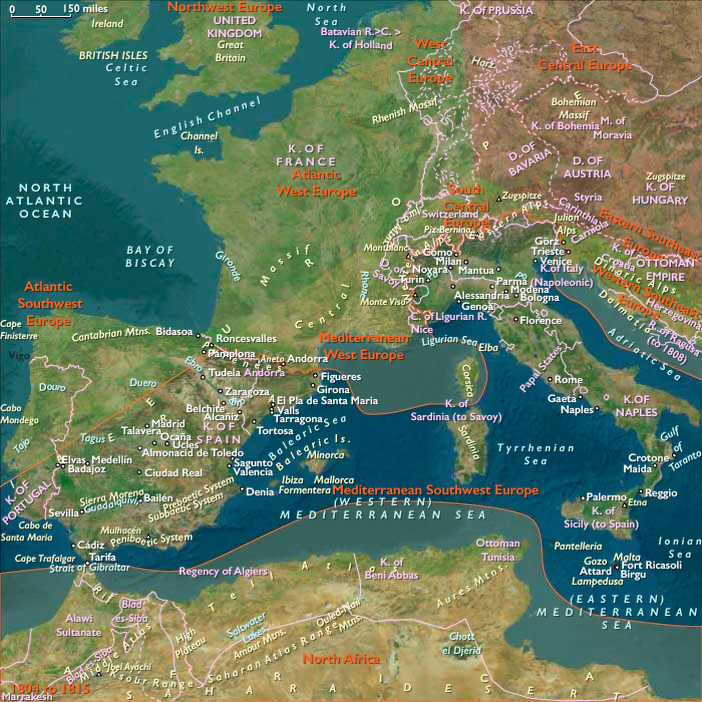
The Spanish Strategic Failure and the Battle…
December 1808 CE
The Spanish Strategic Failure and the Battle of Tudela (November 23, 1808)
By November 1808, the French occupation of Spain had been severely weakened following the Dos de Mayo Uprising (May 2, 1808) and the subsequent Spanish revolts. These events forced the French army to withdraw to the Ebro River, providing the Spanish with a critical opportunity to expel Napoleon’s forces entirely. However, due to a lack of centralized leadership and poor coordination, this opportunity was missed.
The Spanish Forces – Independent and Disorganized
Instead of forming a unified command, the Spanish armies operated independently, with no Supreme Commander to coordinate strategy.
- General Joaquín Blake’s army – Stationed along the north coast, actively harassing French forces but defeated at Pancorbo on October 31, 1808.
- General Francisco Javier Castaños’s army – Operating around Tudela, but Castaños had been ill, leaving much of the decision-making to General Palafox.
- General José Rebolledo de Palafox’s army – Centered around Zaragoza, but Palafox was indecisive, preventing an effective response to French maneuvers.
The Spanish armies remained in constant movement but to no strategic effect, giving Napoleon the perfect opportunity to strike.
Napoleon’s Strategy – A Coordinated French Counteroffensive
Napoleon’s plan was to split the Spanish forces apart:
- A major French attack towards Burgos to separate Blake’s army from the others.
- Flanking movements north and south to trap Spanish forces before they could retreat.
The French armies had been ordered not to attack too soon, ensuring that the Spanish remained in their vulnerable forward positions. Thus, Marshal Bon-Adrien Jeannot de Moncey’s III Corps remained inactive in front of Castaños’s army for nearly two months (October–November 21, 1808).
The French Advance – Spanish Retreat to Tudela
- On November 21, 1808, Moncey’s III Corps crossed the Ebro at Logroño and headed east toward Calahorra, directly threatening Castaños’s position.
- Meanwhile, Marshal Michel Ney’s VI Corps advanced through the Upper Douro Valley, aiming for Tudela.
- These coordinated movements threatened to trap Castaños’s army between two French forces.
- To avoid encirclement, Castaños withdrew to Tudela, unknowingly walking into a French trap.
The Battle of Tudela (November 23, 1808) – A Decisive French Victory
On November 23, 1808, Marshal Jean Lannes led the French attack at Tudela, overwhelming the Spanish forces under Castaños and Palafox.
- The French forces attacked in a coordinated assault, utilizing their superior tactical organization and firepower.
- The Spanish lines collapsed, suffering heavy casualties.
- The battle ended in a devastating defeat for Spain, further weakening Spanish resistance in northern Spain.
Consequences of the Defeat at Tudela
- Castaños’s army was shattered, allowing Napoleon’s forces to advance deeper into Spain.
- The Spanish resistance became even more disorganized, enabling French forces to capture Madrid on December 4, 1808.
- The failure to appoint a Supreme Commander for Spanish forces proved disastrous, as Napoleon’s well-coordinated forces easily outmaneuvered them.
Conclusion – The Turning Point in Napoleon’s Spanish Campaign
The Battle of Tudela was a key turning point in Napoleon’s effort to reassert French dominance in Spain. Though the Spanish people remained defiant, their lack of military coordination and strategic leadership allowed Napoleon’s well-organized army to regain the upper hand. However, despite these initial French victories, the Spanish guerrilla resistance, British intervention, and continued Portuguese defiance would soon turn the Peninsular War into a long and costly struggle for Napoleon.
Locations
People
Groups
Topics
Regions
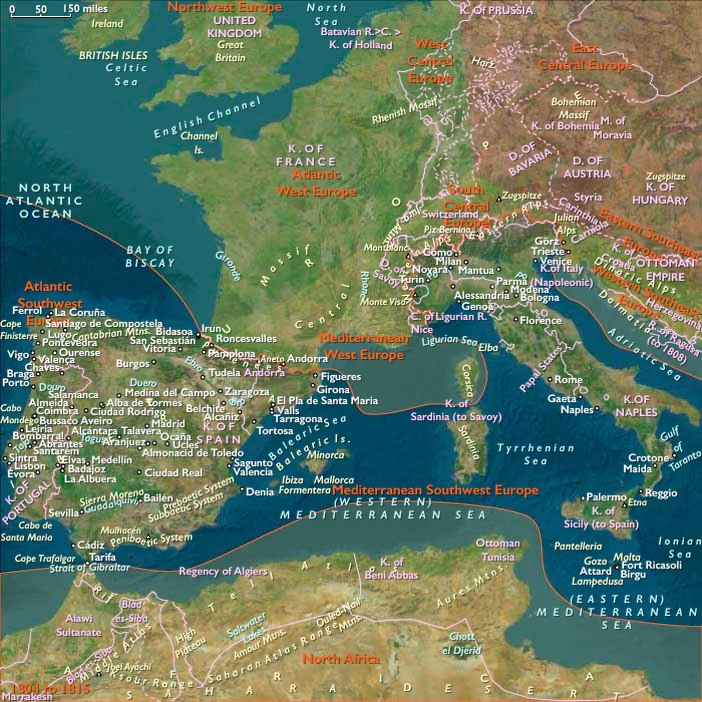
Southwest Europe
View →Subregions