If the economy of the Viceroyalty of…
1684 CE to 1827 CE
If the economy of the Viceroyalty of Peru reaches a certain steady state during the seventeenth century, its population continues to decline.
Estimated at around three million in 1650, the population of the viceroyalty finally reaches its nadir at a little over one million inhabitants in 1798.
It rises sharply to almost two and a half million inhabitants by 1825.
The 1792 census indicates an ethnic composition of thirteen percent European, fifty-six percent native American, and twenty-seven percent castas (mestizos), the latter category the fastest-growing group because of both acculturation and miscegenation between Europeans and natives.
Demographic expansion and the revival of silver production, which had fallen sharply at the end of the seventeenth century, promotes a period of gradual economic growth from 1730 to 1770.
The pace of growth picks up in the last quarter of the eighteenth century, partly as a result of the so-called Bourbon reforms of 1764, named after a branch of the ruling French Bourbon family that had ascended to the Spanish throne after the death of the last Habsburg in 1700.
In the second half of the eighteenth century, particularly during the reign of Charles III (1759-1788),
Spain turns its reform efforts to Spanish America in a concerted effort to increase the revenue flow from its American empire.
The aims of the program are to centralize and improve the structure of government, to create more efficient economic and financial machinery, and to defend the empire from foreign powers.
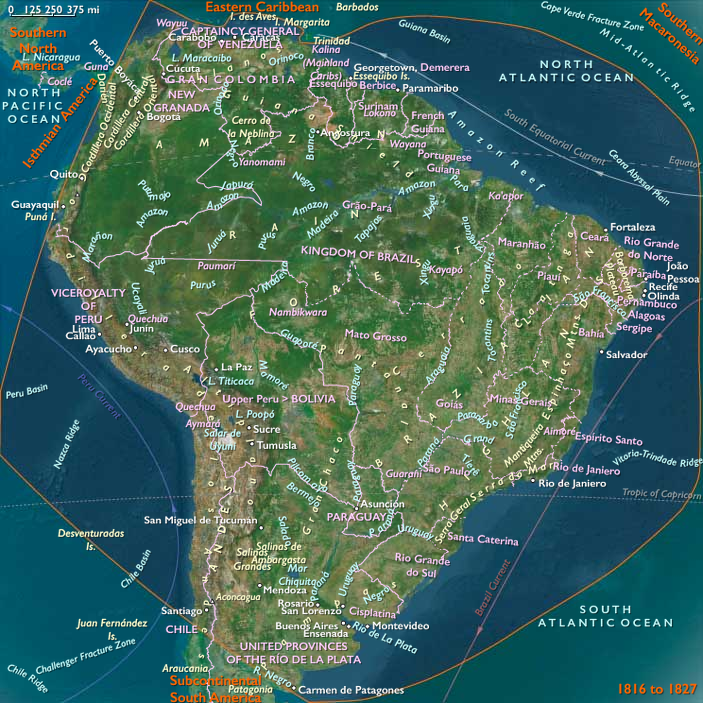
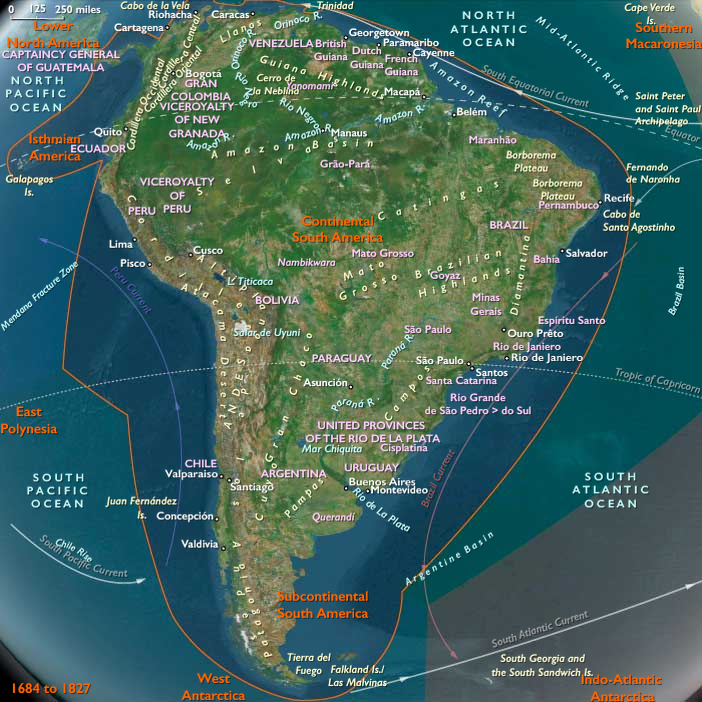
For Peru, perhaps the most far-reaching change us the creation in 1776 of a new viceroyalty in the Rio de la Plata (River Plate) region that radically alters the geopolitical and economic balance in South America.
Upper Peru is detached administratively from the old Viceroyalty of Peru, so that profits from Potosí no longer flow to Lima and Lower Peru, but to Buenos Aires.
With the rupture of the old Lima-Potosi circuit, Lima suffers an inevitable decline in prosperity and prestige, as do the southern highlands (Cusco, Arequipa, and Puno).
The viceregal capital's status declines further from the general measures to introduce free trade within the empire.
These measures stimulate the economic development of peripheral areas in northern South America (Venezuela) and southern South America (Argentina), ending Lima's former monopoly of South American trade.
As a result of these and other changes, the economic axis of Peru shifts northward to the central and northern Sierra and central coast.
These areas benefit from the development of silver mining, particularly at Cerro de Pasco, which is spurred by a series of measures taken by the Bourbons to modernize and revitalize the industry.
However, declining trade and production in the south, together with a rising tax burden levied by the Bourbon state, which falls heavily on the native peasantry, sets the stage for the massive native American revolt that erupts with the Tupac Amaru rebellion in 1780-82.
Locations
People
Groups
Commodities
Subjects
Regions
South America
View →Subregions