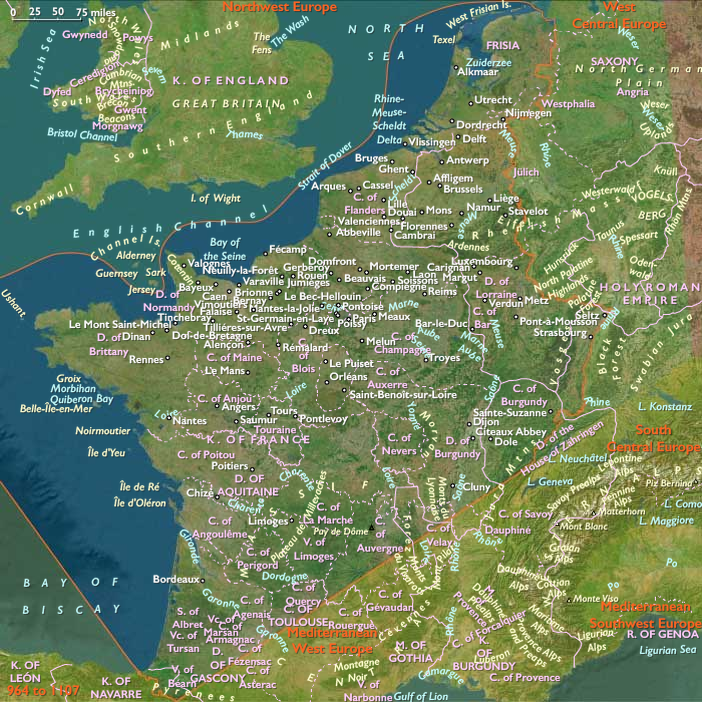
The People's Crusade and Robert Curthose's Departure…
April 1096 CE
The People's Crusade and Robert Curthose's Departure for the First Crusade (1096–1097)
In 1096, thousands of commoners, poor pilgrims, and knights responded to Pope Urban II’s call to liberate Jerusalem and aid the Byzantine Empire against Muslim forces. Many of these early Crusaders sewed a red cross onto their tunics, symbolizing that they had assumed the cross and become soldiers of Christ. However, the movement quickly split into two distinct waves:
- The People’s Crusade, led by Peter the Hermit and Walter Sans Avoir, which departed early and was largely disastrous.
- The main body of the First Crusade, which included Robert Curthose, Duke of Normandy, and other European nobles.
The People's Crusade: Disorder and Massacres (April 1096)
- Before the official Crusader armies had even assembled, large, disorganized bands of peasants and lesser knights set out under Peter the Hermit and Walter Sans Avoir.
- These so-called People’s Crusaders were poorly armed, inexperienced, and motivated by religious zeal but lacked discipline.
- In April 1096, many among these groups turned against Jewish communities in France and Germany, viewing them as just as much an enemy as the distant Muslims.
- Massacres of Jews took place across the Rhineland, and also in Rouen, a city under the rule of one of William the Conqueror’s sons, leading many Jewish survivors to flee to England for safety.
Robert Curthose Joins the First Crusade (1096–1097)
- Robert Curthose, Duke of Normandy, was among the major European nobles who responded to the Pope’s call and joined the main Crusader force.
- At the time of his departure in 1096, Robert was reportedly so poor that he lacked proper clothing, reflecting his mismanagement of Normandy’s finances.
- In order to fund his participation, Robert mortgaged Normandy to his younger brother, William Rufus, King of England, for 10,000 marks.
- This arrangement allowed William to effectively rule Normandy in Robert’s absence, strengthening William’s position in the ongoing power struggles between the Conqueror’s sons.
Consequences of Robert's Departure
- Normandy fell under William Rufus’ administration, a move that would later affect the balance of power between William and Henry.
- Robert’s departure for the Holy Land further demonstrated his restless and adventurous nature, prioritizing military and religious ambition over effective governance.
- The People’s Crusade ended in disaster, as most of its members were slaughtered by the Turks in Anatolia, while the main Crusading army, including Robert, would arrive in the East in 1097 and ultimately capture Jerusalem in 1099.
Robert’s decision to mortgage Normandy in order to finance his Crusade would have lasting consequences, as it ultimately led to the duchy falling into the hands of Henry I, shaping the future of Normandy and England’s political landscape.
Locations
People
Groups
Jews
View →
Germans
View →
Breton people
View →
Anglo-Saxons
View →
Muslims, Sunni
View →
Maine, County of
View →
Flanders, County of
View →
Anjou, County of
View →
Normandy, Duchy of
View →
Brittanny, Duchy of
View →
Normans
View →
German, or Ottonian (Roman) Empire
View →
French people (Latins)
View →
France, (Capetian) Kingdom of
View →
Christians, Roman Catholic
View →
England, (Norman) Kingdom of
View →
Commodities
Subjects
Regions
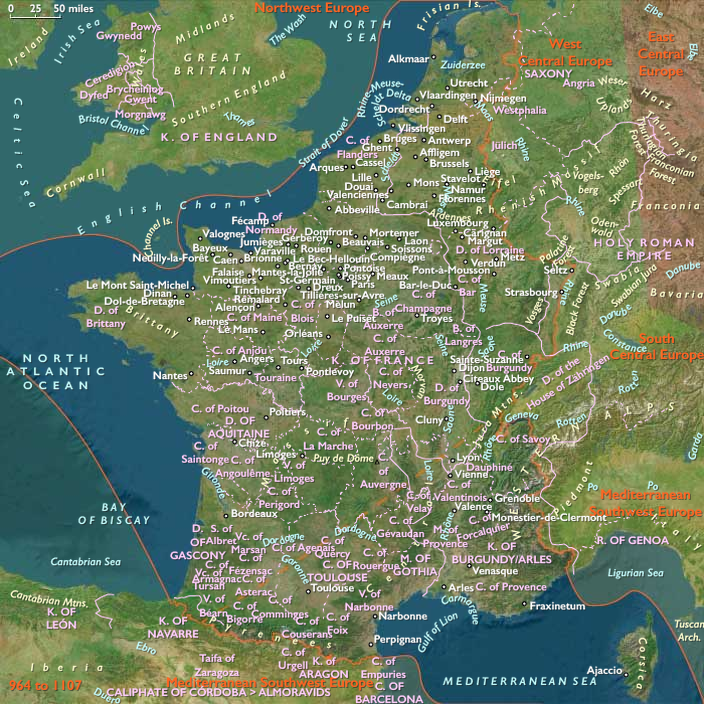
West Europe
View →Subregions