
Philip of Montfort
Lord of Tyre
1205 CE to 1270 CE
Philip of Montfort, (d. March 17, 1270, Tyre) was Lord of La Ferté-Alais and Castres-en-Albigeois 1228–1270, Lord of Tyre 1246–1270, and Lord of Toron aft.
1240–1270.
He is the son of Guy of Montfort and Helvis of Ibelin (daughter of Balian of Ibelin).
World
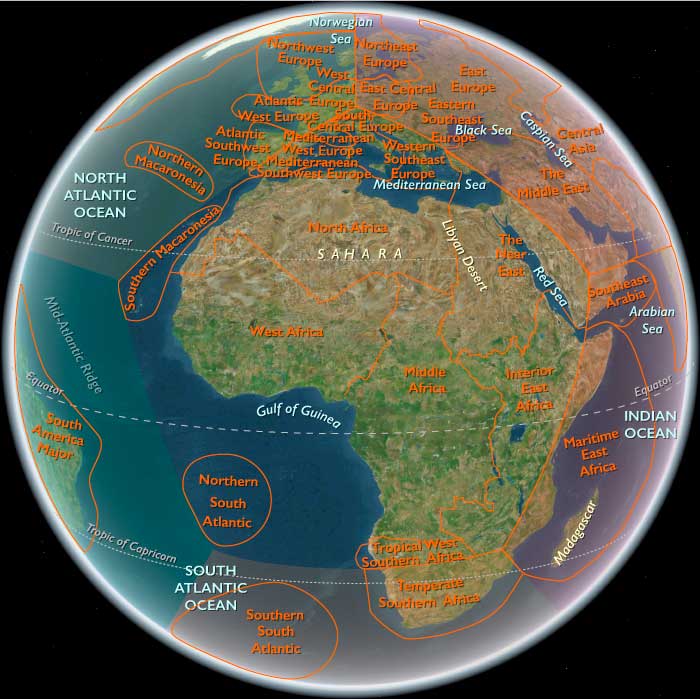
The Middle of The Earth
View →Related Events
Showing 7 events out of 7 total
Many criminals and other undesirables have found their way to Acre.
More important, the earlier homogeneity of a French character has given way to an Italian predominance, but the Italians of Outremer are as divided as they were in Italy.
The Genoese-Venetian rivalry extends to the Levant and occasionally, as at Acre in 1256, results in outright war.
When the Venetians are evicted from Tyre, war grows out of a dispute concerning land in Acre owned by the monastery of Saint Sabas but claimed by both Genoa and Venice.
Genoa has a clear upper hand at first, but its early successes in the War of Saint Sabas are abruptly reversed when the Republic of Pisa, a former ally, signs a ten-year pact of military alliance with Venice.
Venetian admiral Lorenzo Tiepolo breaks through Acre's harbor chain in 1257 and destroys several Genoese ships, conquers the disputed property, and destroys Saint Sabas' fortifications.
Despite throwing up a blockade, he is unable to expel from their quarter of the city the Genoese, who are eight hundred men strong and armed with fifty to sixty ballistae; there are also siege engines among the Venetians.
The famed Genoese crossbowmen are also fighting in Acre: the life of the Count of Jaffa is only spared by a chivalrous Genoese consul who has forbidden his crossbowman to shoot the count from his tower.
Pisa and Venice hire men to row their galleys in Acre itself during the siege: the average rate of pay of a Pisan- or Venetian-employed sailor on one of their galleys is ten Saracen besants a day and nine a night.
The blockade has lasted more than a year (perhaps twelve or fourteen months), but because the Hospitaller complex is also near the Genoese quarter, food is brought to them quite simply, even from as far away as from Philip of Montfort in Tyre.
The regent of the kingdom, John of Arsuf, who had initially tried to mediate, in August 1257 confirms a treaty with the city of Ancona, granting it commercial rights in Acre in return for aid of fifty men-at-arms for two years.
Ancona is an ally of Genoa and John seeks by his treaty to bring the feudatories—most of whom are onside—to support Genoa against Venice.
His plan ultimately backfires and John of Jaffa and John II of Beirut "manipulated the complex regency laws" in order to bring the feudatories of the Kingdom of Jerusalem into a position of support for Venice.
In this they have the support of the new bailiff, Plaisance of Cyprus, Bohemond VI of Antioch, and the Knights Templar.
At this juncture, Philip of Montfort, who has been providing food to the Genoese in Acre, is one of Genoa's only supporters.
Philip is staying about a mile away from Acre, in a place called "the new Vigny" (la Vignie Neuve) with "eighty men on horses and three hundred archer-villeins from his land".
Hethum continues as a vassal of the Mongols; his son-in-law, …
…Bohemond VI of Antioch-Tripoli, a principality increasingly aloof and through intermarriage closely tied to Armenia, follows suit.
The barons at Acre, unlike the lords of Armenia and Antioch-Tripoli, remain more disposed to deal with the Muslims, whom they know, than with the terrifying and unknown Mongols.
Philip of Montfort, as per a plan, marches on Acre in June and joins up with a band of Hospitallers while a Genoese fleet attacks the city by sea.
The Genoese navy, numbering some forty-eight galleys and four sailing ships armed with siege engines, under Rosso della Turca is quickly overrun by the Venetians and …
…the Genoese are forced to abandon their quarter and retreat with Philip to Tyre.
The Venetian-Genoese conflict has worn down.
A fragile peace takes effect, though the Genoese are still out of Acre.
Pope Urban IV, who has become understandably worried about the effect of the war in the event of a Mongol attack (a threat that fails to materialize), now organizes a council to reestablish order in the kingdom following five years of fighting.