
Prince Albert
Prince Consort of the United Kingdom
1819 CE to 1861 CE
Prince Albert of Saxe-Coburg and Gotha (Francis Albert Augustus Charles Emmanuel; later The Prince Consort; 26 August 1819 – 14 December 1861) is the husband of Queen Victoria of the United Kingdom of Great Britain and Ireland.
He was born in the Saxon duchy of Saxe-Coburg-Saalfeld to a family connected to many of Europe's ruling monarchs.
At the age of 20, he marries his first cousin, Queen Victoria, with whom he will ultimately have nine children.
At first, Albert feels constrained by his position as consort, which does not confer any power or duties upon him.
Over time he adopts many public causes, such as educational reform and a worldwide abolition of slavery, and takes on the responsibilities of running the Queen's household, estates and office.
He is heavily involved with the organization of the Great Exhibition of 1851.
Albert aids in the development of Britain's constitutional monarchy by persuading his wife to show less partisanship in her dealings with Parliament—although he actively disagrees with the interventionist foreign policy pursued during Lord Palmerston's tenure as Foreign Secretary.
He dies at the early age of 42, plunging the Queen into a deep mourning that lasts for the rest of her life.
Upon Queen Victoria's death in 1901, their eldest son, Edward VII, succeeds as the first British monarch of the House of Saxe-Coburg and Gotha, named after the ducal house to which Albert belonged.
World
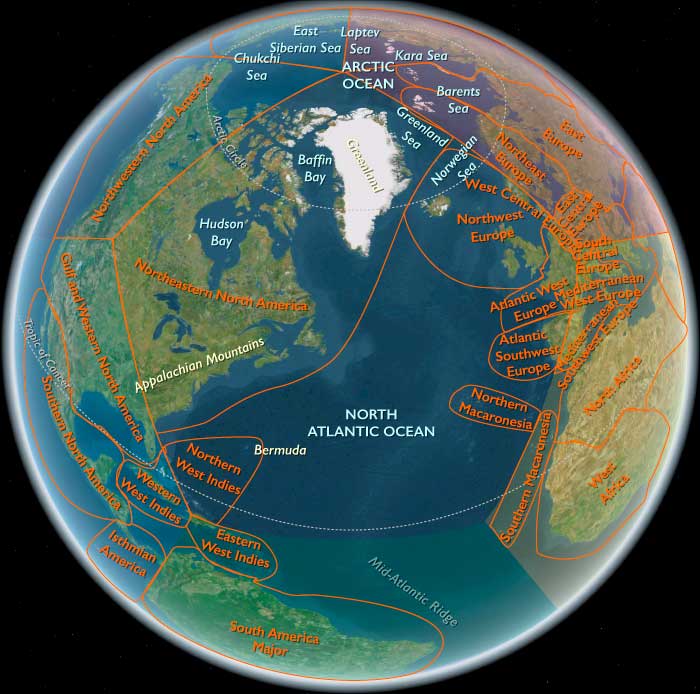
The Atlantic Lands
View →Related Events
Showing 9 events out of 9 total
Buckingham Palace, its restoration completed in 1835, finally becomes the official royal palace of the British monarch on the accession of Queen Victoria of Hanover (properly, Saxe-Coburg-Gotha, after her consort, Prince Albert) upon the death of her father, Britain’s King William IV.
At this time, the United Kingdom is already an established constitutional monarchy in which the king or queen holds few political powers.
However, she still serves as a very important symbolic figure of her time.
The building which forms the core of today's palace had been a large townhouse built for the Duke of Buckingham in 1703 and acquired by George III in 1761 as a private residence, known as "The Queen's House".
It had been enlarged over the next seventy-five years, principally by architects John Nash and Edward Blore, forming three wings around a central courtyard.
The first monarch to reside at Buckingham Palace, she moves into the newly completed palace upon her accession on June 20, 1837.
While the state rooms are a riot of gilt and color, the necessities of the new palace are somewhat less luxurious.
For one thing, it is reported the chimneys smoke so much that the fires have to be allowed to die down, and consequently the court shivers in icy magnificence.
Ventilation is so bad that the interior smells, and when a decision is taken to install gas lamps there is a serious worry about the buildup of gas on the lower floors.
It is also said that the staff are lax and lazy and the palace is dirty.
Northwest Europe (1840–1851): Victorian Ascendancy, Social Crisis, and Industrial Triumph
The Victorian Era: Stability and New Challenges
Between 1840 and 1851, Britain solidified its position as a global superpower under the stable reign of Queen Victoria (who ascended the throne in 1837 at the age of eighteen). Married to Prince Albert in 1840, Victoria's reign came to embody moral rectitude, domesticity, and social responsibility. The period saw Britain reach the zenith of its economic, political, and imperial influence, distinguished by innovations in transportation, communication, and industry, notably steamships, railways, photography, and telegraphy.
British society, still dominated by aristocracy and landed gentry controlling government, Parliament, the Church, and the military, began to grapple with social reforms and issues brought about by rapid industrialization.
Ireland's Great Hunger and Social Catastrophe
A catastrophic humanitarian crisis struck Ireland with the onset of the Great Irish Famine (1845–1849), caused by devastating potato blight starting in 1846. The rural population, heavily dependent on potatoes, faced widespread starvation as government relief efforts proved inadequate. Hundreds of thousands perished from starvation and disease. Millions emigrated, primarily to England or North America, permanently reducing Ireland's population.
The famine's aftermath was compounded by outbreaks of disease. A major cholera epidemic swept Ireland in 1849, disproportionately affecting famine survivors already weakened by starvation and fever. Additionally, a severe typhus epidemic ravaged Ireland from 1846 to 1849, spreading to England as "Irish fever" and devastating all social classes due to widespread lice infestation.
Cholera in Britain: Public Health Crisis
England and Wales suffered a severe cholera outbreak starting in 1848, lasting two years and claiming 52,000 lives. London experienced its worst cholera epidemic, recording 14,137 deaths from 1848 to 1851, surpassing the previous 1832 epidemic. Liverpool, a major embarkation point for emigrants to North America, lost 5,380 lives to cholera in 1849; Hull recorded 1,834 deaths the same year. These outbreaks highlighted poor urban sanitation, prompting gradual movement toward public health reform.
Social Reform: Labor and Industry
Parliament enacted significant social reforms to improve working conditions amid public outrage over industrial abuses. The shocking exposure of child labor practices led to the passage of the Mines Act of 1842, which banned girls and boys under ten from working underground in coal mines, representing a crucial step in labor protection.
Chartism, a democratic working-class movement demanding political reforms, peaked notably in 1848. Despite its political frustrations, Chartism redirected its energies toward trade unions and cooperative societies. British workers largely ignored revolutionary ideologies introduced by figures such as Karl Marx, instead embracing gradual social reform and increasing prosperity.
Paternalistic Employers and Welfare Innovations
Many British employers adopted paternalistic practices, recognizing trade unions and providing extensive welfare services, including housing, education, churches, libraries, baths, and gymnasia. Middle-class reformers simultaneously encouraged working classes toward middle-class values of respectability, temperance, and moral propriety.
Thomas Cook and the Birth of Organized Travel
Innovations in transportation sparked new social practices, exemplified by Thomas Cook, who pioneered organized leisure travel. On July 5, 1841, inspired while walking to a temperance meeting, Cook arranged his first excursion: 500 people from Leicester to a temperance rally in Loughborough by train, paying a shilling each. Cook expanded rapidly, conducting trips to Liverpool in 1845, Scotland in 1846, and notably, arranging for 150,000 people to visit the Great Exhibition in 1851. His innovations laid the foundation for modern tourism, eventually expanding into international travel in the following decades.
Economic Liberalism and Free Trade Victories
The period marked the definitive triumph of economic liberalism. Advocacy by reformers Richard Cobden and John Bright led to the repeal of the protectionist Corn Laws (1846), dramatically lowering food prices and easing hardship among Britain's urban poor. Britain's embrace of free trade and minimal governmental restrictions facilitated its economic dominance, underpinning an empire sustained both formally through direct rule and informally through financial investment, notably in Latin America and Asia.
The Great Exhibition and Technological Dominance
In 1851, Britain hosted the celebrated Great Exhibition in London’s Crystal Palace, a powerful display of British industrial and engineering dominance. However, it notably showcased industrial achievements rather than excellence in sculpture, painting, or music. This exhibition underscored Britain's position as the leading industrial power, an advantage it would retain until challenged by the rise of the United States and Germany in the later nineteenth century.
Standardization of Industry and Precision Engineering
Industrial precision advanced significantly, notably with standardization in screw-thread production, building on Henry Maudslay’s development of the first practical screw-cutting lathe in 1800. By the 1840s, standardized screw threads became widespread, facilitating compatibility across manufacturers, enabling mass production, and bolstering Britain's industrial capacity and reliability.
Postal Revolution: Uniform Penny Post
Postal reform dramatically reshaped communications. Following advocacy by reformer Rowland Hill, Britain adopted the Uniform Penny Post in 1840, represented by the iconic Penny Black stamp, revolutionizing the postal system from an inefficient, costly service into a reliable, affordable system vital for commerce, industry, and personal correspondence.
Persistent Social Inequalities: Class and Gender
Despite economic prosperity, social inequalities persisted. British society continued to be dominated by aristocratic interests. Wealthy industrialists still lacked the social prestige accorded to landowners and titled families. Gender inequality remained stark, exemplified by women who continued disguising themselves as men for higher wages and better employment opportunities.
Culture and Education
Victorian literature flourished, with figures such as Charles Dickens illuminating social inequalities and urban hardships. However, education remained mediocre, particularly outside Scotland; Britain's universities were uninspiring, reflecting a society still privileging inheritance over merit and land ownership over commerce.
Diplomatic Stability and Imperial Expansion
Britain maintained diplomatic stability, largely staying aloof from Continental revolutions of 1848, under governments led by Prime Ministers including Lord Melbourne, Sir Robert Peel, Lord John Russell, and briefly Lord Derby. British influence grew globally, especially through economic and financial strength. The era further developed Britain’s "second empire," defined by formal colonies and informal spheres of financial influence.
Scandinavia: Stability and National Identities
Scandinavian countries, notably Sweden and Norway, experienced stability, with Norway strengthening its national identity within the union. Denmark navigated cautiously through modest internal liberal reforms, remaining stable but peripheral within European geopolitics.
From 1840 to 1851, Northwest Europe navigated profound economic expansion, technological advancements, and severe humanitarian crises. Victorian Britain, characterized by rapid industrialization, railway innovation, social reforms, and the notable postal revolution, consolidated its global dominance. Simultaneously, catastrophic events like the Irish Famine, epidemics of cholera and typhus, and persistent inequalities highlighted ongoing social vulnerabilities. This era marked Britain's ascendant trajectory toward global economic and imperial preeminence, defining much of the Victorian age’s complex legacy.
Victoria had come to the throne aged eighteen on June 20, 1837.
Her letters of the time show interest in Albert's education for the role he would have to play, although she had resisted attempts to rush her into marriage.
In the winter of 1838–39, the prince had visited Italy, accompanied by the Coburg family's confidential adviser, Baron Stockmar.
Albert had returned to the United Kingdom with Ernest in October 1839 to visit the Queen, with the objective of settling the marriage.
Albert and Victoria felt mutual affection and the Queen had proposed to him on October 15, 1839.
Victoria's intention to marry had been declared formally to the Privy Council on November 23, and the couple marry on February 10, 1840 at the Chapel Royal, St James's Palace.
Just before the marriage, Albert had been naturalized by Act of Parliament, and granted the style of Royal Highness by an Order in Council.
Initially Albert is not popular with the British public; he is perceived to be from an impoverished and undistinguished minor state, barely larger than a small English county.
The British Prime Minister, Lord Melbourne, advises the Queen against granting her husband the title of "King Consort"; Parliament also objects to Albert being created a peer—partly because of anti-German sentiment and a desire to exclude Albert from any political role.
Albert's religious views had provided a small amount of controversy when the marriage was debated in Parliament: although as a member of the Lutheran Evangelical Church Albert is a Protestant, the non-Episcopal nature of his church is considered worrisome.
Of greater concern, however, is that some of Albert's family are Roman Catholic.
Melbourne leads a minority government and the opposition takes advantage of the marriage to weaken his position further.
They oppose the ennoblement of Albert and grant him a smaller annuity than previous consorts, £30,000 instead of the usual £50,000.
Albert claims that he has no need of a British peerage, writing: "It would almost be a step downwards, for as a Duke of Saxony, I feel myself much higher than a Duke of York or Kent."
For the next seventeen years, Albert will be formally titled "HRH Prince Albert" until June 25, 1857, when Victoria will formally grant him the title Prince Consort.
The anonymously written Vestiges of the Natural History of Creation is published, and paves the way for the acceptance of Darwin's book On the Origin of Species.
Vestiges of the Natural History of Creation is a work of speculative natural history and philosophy by Robert Chambers.
Published anonymously in England in October 1844, it brings together various ideas of stellar evolution with the progressive transmutation of species in an accessible narrative that ties together numerous scientific theories of the age.
Vestiges is initially well received by polite Victorian society and will become an international bestseller, but its unorthodox themes contradict the natural theology fashionable at this time and will be reviled by clergymen—and subsequently by scientists who will readily find fault with its amateurish deficiencies.
The ideas in the book are favored by Radicals, but its presentation will remain popular with a much wider public.
Prince Albert will read it aloud to Queen Victoria in 1845.
Vestiges causes a shift in popular opinion which—Charles Darwin believes—prepares the public mind for the scientific theories of evolution by natural selection that will followed from the publication of On the Origin of Species in 1859.
For decades there will be speculation about its authorship.
The 12th edition, published in 1884, will reveal officially that the author is Robert Chambers, a Scottish journalist, who had written the book in St Andrews between 1841 and 1844 while recovering from a psychiatric illness.
Initially, Chambers had proposed the title The Natural History of Creation, but he was persuaded to revise the title in deference to the Scottish geologist James Hutton, who had remarked of the timeless aspect of geology: "no vestige of a beginning, no prospect of an end".
Some of the inspiration for the work derived from the Edinburgh Phrenological Society, whose materialist influence reached a climax between 1825 and 1840.
George Combe, the leading proponent of phrenological thinking, had published his influential The Constitution of Man in 1828.
Chambers is closely involved with Combe's associates William A.F. Browne and Hewett Cottrell Watson who did much to spell out the materialist theory of the mind.
Chambers will die in 1871 and be buried in the grounds of St Andrews Cathedral, within the ancient chapel of St Regulus.
The precursor of Bingley Hall was an "Exhibition of the Manufactures of Birmingham and the Midland Counties" in a temporary wooden hall built in the grounds of, and attached to, Bingley House on Broad Street in central Birmingham (which once belonged to banker Charles Lloyd and was visited by Samuel Taylor Coleridge) and opened on September 3, 1849, for visitors to the Birmingham Triennial Music Festival.
This exhibition was visited by Charles Darwin, and also on November 12 by Prince Albert and may have contributed to his ideas for the Great Exhibition of 1851 at the Crystal Palace.
Bingley Hall is built by Messrs Branson and Gwyther (architect J. A. Chatwin), for six thousand pounds in six weeks in 1850, using steel columns surplus to the construction of Euston railway station.
It is built in the Roman Doric style using red and blue bricks (the Staffordshire blue bricks being diverted from building the Oxford Street viaduct).
Covering one and a quarter acres internally, it measures two hundred and twenty-four feet (sixty-eight meters) by two hundred and twenty-one feet (sixty-seven meters), used eleven thousand seven hundred feet (thirty-six hundred meters) of twenty-one-inch (five hundred and thirty millimeter) glass, and has ten entrance doors.
Northwest Europe (1852–1863): Imperial Prosperity, Public Health Advances, and Diplomatic Challenges
Victorian Britain’s "Golden Years"
The period from 1852 to 1863 represented the height of British power, influence, and prosperity, characterized by what historian Bernard Porter has termed Britain’s “Golden Years” (1850–1870). With peace abroad—save the brief yet costly Crimean War (1854–1856)—and remarkable domestic stability, Britain’s national income per capita increased dramatically, growing by half due to sustained industrialization, especially in textiles, machinery, and global trade networks.
A widespread spirit of libertarianism emerged, with minimal government interference, low taxes, and a vibrant sense of personal freedom. Nevertheless, societal power remained concentrated among the aristocracy and gentry, who dominated government, Parliament, the military, and the Church. Rich industrialists, despite their economic success, continued to rank lower in social prestige than titled landowners.
Cholera, Epidemiology, and Public Health Reform
Public health continued as a significant concern, highlighted by London’s severe cholera epidemic of 1853–1854, which claimed 10,739 lives. In a crucial turning point for epidemiology, physician Dr. John Snow traced one local outbreak, responsible for over 500 deaths, to a contaminated water pump in Broad Street, London. Snow’s investigation validated his theory that cholera was water-borne, marking the beginning of modern epidemiological methods—although acceptance of this breakthrough by medical authorities remained gradual, and comprehensive public health reforms took years to implement fully.
Meanwhile, earlier epidemics had already spurred initial sanitation reforms. However, Snow’s landmark discovery profoundly influenced future public health policy, emphasizing sanitation infrastructure, clean water supply, and urban planning improvements in Britain’s rapidly growing cities.
Iceland’s Growing Nationalism and Trade Liberalization
Outside Britain, national consciousness blossomed notably in Iceland, inspired by European romantic and nationalist ideals. Under the influential leadership of Jón Sigurðsson, an Icelandic independence movement emerged strongly during the 1850s. The year 1854 marked a significant step toward economic independence, as Icelandic trade—long monopolized by Danish merchants—opened to other nations, laying foundations for greater Icelandic autonomy and national identity.
Social Reforms and Industrial Regulation
Social reforms continued apace within Britain’s industrial environment. Building upon earlier efforts such as the Mines Act of 1842, Parliament progressively enacted further measures addressing appalling working conditions, child labor, and workplace safety. The Victorian middle class, committed to ideals of "respectability," actively sought to uplift working-class living standards through education, temperance, and social improvement initiatives. Employers adopted paternalistic practices, recognizing trade unions, and frequently provided workers with comprehensive welfare services, including housing, schools, churches, libraries, baths, and gymnasia.
Chartism’s Decline and Working-Class Prosperity
The democratic, working-class movement of Chartism, having peaked in 1848, gradually declined. British workers, increasingly experiencing material prosperity, largely ignored radical foreign agitators such as Karl Marx and instead focused energies on trade unions, cooperative societies, and economic advancement. This shift reflected a new societal consensus, underpinning domestic peace and sustained economic growth.
Thomas Cook and Victorian Leisure
Leisure and tourism blossomed, spearheaded by entrepreneur Thomas Cook. From humble beginnings arranging railway excursions for temperance campaigners in 1841, Cook significantly expanded his business through the 1850s, notably facilitating travel for 150,000 visitors to London’s Great Exhibition (1851). Cook’s tours soon included international destinations, pioneering modern organized travel and broadening leisure opportunities for Britain's growing middle classes.
Industrial Standardization and Technological Innovation
Industrial and technological advances continued, notably through widespread standardization of screw threads and precision engineering—building on Henry Maudslay’s earlier inventions—which facilitated compatibility, mass production, and interchangeability in manufacturing. These developments solidified Britain's global industrial dominance, showcased vividly at the Great Exhibition, and drove Britain's global commercial network.
The Crimean War: Diplomatic and Military Challenges
Although generally peaceful, Britain briefly engaged in significant continental conflict during the Crimean War (1854–1856). Fearing Russian ambitions toward Constantinople and the Bosporus—crucial to Britain's strategic and commercial interests—Britain allied with France and the Ottoman Empire against Russia. Despite victory, the war exposed glaring deficiencies in Britain’s military logistics and health care, notably addressed by reformer Florence Nightingale. High casualties due to disease and poor administration sparked critical reforms in British military organization and public health management.
Lord Palmerston and British Foreign Policy
British foreign policy during this era was dominated by Lord Palmerston (1784–1865), who served as Foreign Secretary and Prime Minister. Palmerston, a fierce nationalist and controversial figure known for aggressive diplomacy and "liberal interventionism," used British naval power to suppress the Atlantic slave trade. His tenure shaped Britain's assertive global posture, marked by patriotic confidence but also underlying diplomatic tensions, notably regarding relations with France’s Napoleon III and concerns over the stability of the Ottoman Empire.
British Diplomacy and the American Civil War
Britain faced significant diplomatic challenges during the American Civil War (1861–1865). British aristocratic leaders tended to favor the Confederacy, attracted by its aristocratic structures and crucial cotton exports for Britain’s textile industry. However, Britain’s working classes, dependent on Northern grain and meat exports—especially following poor British harvests in the late 1850s and early 1860s—strongly supported the Union.
Prince Albert played a crucial diplomatic role in defusing a potential Anglo-American war crisis in late 1861. In 1862, Britain and France contemplated diplomatic intervention favoring the Confederacy, risking war with the United States. However, President Abraham Lincoln’s Emancipation Proclamation announcement in September 1862, making the abolition of slavery a central war aim, eliminated prospects of European intervention on the Confederate side.
Nevertheless, Britain maintained economic engagement with both sides, selling arms, building blockade runners for the Confederacy, and controversially permitting construction of Confederate warships in British shipyards—actions that later sparked diplomatic tensions resolved in America’s favor in the Alabama Claims of 1872.
British Attitudes Toward France and Napoleon III
Despite allying with France during the Crimean War, Britain viewed the Second Empire of Napoleon III with skepticism. Napoleon’s assertive foreign policy, rapid naval buildup, and construction of ironclad warships raised British fears of potential French threats to global maritime dominance, resulting in cautious diplomatic relations and suspicion between the two powers.
Scandinavian Stability and National Identities
Scandinavia, particularly Sweden and Norway, maintained political stability. Norway increasingly asserted its distinct national identity within its union with Sweden, while Denmark continued moderate internal liberalization. This period notably coincided with Iceland’s emerging nationalism and liberalization of its trade policies, reflecting broader nationalist trends across Northern Europe.
Between 1852 and 1863, Northwest Europe—centered on Victorian Britain—experienced unparalleled prosperity, stability, and technological advancement. Public health crises like London's cholera epidemic accelerated sanitary reforms and epidemiological breakthroughs by figures like John Snow. Britain's global diplomatic leadership, industrial dominance, and cautious foreign policy, shaped profoundly by influential statesmen like Lord Palmerston, navigated complex international challenges, including the Crimean War and American Civil War diplomacy. Concurrently, emergent nationalist movements in Iceland and Scandinavia indicated broader regional transformations. Together, these developments epitomized Britain's "Golden Years," reflecting both imperial confidence and emergent modernity shaping the remainder of the nineteenth century.
Prince Albert is effective in defusing a war scare in late 1861.
The British people, who depend heavily on American food imports, generally favor the United States.
What little cotton is available comes from New York, as the blockade by the US Navy shuts down ninety-five percent of Southern exports to Britain.
In September 1862, Britain (along with France) contemplated stepping in and negotiating a peace settlement, which could only mean war with the United States, but in the same month, US president Abraham Lincoln announces the Emancipation Proclamation will be issued in January 1863, making abolition of slavery in the Confederacy a war goal.
As support of the Confederacy now means support for slavery, there is no longer any possibility of European intervention.
However, the British working class are quite overwhelmingly pro-Union.
In the end, although Britain can survive without Southern cotton, the North's meat and grain is more important to feed the UK's urban population, especially as a series of bad harvests had affected British agriculture in the late 1850s to early 1860s.
Meanwhile, the British sell arms to both sides, build blockade runners for a lucrative trade with the Confederacy, and surreptitiously allow warships to be built for the Confederacy
The warships cause a major diplomatic row that will be resolved in the Alabama Claims in 1872, in the Americans' favor.
The Irish Industrial Exhibition Building, located on the grounds of Leinster House, houses the entire fair. It lasts from May 12 to October 31.
Queen Victoria, accompanied by the Prince Consort and the Prince of Wales, pays an official visit on August 29.
It is entirely funded by William Dargan, entrepreneur and developer of Irish railways.
He had planned to donate $100,000 to the effort, but ends up giving $400,000.
The intent of the exhibition is to introduce the industrial revolution to Ireland, which is behind some other European countries.
– The Great Industrial Exhibition is held in Dublin, Ireland.
[5][6]
The Victoria and Albert Museum in London is officially opened by Queen Victoria on June 22, 1857.
The museum has its origins in the Great Exhibition of 1851, with which Henry Cole, the museum's first director, had been involved in planning.
Initially it was known as the Museum of Manufactures, first opening in May 1852 at Marlborough House, but by September had been transferred to Somerset House.
At this stage the collections covered both applied art and science.
Several of the exhibits from the Exhibition were purchased to form the nucleus of the collection.
By February 1854 discussions were underway to transfer the museum to the current site and it was renamed South Kensington Museum.
In 1855 the German architect Gottfried Semper, at the request of Cole, produced a design for the museum, but it was rejected by the Board of Trade as too expensive.
The site was occupied by Brompton Park House; this was extended including the first refreshment rooms opened in 1857, the museum being the first in the world to provide such a facility.