Ptolemy I Soter
Macedonian general and ruler of Egypt
Years: 367BCE - 282BCE
Ptolemy I Soter I (i.e.
Ptolemy the Savior), also known as Ptolemy Lagides, c. 367 BCE – c. 283 BCE, is a Macedonian general under Alexander the Great, who became ruler of Egypt (323 BCE – 283 BCE) and founder of both the Ptolemaic Kingdom and the Ptolemaic Dynasty.
In 305/4 BCE, he takes the title of pharaoh.
His mother is Arsinoe of Macedon, and, while his father is unknown, ancient sources variously describe him either as the son of Lagus, a Macedonian nobleman, or as an illegitimate son of Philip II of Macedon (which, if true would have made Ptolemy the half-brother of Alexander).
Ptolemy is one of Alexander's most trusted generals, and is among the seven somatophylakes (bodyguards) attached to his person.
He is a few years older than Alexander, and has been his intimate friend since childhood.
Ptolemy serves with Alexander from his first campaigns, and plays a principal part in the later campaigns in Afghanistan and India.
At the Susa marriage festival in 324, Alexander has Ptolemy marry the Persian princess Artakama.
Ptolemy also has a consort in Thaïs, the Athenian hetaera and one of Alexander's companions in his conquest of the ancient world.

Related Events
Filter results
Showing 10 events out of 131 total
Neither Philip nor Macedon has representatives on the council, but the knowledge that the hegemon has the power of Macedon in his hand makes this organization effective.
In the constitutional details of his settlement of Greece, Philip may well have had the help of Aristotle, free from his recent duties as tutor of the young Alexander.
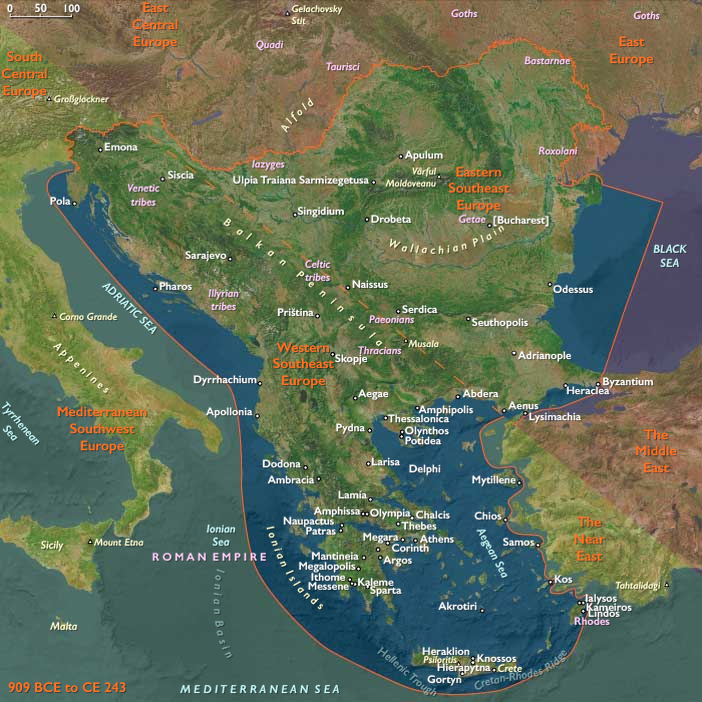
Philip's marriage to a young Macedonian noblewoman, Cleopatra, in 338, had led to a final break with Olympias, his queen, who left the country for her native Epirus accompanied by the crown prince Alexander, who will later goe to Illyria.
Ptolemy, the son of the nobleman Lagus, a native of the Macedonian district of Eordaea whose family is undistinguished, and of Arsinoe, who is related to the Macedonian Argead dynasty, was probably educated as a page at the royal court of Macedonia, where he has become closely associated with Alexander.
He is exiled in 337, along with other companions of the crown prince.
Although Olympias had been unpopular at court and though Cleopatra's connections are powerful and important, it had not been “politic” to put the succession in jeopardy.
Philip shows that he had never intended this result, by taking trouble to be reconciled with Alexander.
He does not, however, restore his son to favor, and Alexander, his position as heir in jeopardy, remains isolated and insecure.
Philip will presently lead the grand army into Asia, and the Greeks will be with him.
Perhaps some Macedonian soldiers, who might have preferred Athenian loot to an Athenian alliance, are puzzled about Philip's motives.
Thus, it may be for the benefit of such doubters that Philip has himself depicted in a domestic Macedonian context (he would surely not risks such a thing in Greece) as a “thirteenth Olympian god.”
On the eve of the Persian invasion, however, during the wedding of his daughter, Cleopatra, to his brother-in-law, Alexander of Molossia in June/July 336, the forty-six-year-old Philip is assassinated in mysterious circumstances, perhaps at the instigation of Persian king Darius III.
The assassin, a bodyguard (somatphylax) named Pausanias, is quickly slain, perhaps accidentally, by one Leonnatus; but suspicion immediately falls upon Alexander, never far from Philip's side that day, and Alexander's abused mother Olympias and her political party, those with most to gain from Philip's death.
Alexander, however, is quickly presented to the army as Macedon's new king, and immediately executes two highly placed suspects, the princes of Lyncestis, alleged to be behind Philip's murder, along with all possible rivals and the whole of the opposition faction.
Not many actual rivals have to be eliminated, however, because Alexander's succession is not in serious doubt.
Amyntas is still alive, but there is no reason for Alexander to see him as a threat (in any case, he is probably dead by 335).
Olympias, on her return from Epirus, has Cleopatra and her infant daughter killed.
Ptolemy returns from exile also and joins the King's bodyguard.
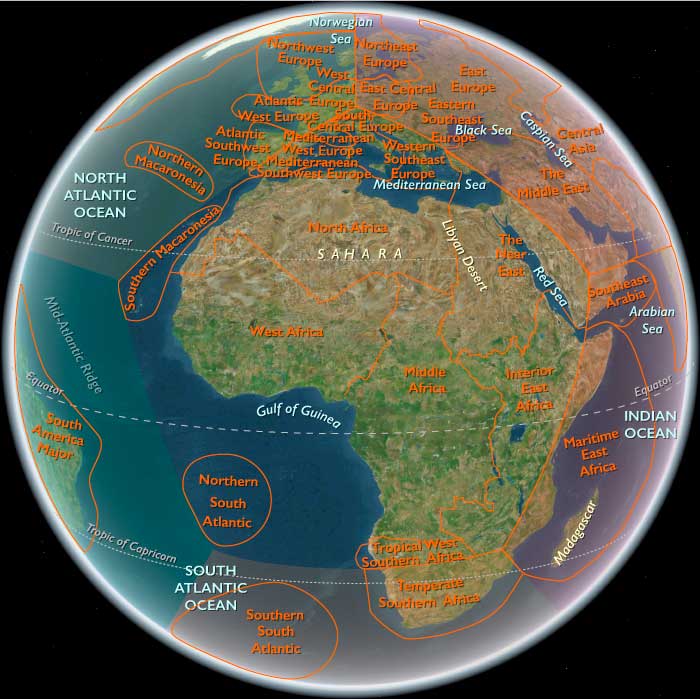
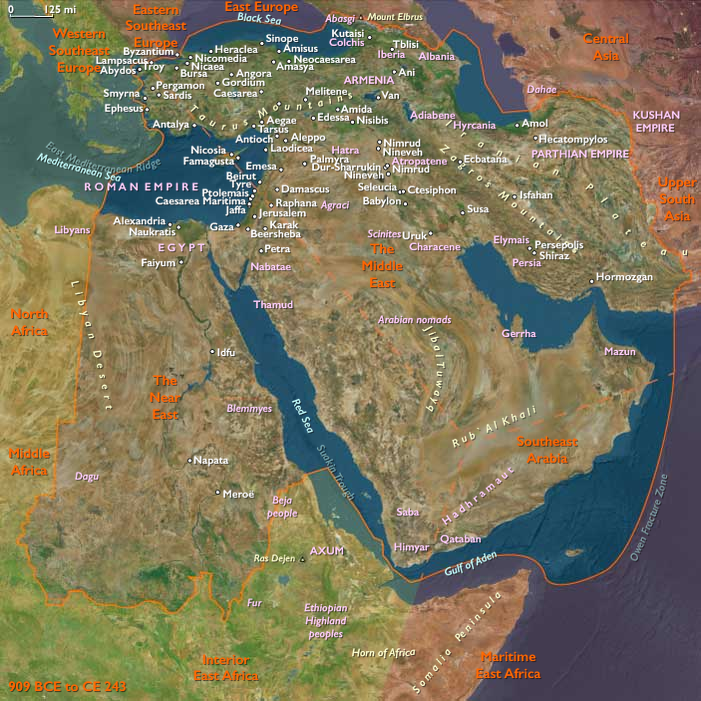
The Achaemenids dominate the whole of the Near and Middle East for two centuries until the rise of Macedonian power under Alexander the Great.
Alexander, leading a small but well-trained army, had crossed into Asia in 334 BCE, defeated Persia's forces, and within a few years has built an empire that stretches from the Nile River to the Indus River in contemporary Pakistan.
Alexander's conquests are divided among his Macedonian generals after his death in 323 BCE.
The Ptolemaic Dynasty of pharaohs in Egypt and the line of Seleucid kings in Syria are descended from two of these generals.
The eastern part—Phoenicia, Asia Minor, northern Syria, and Mesopotamia—fall to Seleucus I, founder of the Seleucid dynasty.
The southern part of Syria and Egypt fall to Ptolemy, and the European part, including Macedon, to Antigonus I.
This settlement, however, fails to bring peace because Seleucus I and Ptolemy clash repeatedly in the course of their ambitious efforts to share in Phoenician prosperity.
A final victory of the Seleucids ends a forty-year period of conflict.
The Middle East: 333–190 BCE
From Alexander’s Conquests to Seleucid Rule
Alexander’s Empire and Its Impact
In 333 BCE, Alexander the Great decisively defeats Persian forces at the Battle of Issus, marking the rapid decline of the Achaemenid Persian Empire. Advancing swiftly along the Mediterranean coast, Alexander captures crucial Phoenician cities. While most cities surrender, Tyre resists fiercely and is besieged and conquered in 332 BCE, its citizens sold into slavery. Alexander reshapes the region culturally, embedding Greek (Hellenistic) influence deeply into the Middle East. His strategic marriage to Roxana, a Bactrian noblewoman, and mass weddings between his soldiers and Iranian women embody his vision of cultural integration between Greeks and Persians.
Alexander’s sudden death without a designated heir in 323 BCE triggers fierce rivalry among his generals, the Diadochi, fragmenting his empire into multiple Hellenistic kingdoms. General Seleucus I Nicator gains control over much of Mesopotamia and Greater Syria, founding the Seleucid Empire in 312 BCE. Under Seleucid rule, Greek-style cities such as Seleucia on the Tigris and Laodicea in Syria are established, significantly enhancing regional trade and cultural exchange.
Babylon’s Brief Revival
Alexander's conquest briefly revives Babylon, which greets him as a liberator. He honors local customs, such as worshiping Marduk, the city’s chief deity, and announces ambitious plans to revitalize Babylon as a major imperial center. These grand designs remain unfulfilled due to his untimely death in Babylon, likely from malaria.
The Seleucids maintain Babylon’s economic revival through Greek-founded cities, boosting commerce by exporting barley, wheat, dates, wool, and bitumen, and importing spices, gold, precious stones, and ivory. Greek and Mesopotamian scholars preserve ancient astronomical and mathematical knowledge through intensive cultural exchanges.
Phoenician and Cypriot Realignments
Phoenician cities integrate Hellenistic cultural elements into their cosmopolitan traditions. After brief autonomy, Cyprus aids Alexander at the siege of Tyre and enjoys temporary independence. However, following Alexander’s death, Cyprus is contested until Ptolemy I of Egypt secures control in 294 BCE, replacing its city-kingdoms with centralized Egyptian administration.
Hellenistic Cultural Fusion
Hellenistic influence profoundly reshapes the Middle East’s cultural landscape. Greek colonists flood into Syria, expanding trade networks to India, East Asia, and Europe, fostering significant advancements in jurisprudence, philosophy, and science. This synthesis, Near Eastern Hellenism, marks a vibrant cultural and intellectual era.
Challenges to Seleucid Authority
Despite cultural and economic progress, the Seleucid Empire faces internal challenges. In 247 BCE, Arsaces, leader of the seminomadic Parni tribe, revolts against Seleucid control, establishing the Parthian Empire. By 250 BCE, Greek influence recedes significantly eastward, consolidating Parthian hold over the Persian Gulf, creating distinct Persian trade networks separate from Greek Mediterranean commerce.
Antiochus III the Great (223 BCE) sets himself the task of restoring lost Seleucid territories. He reestablishes control over Media and Persia by 221 BCE, though persistent threats from the Parthians and Bactrians necessitate ongoing military campaigns.
Lasting Legacies of the Seleucid Age
Although Seleucid political authority diminishes, their cultural and economic contributions endure. Cities like Antioch and Seleucia remain vital trade and learning centers. Greek language and administrative practices persist, shaping subsequent Middle Eastern political and cultural developments. By fostering economic revival, widespread Hellenization, and enduring cultural synthesis, the period from 333 to 190 BCE profoundly transforms the Middle East, laying foundations for future historical developments.
Cypriot freedom from the Persians finally comes in 333 BCE when Alexander the Great decisively defeats Persia at the Battle of Issus.
The Cypriot kings are granted autonomy a short time later in return for helping Alexander at the siege of Tyre.
The death of Alexander in 323 BCE signals the end of this short period of self-government.
Alexander's heirs fight over Cyprus, a rich prize, for several years, but in 294 BCE it is taken by Ptolemy, one of Alexander's generals, who has established himself as satrap (and eventual king) of Egypt.
Under the rule of the Ptolemies, which will last for two and one-half centuries, the city-kingdoms of Cyprus are abolished and a central administration established.
Near East (333–190 BCE): Hellenistic Conquests and Cultural Transformations
Alexander's Empire and its Immediate Aftermath (333–322 BCE)
The year 333 BCE inaugurates the Hellenistic Age when Alexander III of Macedon defeats the Persian Empire, transforming the geopolitical landscape of the Near East. Alexander’s swift military successes culminate in notable victories at the battles of Granicus (334 BCE), Issus (333 BCE), and Gaugamela (331 BCE). After the prolonged and pivotal siege of Tyre in 332 BCE, Alexander's domain stretches from Greece to the borders of India. He strategically integrates conquered territories through city foundations, notably Alexandria in Egypt, and religious accommodations, earning acceptance among local populations. His unexpected death in 323 BCE at Babylon triggers a complex power struggle among his generals—Perdiccas, Ptolemy Soter, Seleucus, and Antigonus Monophthalmus—eventually leading to the division of Alexander’s vast empire into separate dynasties.
Emergence of the Hellenistic Monarchies (321–298 BCE)
Alexander's territories fragment into significant Macedonian dynasties by 298 BCE. In Egypt, the Ptolemies establish a prosperous rule, significantly influencing the region by founding the renowned Library of Alexandria and the monumental Pharos Lighthouse. In Syria and Mesopotamia, the Seleucid dynasty emerges, though it remains in recurrent conflict with the Ptolemies, particularly over strategically vital areas such as Coele-Syria (modern-day Lebanon and southern Syria). Notably, after a forty-year conflict, a decisive Seleucid victory concludes initial hostilities over Phoenician territories.
Cultural Integration and Scholarly Achievement (297–274 BCE)
The Near East experiences widespread Hellenization, adopting Greek artistic, scientific, and architectural standards. Intellectual advancement peaks with scholars like Euclid, whose foundational texts on geometry and optics profoundly influence science. Cities such as Ashkelon and Ashdod are widely recognized by their Hellenized names, Ascalon and Azotus, exemplifying the era’s cultural synthesis. Egypt’s Ptolemaic Museum and Library at Alexandria become major scholarly hubs, further embedding Greek culture and intellectualism into the region.
Dynastic Rivalries and Egyptian Decline (273–226 BCE)
The Near East remains marked by fierce dynastic rivalries, particularly the Damascene War (280 BCE) and the subsequent First Syrian War (274 BCE). The internal stability of Ptolemaic Egypt significantly weakens due to court intrigues, rebellions, and economic strains. Antiochus III exploits this turmoil, resulting in Egypt's near-total loss of its Asian territories following the Battle of Panium (200 BCE). Such territorial shifts profoundly alter regional power structures.
Revolts and the Rise of Regional Powers (225–190 BCE)
Seleucid domains experience instability due to revolts by powerful satraps, notably Achaeus and Attalus of Pergamon, who successfully assert independence in Asia Minor. Attalus I consolidates Pergamon's power through victories over the Galatians, celebrated in the renowned sculpture The Dying Gaul. The century ends with the devastating Roman–Syrian War (192–188 BCE), significantly curtailing Seleucid authority, limiting it to a fragmented domain centered in Mesopotamia and inland Syria.
Legacy of the Age
The Near East during the Hellenistic Age undergoes profound political and cultural transformations marked by the spread of Greek culture, administrative reforms, and vibrant urban planning. Influential cities like Alexandria and Pergamon symbolize these shifts, becoming enduring centers of culture and learning. Despite flourishing intellectually and artistically, persistent dynastic conflicts and internal instabilities ultimately create vulnerabilities that pave the way for Roman ascendancy, marking this period as a crucial transition shaping the historical evolution of the Near East.
The Persian occupation of Egypt ends when Alexander the Great defeats the Persians at the Battle of Issus (near present-day Iskenderun in Turkey) in November 333 BCE.
The Egyptians, who despise the monotheistic Persians and chafe under Persian rule, welcome Alexander as a deliverer.
In the autumn of 332 BCE Alexander enters Memphis, where, like a true Hellene, he pays homage to the native gods and is apparently accepted without question as king of Egypt.
Also like a true Hellene, he celebrates the occasion with competitive games and a drama and music festival at which some of the leading artists of Greece are present.
From Memphis, Alexander marches down the western arm of the Nile and founds the city of Alexandria.
He next goes to the oasis of Siwa (present-day Siwah) to consult the oracle at the Temple of Amun, the Egyptian god whom the Greeks identify with their own Zeus.
After Alexander's death of malarial fever in 323 BCE, the Macedonian commander in Egypt, Ptolemy, who is the son of Lagos, one of Alexander's seven bodyguards, manages to secure for himself the satrapy (provincial governorship) of Egypt.
Another of Alexander's generals, Antigonus, citing the principle that the empire Alexander created should remain unified, takes the royal title in 306 BCE.
In reaction, his rivals for power, Ptolemy of Egypt, Cassander of Macedonia, and Seleucus of Syria, counter by declaring themselves kings of their respective dominions.
Thus comes into existence the three great monarchies that are to dominate the Hellenistic world until they are absorbed, one by one, into the Roman Empire.
The dynasty Ptolemy founds in Egypt is known as the line of Ptolemaic pharaohs and will endure until the suicide of Cleopatra in 30 BCE, at which time direct Roman control will be instituted.
The early Ptolemies are hardheaded administrators and business people, anxious to make the state that they have created stable, wealthy, and influential.
The Ptolemies have their eyes directed outward to the eastern Mediterranean world in which they seek to play a part.
Egypt is their basis of power, their granary, and the source of their wealth.
Under the early Ptolemies, the culture is exclusively Greek.
Greek is the language of the court, the army, and the administration.
The Ptolemies found the university, the museum, and the library at Alexandria and build the lighthouse at Pharos.
A canal to the Red Sea is opened, and Greek sailors explore new trade routes.
Whereas many Egyptians adopt Greek speech, dress, and much of Greek culture, the Greeks also borrow much from the Egyptians, particularly in religion.
In this way, a mixed culture is formed along with a hybrid art that combines Egyptian themes with elements of Hellenistic culture.
Examples of this are the grandiose temples built by the Ptolemies at Edfu (present-day Idfu) and Dendera (present-day Dandarah).
Alexander the Great destroys the Persian Empire in 332 BCE, but largely ignores Judah.
His generals divide his empire after the Macedonian conqueror's death, and subsequently fight over it.
Ptolemy I takes direct control of the Jewish homeland in 301 BCE, but he makes no serious effort to interfere in its religious affairs.
North Africa (333–190 BCE)
Carthaginian Dominance, Conflict, Reconstruction, Cyrenaic Stability, and Berber Continuity
Carthage’s Strategic Adaptation and the Punic Wars
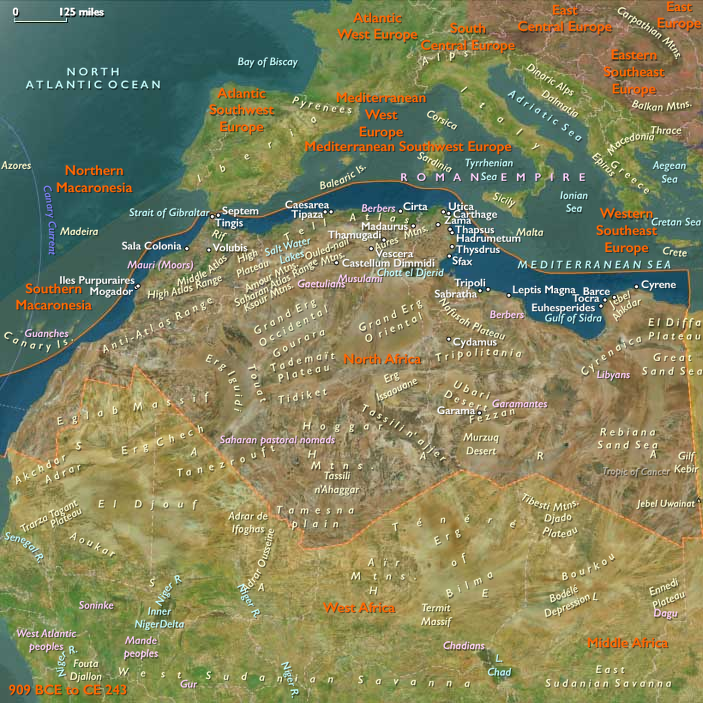
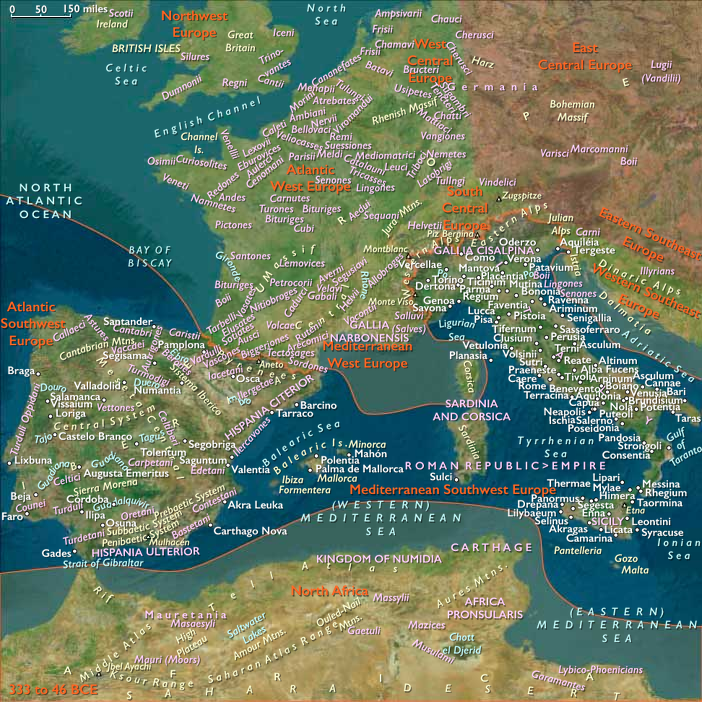
From 333 to 190 BCE, North Africa experiences profound shifts driven by Carthage’s evolving geopolitical ambitions and subsequent military conflicts. Initially dominant, Carthage extends its hegemony significantly, maintaining naval supremacy and securing crucial Mediterranean trade routes, particularly around strategic colonies such as Leptis and Oea (modern Tripoli). The Punic civilization flourishes, integrating Berber communities economically and culturally through robust trade networks and sophisticated agricultural practices.
However, Carthage faces immense challenges during the First Punic War (264–241 BCE), triggered by rivalry with Rome over Sicily. Although initially holding its ground, Carthage ultimately succumbs, losing Sicily and paying heavy indemnities. The subsequent Mercenary War (241–237 BCE), arising from unpaid mercenary forces—including Berber soldiers who successfully seize control of much of Carthage’s North African territory and mint coins labeled "Libyan"—further destabilizes Carthage. Under the decisive leadership of Hamilcar Barca, Carthage regains control, yet its recovery is marred by Roman opportunism, notably Rome’s seizure of Sardinia and Corsica.
The Second Punic War (218–201 BCE), spearheaded by Hannibal Barca, significantly impacts Carthage’s geopolitical standing. Despite remarkable military campaigns in Italy, Hannibal’s eventual defeat at the Battle of Zama (202 BCE) severely cripples Carthaginian power, forcing it into substantial post-war reconstruction and diplomatic realignment.
Post-War Reconstruction and Diplomatic Realignment
Post-war Carthage faces heavy penalties, including loss of territories, naval limitations, and severe indemnities. Nevertheless, it demonstrates remarkable resilience by focusing intensely on agricultural and economic recovery, particularly in the productive North African hinterland. Key cities, especially Leptis and Oea, remain central to economic revitalization. Diplomatically, Carthage adopts cautious pragmatism, strategically repositioning itself to maintain stable relations with Rome and neutrality in broader Mediterranean affairs.
Cyrenaica’s Consistent Economic and Diplomatic Stability
Throughout this turbulent period, the Greek Pentapolis—Cyrene, Barce (Al Marj), Euhesperides (Benghazi), Teuchira (Tukrah), and Apollonia (Susah)—retains significant economic stability. Initially, the region welcomes Alexander the Great in 331 BCE, and after his death in 323 BCE, Cyrenaica is absorbed into the territories ruled by Ptolemy, a general under Alexander. The Pentapolis forms a federation typically ruled by a Ptolemaic king, bringing political stability through imposed constitutions due to internal governance challenges.
Economic and cultural prosperity remains robust despite political turbulence. Cyrenaica becomes wealthy through grain, wine, wool, stockbreeding, and notably Silphium, an herb unique to the region. Cyrene emerges as a prominent intellectual and artistic hub, renowned for its medical school, learned academies, and distinctive Hellenistic architecture. Additionally, the philosophical Cyrenaics, proponents of a doctrine equating happiness with human pleasure, flourish here.
Berber Economic Integration and Cultural Continuity
Berber communities—Caucasoid peoples speaking variations of a single Hamito-Semitic language, who identify themselves as “Amazigh” or "free men"—remain economically integrated within Carthaginian and Greek trade networks throughout these conflicts. Continuously adopting advanced agricultural, maritime, and artisanal techniques, Berbers sustain economic vitality in coastal hubs such as Oea (Tripoli). Inland Berber tribes preserve their autonomy, benefiting indirectly from prosperous coastal trade, reinforcing regional stability and cultural resilience.
Vibrant Cultural Exchange and Religious Syncretism
The interactions among Berber, Carthaginian, and Greek populations continue to flourish, fostering vibrant artistic developments in pottery, textiles, and metalwork. Religious syncretism deepens significantly, harmoniously blending indigenous Berber traditions with Phoenician and Greek religious practices, enriching regional cultural diversity.
Foundations for Sustained Regional Stability
By 190 BCE, despite significant military setbacks and geopolitical disruptions, North Africa achieves considerable political resilience and sustained economic vitality. Carthage’s strategic adaptation and diplomatic caution, Cyrenaica’s unwavering stability, and the ongoing integration and cultural continuity among the Berbers collectively secure regional cohesion and enduring prominence within the Mediterranean.