
The plate could not be loaded.
West Polynesia Collapse Brief Rising Seas, Building Reefs, and Human-Free Oceanic Islands Brief ‹ Polynesia Rising Seas, Building Reefs, and Human-Free Oceanic Islands Explore events
Rising Seas, Building Reefs, and Human-Free Oceanic Islands
West Polynesia · Polynesia · Central Oceania
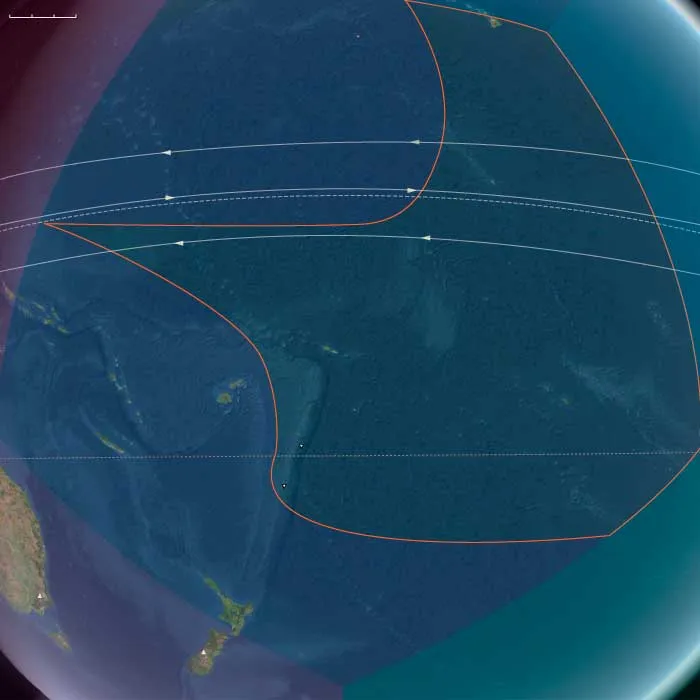
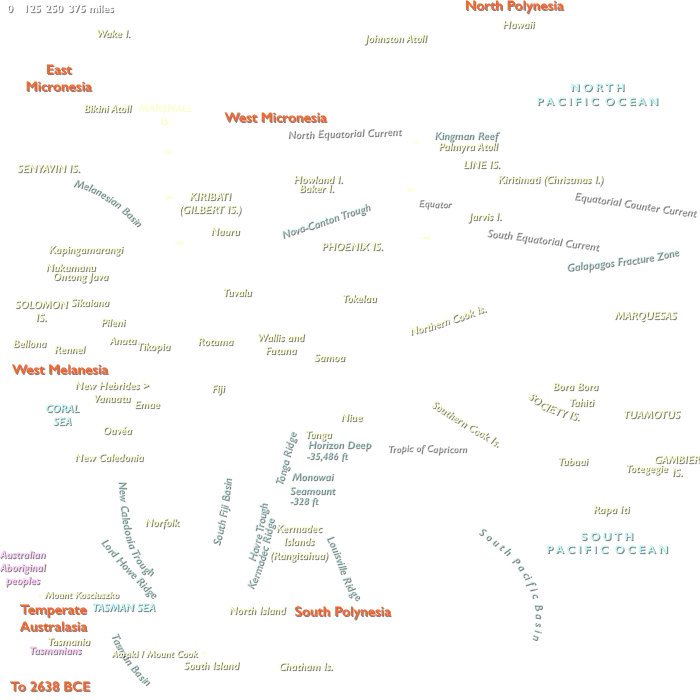
West Polynesia remained entirely without human inhabitants throughout the Middle Holocene. From the young volcanic landscapes of Hawaiʻi Island to Tonga and Samoa, the Cook and Society Islands, the Marquesas, and the low reef islands of Tuvalu and Tokelau, environmental change was governed by volcanism, tectonics, sea-level adjustment, reef growth, erosion, storms, sediment movement, and biological colonization rather than by cultivation, burning, settlement, or voyaging.
Continue reading
West Polynesia remained entirely without human inhabitants throughout the Middle Holocene. From the young volcanic landscapes of Hawaiʻi Island to Tonga and Samoa, the Cook and Society Islands, the Marquesas, and the low reef islands of Tuvalu and Tokelau, environmental change was governed by volcanism, tectonics, sea-level adjustment, reef growth, erosion, storms, sediment movement, and biological colonization rather than by cultivation, burning, settlement, or voyaging.
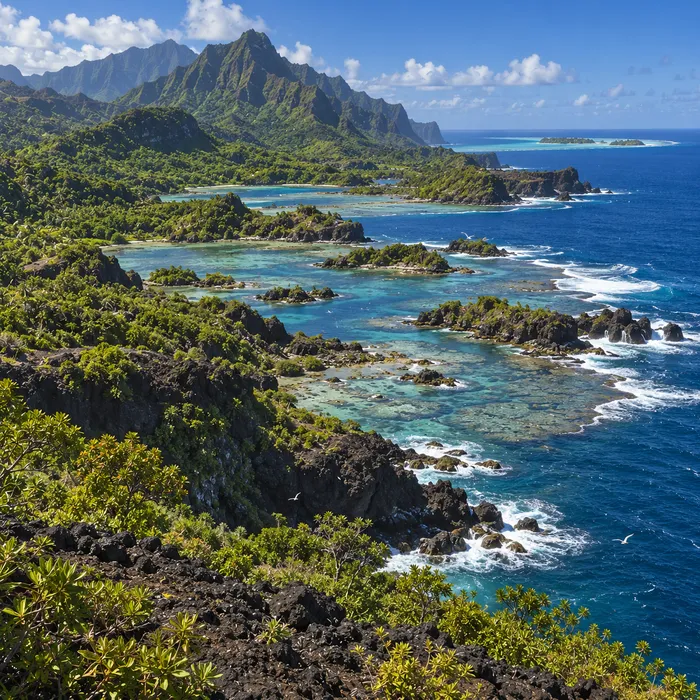
These islands did not form a single environmental type. Hawaiʻi Island was a geologically young volcanic landscape whose coasts, lava fields, valleys, forests, and reefs continued to evolve around active volcanic centers. Fresh lava repeatedly created new substrates, while older surfaces weathered and accumulated vegetation and soils. Streams developed where rainfall and substrate permitted them, and sharp windward-leeward contrasts separated wet forests from much drier vegetation. Marine communities occupied rocky shores, developing reefs, deeper slopes, and offshore waters without any human alteration of terrestrial or coastal ecosystems.
Far to the southwest, Tonga combined low limestone islands, reef platforms, volcanic islands, and tectonically active settings. Lagoons, reef passages, tidal flats, beaches, and coastal wetlands developed differently from island to island as reef growth interacted with relative sea-level change and crustal movement. Samoa's larger volcanic islands presented still another landscape of mountainous interiors, deeply incised streams, humid forests, lava-derived soils, exposed rocky coasts, sheltered bays, and fringing reefs.
The Cook and Society Islands contained a mixture of high volcanic islands, reef-fringed coasts, lagoons, and smaller low islands. Around islands such as Rarotonga, Aitutaki, Tahiti, Moʻorea, and Raʻiātea, coral reefs continued to grow upward and outward as the rate of postglacial sea-level rise slowed. In protected settings, lagoonal sediments accumulated and coastal wetlands or narrow alluvial plains expanded. Elsewhere, waves, steep slopes, river discharge, or volcanic topography limited reef and wetland development. The familiar later Holocene reef-flat and lagoon landscapes were still taking shape rather than existing everywhere in modern form.
The Marquesas contrasted strongly with these broad lagoon systems. Their steep volcanic islands rose abruptly from deep ocean water, with rugged ridges, deeply cut valleys, narrow coastal margins, and embayments but comparatively restricted reef development. Heavy rainfall on windward slopes supported dense vegetation and stream systems, while erosion carried volcanic sediment toward confined coastal plains and bays. Their Middle-Holocene ecological identity was fundamentally mountainous and oceanic rather than lagoon-dominated.
Tuvalu and Tokelau represented the opposite extreme. Here reef platforms, shallow lagoons, carbonate sands, rubble ridges, and low emergent islets formed landscapes only slightly above the sea. Individual islands and sand bodies shifted as storms, waves, currents, reef growth, and sediment accumulation redistributed material across the reef surface. The modern outlines of atolls and motu should not be assumed to have existed unchanged. Land could accrete, migrate, erode, or be repeatedly overwashed while the underlying reef systems continued to develop.
Across the subregion, the slowing of postglacial sea-level rise allowed many coral reefs to approach shallower water and begin developing broader reef-flat environments. In some localities, relative sea level was approaching the higher stands characteristic of later Middle Holocene centuries; elsewhere subsidence, uplift, volcanic loading, tectonics, or local reef history produced different shoreline trajectories. There was no single West Polynesian highstand or uniform coastal equilibrium.
Marine life was abundant. Reef and lagoon fishes, mollusks, crustaceans, sharks, rays, turtles, seabirds, and pelagic species occupied highly productive waters, while whales and dolphins crossed the surrounding ocean. High islands supported native forests, ferns, shrubs, coastal strand vegetation, freshwater organisms, land birds, and immense nesting populations of seabirds in places free of introduced mammalian predators. Biological communities differed sharply according to island age, elevation, rainfall, isolation, geology, and reef development.
No part of the region contained settlements, hearths, cultivated gardens, irrigation, fishponds, canoe landings, cleared paths, planted groves, domesticated animals, or human-introduced rats. Wetlands developed through natural hydrology and sedimentation; forests changed through succession, storms, drought, volcanism, and long-term climate; reefs grew through coral and carbonate production; low islands formed through the movement and accumulation of marine sediment.
Legacy of the Age
By 4,366 BCE, West Polynesia was an increasingly differentiated Middle-Holocene oceanic world. Many reefs had risen closer to sea level as the great postglacial marine transgression slowed, while lagoons, coastal plains, beaches, wetlands, and reef islands continued to develop in locally distinctive ways. Hawaiʻi Island remained strongly shaped by volcanism; Tonga by reefs and tectonics; Samoa by large volcanic landscapes; the Cooks and Societies by varied combinations of high islands, lagoons, and reef growth; the Marquesas by steep, deeply eroded volcanic terrain; and Tuvalu and Tokelau by dynamic low reef-island formation. These environments evolved entirely without human presence, producing no single ecological trajectory and no inevitable preparation for the Polynesian societies that would reach different archipelagos thousands of years later.