
The plate could not be loaded.
Polynesia Collapse Brief Human-Free Islands, Growing Reefs, and Divergent Oceanic Ecosystems Brief ‹ 3 subregions Human-Free Islands, Growing Reefs, and Divergent Oceanic Ecosystems Explore events
Human-Free Islands, Growing Reefs, and Divergent Oceanic Ecosystems
Polynesia · Northern Oceania · Central Oceania · The Ends of the Earth
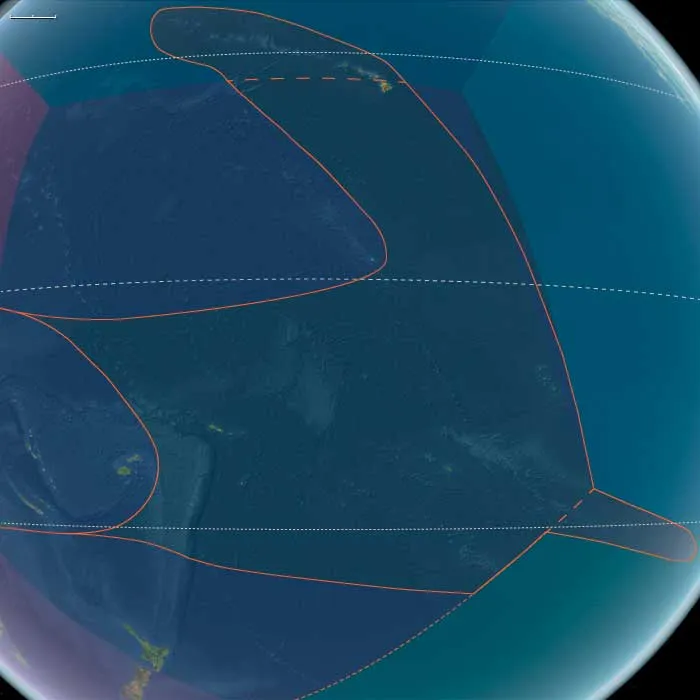
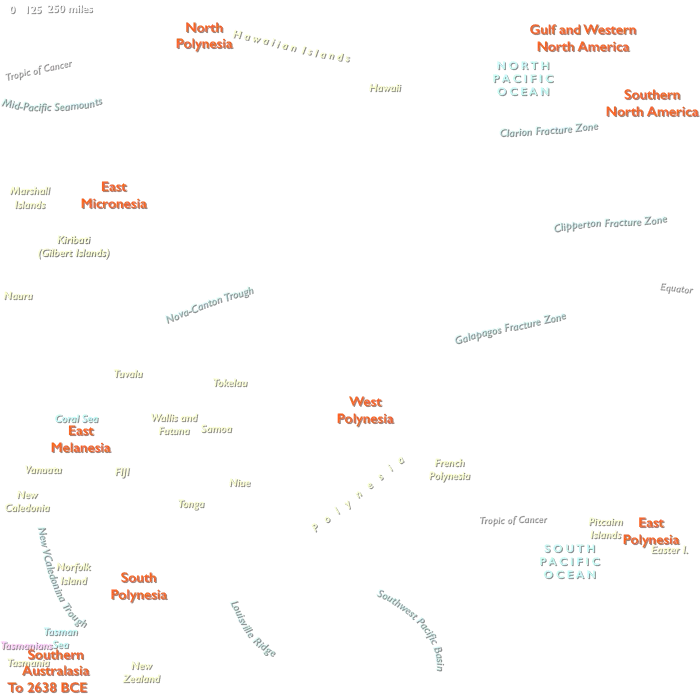
Polynesia formed one of the largest entirely human-free regions on Earth during the Middle Holocene. From the Hawaiian chain in the north through Tonga, Samoa, the Cook and Society Islands, the Marquesas, and onward to Rapa Nui, Pitcairn, Henderson, Ducie, and Oeno, the region consisted of volcanic high islands, uplifted limestone islands, coral atolls, reef platforms, and isolated oceanic outliers evolving without human settlement.
Continue reading
Polynesia formed one of the largest entirely human-free regions on Earth during the Middle Holocene. From the Hawaiian chain in the north through Tonga, Samoa, the Cook and Society Islands, the Marquesas, and onward to Rapa Nui, Pitcairn, Henderson, Ducie, and Oeno, the region consisted of volcanic high islands, uplifted limestone islands, coral atolls, reef platforms, and isolated oceanic outliers evolving without human settlement.
Across the region, postglacial sea-level rise had slowed but continued to influence shorelines, reefs, lagoons, wetlands, and low coastal plains. Coral reefs grew upward and outward in many tropical settings, while sand cays, rubble ridges, motu, lagoon margins, and reef flats shifted under the influence of waves, currents, storms, subsidence, uplift, and local sediment supply.
These processes did not produce one stable Polynesian coastline. Some islands possessed broad reef-flat and lagoon systems, while others remained high-energy volcanic coasts with narrow fringing reefs or little barrier-reef development. Low atolls and reef islands continued to accrete, migrate, erode, fragment, or be repeatedly overwashed.
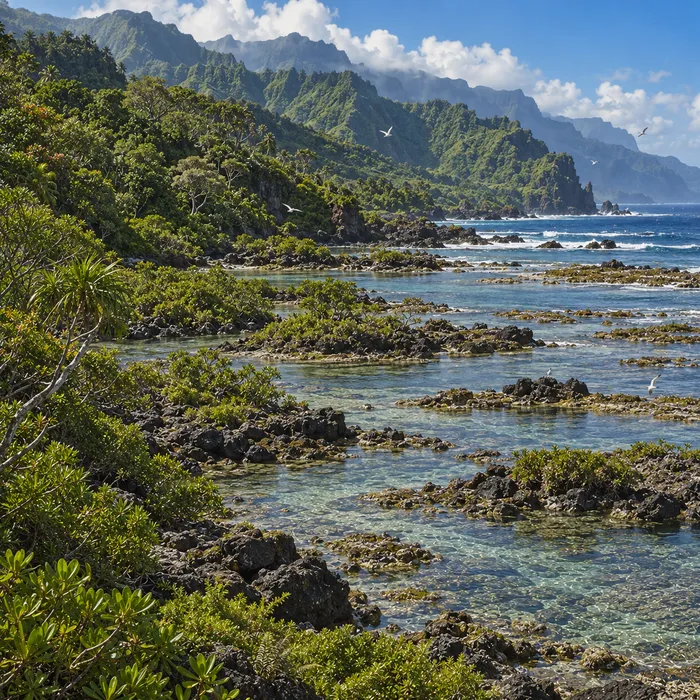
North Polynesia formed a predominantly high-island Hawaiian world. Kauaʻi, Oʻahu, Maui, Molokaʻi, Lānaʻi, Niʻihau, and neighboring islands supported mature native forests, wetlands, streams, dry leeward vegetation, mesic and wet windward forests, reef systems, and abundant bird life. Midway remained a sharply different low-atoll ecosystem dominated by lagoon, reef, carbonate sediment, seabirds, and marine productivity.
These Hawaiian ecosystems were entirely prehuman. Native forests extended into lowlands later transformed by agriculture and settlement, seabirds nested without introduced mammalian predators, and stream, reef, and wetland systems developed without fishponds, taro cultivation, deliberate burning, or introduced species.
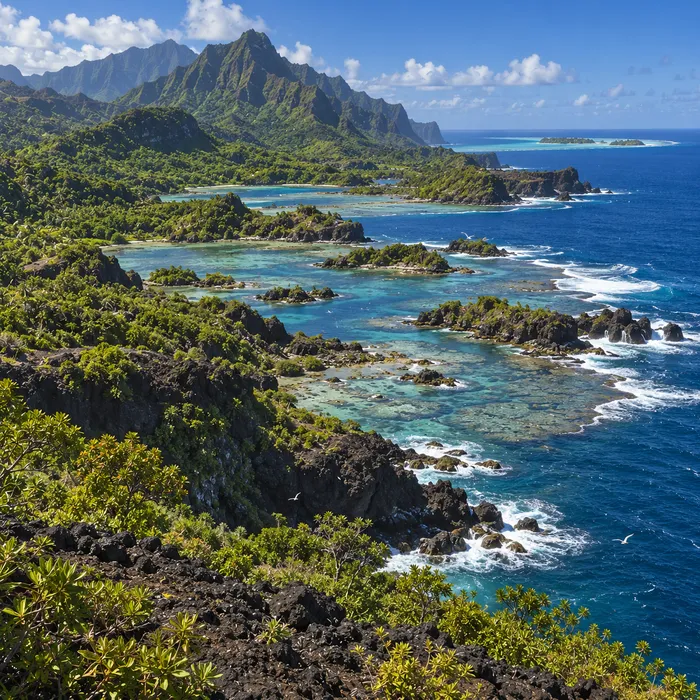
West Polynesia was even more heterogeneous. Hawaiʻi Island remained a young volcanic landscape shaped by lava flows, forest succession, erosion, and reef development, while Tonga combined uplifted limestone, reef, and volcanic islands. Samoa supported large humid volcanic islands with deeply incised rivers and forests.
The Cook and Society Islands developed varied combinations of high volcanic relief, lagoon systems, reef growth, coastal wetlands, and alluvial plains. The Marquesas contrasted strongly with them through steep volcanic relief, narrow coastal margins, deep valleys, and comparatively restricted reef development.
Farther across the tropical Pacific, the low reef islands of Tuvalu and Tokelau remained dynamic carbonate landscapes. Reef platforms, lagoons, sand bodies, and emergent islets changed as waves, currents, storms, and sediment redistribution continually modified their form.
Many of these islands were still developing toward later-Holocene reef-flat and shoreline configurations. Modern motu outlines, lagoon margins, passes, and coastal wetlands should not be assumed to have existed unchanged throughout the epoch.
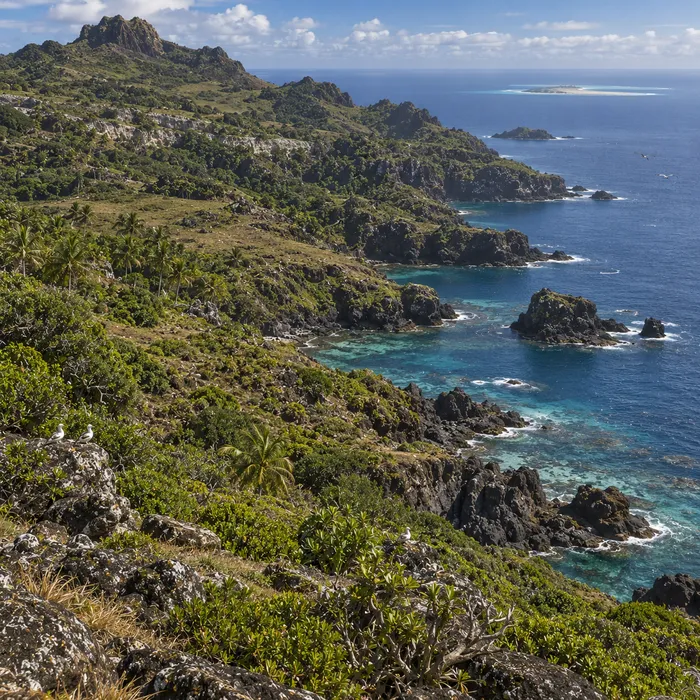
East Polynesia contained another set of sharp contrasts. Rapa Nui supported extensive palm-dominated woodland and crater wetlands; Pitcairn carried native woodland across steep volcanic terrain; Henderson supported a raised-limestone forest rich in endemic species; and Ducie and Oeno remained extremely low reef-island systems shaped by waves, reef growth, and carbonate sediment.
Rapa Nui was profoundly different from its later historical appearance. Palm-dominated woodland covered much of the island, interrupted by shrubs, grasses, ferns, crater wetlands, exposed volcanic ground, and local variations created by rainfall, wind, soil depth, and substrate. There were no gardens, quarry landscapes, fires, introduced rats, or cleared ceremonial spaces.
Pitcairn supported a smaller volcanic ecosystem of wooded slopes, narrow valleys, cliffs, rocky coasts, and freshwater seepages. Henderson, by contrast, was a raised coral-limestone island with karstic terrain, forest, endemic land birds, invertebrates, and large seabird populations.
Ducie and Oeno formed low reef environments with extremely limited terrestrial biomass. Their sand cays, rubble ridges, reef flats, lagoons, and sparse strand vegetation were continually reworked by waves, currents, storms, and changes in sediment supply.
Across tropical Polynesia, coral reefs, lagoons, rocky shores, and pelagic waters supported fishes, sharks, rays, turtles, mollusks, crustaceans, cetaceans, and seabirds. High islands added freshwater streams, forest birds, insects, reptiles, snails, and other terrestrial organisms according to each island’s evolutionary history.
Seabirds were especially important in prehuman Polynesia. Cliffs, beaches, offshore islets, forests, and low reef islands offered nesting habitat free of introduced rats, cats, pigs, or human disturbance. Marine-derived nutrients locally enriched island soils and vegetation around breeding colonies.
Freshwater availability differed greatly. High volcanic islands could contain perennial streams, lakes, swamps, crater basins, and groundwater, while low atolls depended on rainfall, shallow freshwater lenses, and temporary depressions. This contrast strongly shaped terrestrial ecosystems even in the complete absence of human settlement.
Volcanism remained a major force across many archipelagos. Hawaiʻi Island, Tonga, Samoa, parts of the Society Islands, the Marquesas, Rapa Nui, and Pitcairn all reflected volcanic histories of different ages. Lava flows, eruptions, earthquakes, landslides, weathering, and erosion periodically destroyed and recreated habitats.
Storms and drought were equally important. Tropical cyclones, large swells, heavy rainfall, drought, and ENSO-related variability repeatedly altered forests, beaches, reefs, wetlands, and low-island surfaces. Different archipelagos experienced these disturbances at different frequencies and intensities.
There were no human settlements, hearths, gardens, roads, fishponds, irrigation systems, canoes, introduced livestock, cultivated plants, or deliberately cleared landscapes anywhere in Polynesia during this epoch. Even island groups that would become major centers of later Polynesian settlement remained entirely ecological worlds.
The absence of people did not produce ecological uniformity. Wet Hawaiian forests, Tongan reef platforms, Samoan volcanic valleys, Marquesan mountain environments, Rapa Nui palm woodland, Henderson limestone forest, and low coral atolls all followed their own Holocene trajectories.
Legacy of the Age
By 4,366 BCE, Polynesia remained an immense and entirely human-free oceanic region composed of sharply differentiated island systems. Tropical reefs and low islands continued to grow and reorganize, while volcanic high islands supported mature forests, wetlands, stream systems, and endemic terrestrial communities. North Polynesia contained humid and dry Hawaiian high-island ecosystems alongside Midway’s low atoll world; West Polynesia ranged from young Hawaiʻi volcanism and Samoan mountain forests to Tongan reef-limestone systems and dynamic low islands; and East Polynesia included palm-wooded Rapa Nui, volcanic Pitcairn, raised-limestone Henderson, and low reef islands such as Ducie and Oeno. The defining character of the age was not ecological stability or preparation for later settlement, but the continued independent evolution of tropical volcanic, limestone, reef, and atoll ecosystems across the central and eastern Pacific.