
Alexios I Komnenos, a well educated emperor, …
Years: 1096 - 1096
December
Alexios I Komnenos, a well educated emperor, has reformed Constantinople’s monetary and taxation systems.
Alexios had undoubtedly solicited the help of mercenary troops from the West but not for the liberation of the Holy Land from the infidel.
The urgent need is the protection of Constantinople and the recovery of Anatolia.
The Greeks are more realistic about their Muslim neighbors than the distant popes and princes of the West.
The immediate threats to Constantinople had come from the Pechenegs to the north and the Normans to the west.
Alexios, who had doubtless anticipated some sort of auxiliary force, apparently soon realizes that he will have to provide for and police a much larger influx of warriors.
The main Crusading force, which had begun to move as Urban had directed in August 1096, consists of four major contingents, largely French and Norman knights under baronial leadership.
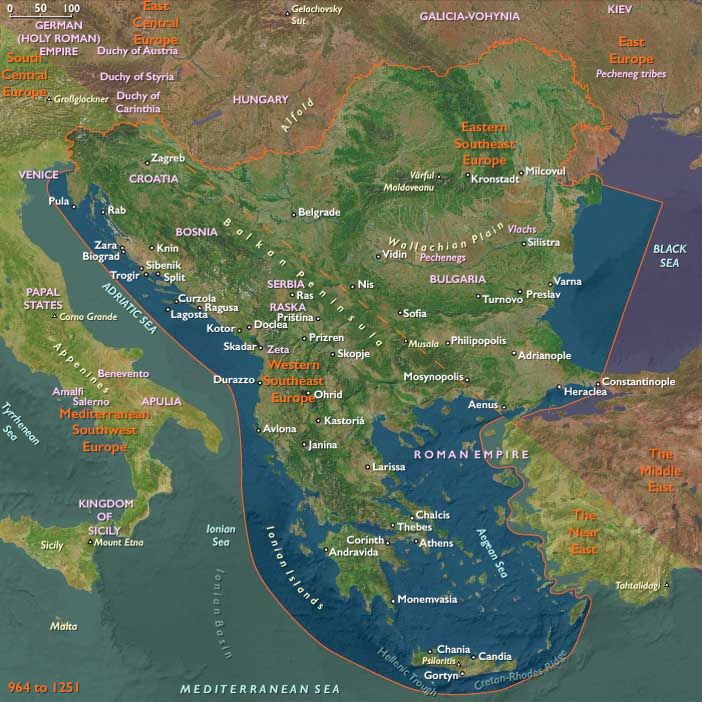
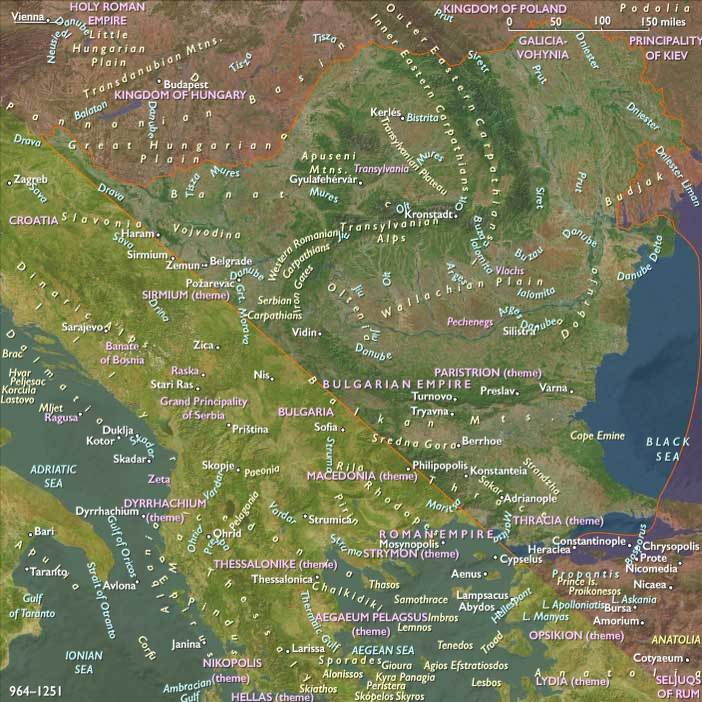
Hugh I of Vermandois, brother of King Philip I of France, had left first with a small following that had been reduced by shipwreck while crossing the Adriatic from Bari to Dyrrhachium.
Godfrey of Bouillon, duke of Lower Lorraine since 1089, is the only major prince from the German kingdom, though he and his associates largely speak French.
His brothers, Eustace and Baldwin of Boulogne, and a kinsman, Baldwin Du Bourcq, join him.
Taking the land route, Godfrey had crossed Hungary without incident, aided by that country's King Colomon, who had protected Hungary's Jewish communities from further mischief.
Markets and provisions had been supplied in imperial territory, and, except for some pillaging, the army reaches Constantinople without serious incident in late December.
Nikephoros Bryennios, a favorite of the emperor, who has given him the title of caesar, assists Alexios in dealing with Godfrey.
Locations
People
- Adhemar of Le Puy
- Al-Afdal Shahanshah
- Alexios I Komnenos
- Baldwin I of Jerusalem
- Baldwin II of Jerusalem
- Bohemond I of Antioch
- Constantine I
- Danishmend Gazi
- Eustace III
- Fakhr al-Mulk Radwan
- Godfrey of Bouillon
- Guglielmo Embriaco
- Hugh I
- Iftikhar al-Dawla
- Kerbogha
- Kilij Arslan I
- Manuel Boutoumites
- Nikephoros Bryennios the Elder
- Peter the Hermit
- Pope Urban II
- Raymond IV
- Robert Curthose
- Robert II, Count of Flanders
- Stephen
- Tancred
- Tatikios
- Walter Sans Avoir
- Yaghi-Siyan
Groups
- Arab people
- Persian people
- Armenian people
- Jews
- Kurdish people
- Germans
- Christians, Armenian Apostolic Orthodox
- Christians, Maronite
- Christians, Miaphysite (Oriental Orthodox)
- Coptic Orthodox Church of Alexandria
- Greeks, Medieval (Byzantines)
- Islam
- Egypt in the Middle Ages
- Muslims, Sunni
- Muslims, Shi'a
- Syrian people
- Toulouse, County of
- Flanders, County of
- Abbasid Caliphate (Baghdad)
- Normandy, Duchy of
- Normans
- German, or Ottonian (Roman) Empire
- Turkmen people
- Cyprus, East Roman (Byzantine)
- Fatimid Caliphate
- French people (Latins)
- France, (Capetian) Kingdom of
- 'Uqaylid Dynasty of Mosul
- Hungary, Kingdom of
- Genoa, (Most Serene) Republic of
- Druze, or Druse, the
- Bulgaria, Theme of
- Lorraine (Lothier), Lower, (second) Duchy of
- Seljuq Empire (Isfahan)
- Christians, Roman Catholic
- Christians, Eastern Orthodox
- England, (Norman) Kingdom of
- Danishmends
- Rum, Sultanate of
- Apulia, Norman Duchy of
- Aleppo, Seljuq Emirate of
- Armenia, Baronry of Little, or Lesser
- Roman Empire, Eastern: Komnenos dynasty, restored
Topics
Commodoties
Subjects
Regions
Subregions
Years: 1096 - 1096
December
Locations
People
- Adhemar of Le Puy
- Al-Afdal Shahanshah
- Alexios I Komnenos
- Baldwin I of Jerusalem
- Baldwin II of Jerusalem
- Bohemond I of Antioch
- Constantine I
- Danishmend Gazi
- Eustace III
- Fakhr al-Mulk Radwan
- Godfrey of Bouillon
- Guglielmo Embriaco
- Hugh I
- Iftikhar al-Dawla
- Kerbogha
- Kilij Arslan I
- Manuel Boutoumites
- Nikephoros Bryennios the Elder
- Peter the Hermit
- Pope Urban II
- Raymond IV
- Robert Curthose
- Robert II, Count of Flanders
- Stephen
- Tancred
- Tatikios
- Walter Sans Avoir
- Yaghi-Siyan
Groups
- Arab people
- Persian people
- Armenian people
- Jews
- Kurdish people
- Germans
- Christians, Armenian Apostolic Orthodox
- Christians, Maronite
- Christians, Miaphysite (Oriental Orthodox)
- Coptic Orthodox Church of Alexandria
- Greeks, Medieval (Byzantines)
- Islam
- Egypt in the Middle Ages
- Muslims, Sunni
- Muslims, Shi'a
- Syrian people
- Toulouse, County of
- Flanders, County of
- Abbasid Caliphate (Baghdad)
- Normandy, Duchy of
- Normans
- German, or Ottonian (Roman) Empire
- Turkmen people
- Cyprus, East Roman (Byzantine)
- Fatimid Caliphate
- French people (Latins)
- France, (Capetian) Kingdom of
- 'Uqaylid Dynasty of Mosul
- Hungary, Kingdom of
- Genoa, (Most Serene) Republic of
- Druze, or Druse, the
- Bulgaria, Theme of
- Lorraine (Lothier), Lower, (second) Duchy of
- Seljuq Empire (Isfahan)
- Christians, Roman Catholic
- Christians, Eastern Orthodox
- England, (Norman) Kingdom of
- Danishmends
- Rum, Sultanate of
- Apulia, Norman Duchy of
- Aleppo, Seljuq Emirate of
- Armenia, Baronry of Little, or Lesser
- Roman Empire, Eastern: Komnenos dynasty, restored
Topics
Commodoties
Subjects
Regions
Subregions