
Atlantic Southwest Europe (1516–1527 CE): Rise of …
Years: 1516 - 1527
Atlantic Southwest Europe (1516–1527 CE): Rise of Habsburg Spain, Portugal’s Imperial Zenith, and Renaissance Cultural Maturity
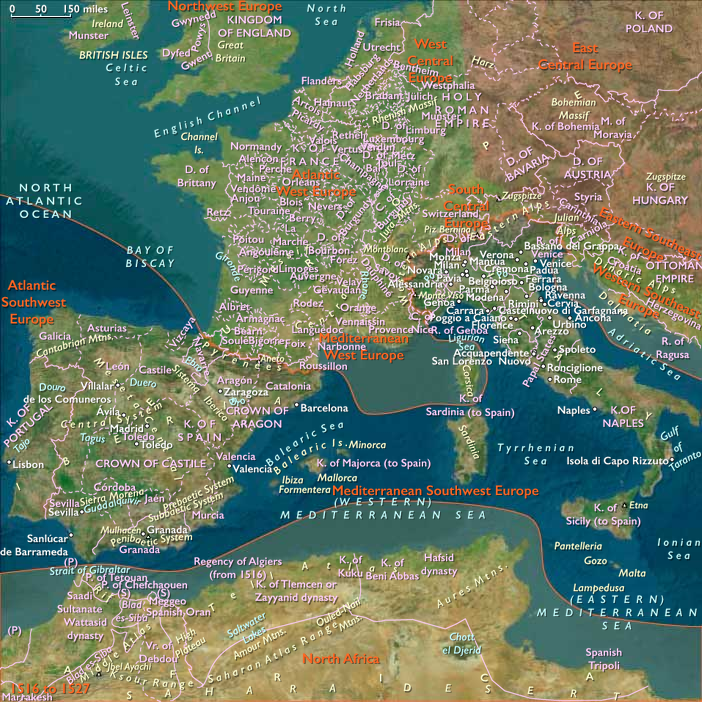
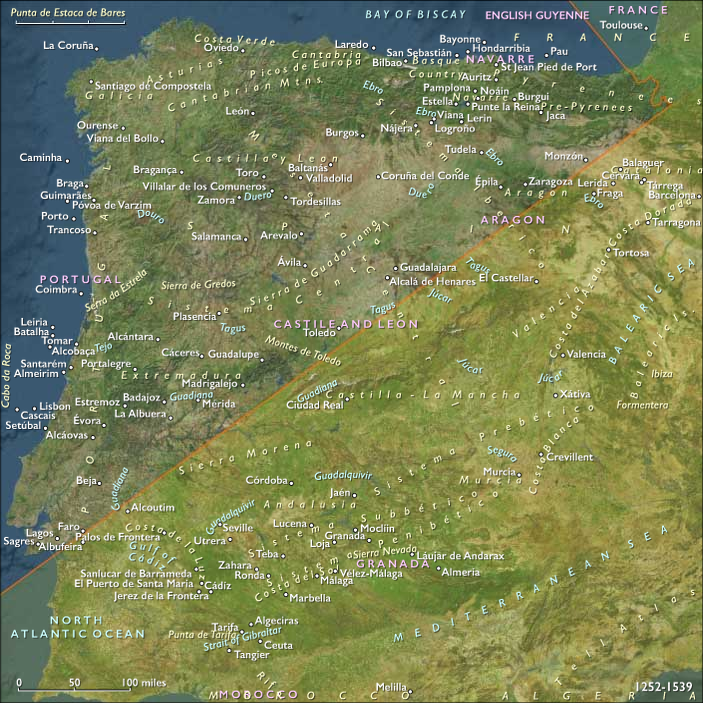
Between 1516 and 1527 CE, Atlantic Southwest Europe—including Galicia, northern and central Portugal, Asturias, Cantabria, and northern Spain south of the Franco-Spanish border (43.05548° N, 1.22924° W)—experienced profound transformations marked by the ascendancy of Habsburg power under Charles I of Spain (later Holy Roman Emperor Charles V), Portugal’s global maritime empire reaching its pinnacle under King Manuel I, and the full flowering of Renaissance humanism. These changes decisively shaped regional identities, global geopolitics, intellectual advancements, economic prosperity, and the cultural trajectory of the Iberian Peninsula.
Political and Military Developments
Ascendancy of Habsburg Spain under Charles V
Following Ferdinand II’s death (1516), the inheritance of his grandson, Charles I of Spain (1516–1556 CE)—who became Holy Roman Emperor Charles V in 1519—marked a decisive shift in regional governance. Charles unified Castile, Aragón, Naples, Sicily, the Netherlands, and extensive New World territories under a single Habsburg crown, dramatically reshaping Iberian political structures, centralizing administration, and elevating Spain as a preeminent European and global power.
Portugal’s Global Maritime Empire at its Peak
Under the later reign of King Manuel I (1495–1521 CE), Portugal decisively solidified global maritime dominance, expanding colonial holdings and trade networks across Africa, Asia, and Brazil. Following Manuel’s death, his son King João III (1521–1557 CE) continued to strengthen Portugal’s commercial and imperial stature. Portuguese dominance of Indian Ocean trade, fortified Asian coastal settlements, and American colonies significantly reinforced Lisbon’s economic prosperity and geopolitical influence.
Navarrese Integration and Resistance
Southern Navarre, annexed by Castile and Aragón in 1512, decisively integrated into Habsburg Spain under Charles I, though northern Navarre maintained tenuous independence under French protection. Resistance and political tensions persisted, shaping the distinctive regional identities of Basque communities and profoundly affecting Iberian political cohesion.
Economic Developments
Agricultural Stability and Regional Prosperity
Agricultural productivity decisively remained strong, sustained by diversified cultivation of grains, vineyards, olives, citrus fruits, and almonds, coupled with extensive livestock production. Mining activities—particularly gold and silver extraction in Galicia and Asturias—significantly supported economic resilience, demographic stability, and regional prosperity.
Portuguese Maritime Trade and Global Economic Dominance
Portugal decisively reached its global economic zenith under Manuel I and João III, maintaining extensive maritime trade networks linking Lisbon, Porto, Braga, and Coimbra with Asia, Africa, and America. Dominance of the spice trade, textiles, luxury commodities, and precious metals decisively reinforced Portugal’s economic prosperity and European commercial prominence. Galicia’s ports, especially A Coruña, benefitted economically from robust maritime trade activities.
Spanish-American Trade and Economic Expansion
Under Charles V, Spain decisively expanded economic prosperity through intensified trade and resource extraction from the Americas. Gold, silver, and agricultural products from American colonies significantly enhanced Iberian economic vitality, reshaping regional commerce and underpinning Spain’s ascent as a global economic power.
Cultural and Religious Developments
Portuguese Renaissance Maturity and Manueline Culture
Portugal’s cultural Renaissance decisively reached maturity under Manuel I and João III, prominently exemplified by lavish Manueline architecture, sophisticated scholarship, humanist literature, scientific advancements, and global exploration narratives. Portuguese intellectuals, artists, and scholars significantly influenced European Renaissance thought, contributing robustly to broader humanist developments.
Spanish Renaissance Flourishing under Charles V
Spain decisively entered its mature Renaissance phase under Charles V, with courtly patronage significantly promoting humanist scholarship, artistic creativity, educational reform, literary flourishing, and scientific inquiry. Intellectual exchanges with Italy, northern Europe, and Spanish America enriched Iberian cultural life, establishing Spain as a vibrant center of Renaissance intellectualism and artistic production.
Galician Cultural Prominence and Ecclesiastical Patronage
Galicia decisively maintained cultural prominence, bolstered by Santiago de Compostela’s ecclesiastical authority and pilgrimage traditions. Scholarship, manuscript preservation, artistic endeavors, and architectural projects flourished, reinforcing Galicia’s cultural identity, regional resilience, and international recognition.
Persistent Cultural Syncretism and Local Traditions
Orthodox Christianity consistently integrated indigenous Iberian and Celtic traditions, particularly in rural Galicia and northern Portugal. Persistent cultural syncretism decisively reinforced regional identities, social cohesion, and cultural resilience during rapid geopolitical and intellectual transformations.
Civic Identity and Governance
Portuguese Civic Unity and Imperial Ambitions
Portugal decisively reinforced civic unity, national identity, and governance stability under Manuel I and João III. Maritime exploration significantly shaped Portuguese collective ambitions, laying critical foundations for global empire-building, economic prosperity, and cultural prominence.
Spanish Civic Identity and Centralized Habsburg Governance
Under Charles V, Spanish civic identity decisively unified through centralized governance, administrative reform, and global ambitions. Habsburg imperial policies significantly reshaped Spanish political coherence, regional identity, and Renaissance intellectual and cultural vitality.
Navarrese Civic Identity and Regional Resistance
Navarre faced complex civic transformations, particularly in its southern territories under Spanish annexation. Basque communities preserved strong regional identities, distinct traditions, and local governance practices, fostering cultural resilience amid political integration.
Notable Regional Groups and Settlements
-
Portuguese: Reached decisive global maritime ascendancy, economic prosperity, and Renaissance cultural maturity under Manuel I and João III, significantly influencing Portugal’s historical trajectory and global prominence.
-
Spaniards (Castilians and Aragonese): Unified governance stability, territorial integrity, cultural renewal, and global ambitions under Charles V, significantly shaping Iberian political structures and Renaissance intellectual identity.
-
Galicians: Sustained vibrant economic resilience, cultural vitality, and ecclesiastical prominence, significantly reinforced by pilgrimage activity and maritime trade.
-
Basques (Navarre): Maintained distinctive regional identities, cultural resilience, and local governance despite political annexation, profoundly influencing northern Iberian political coherence.
Long-Term Significance and Legacy
Between 1516 and 1527 CE, Atlantic Southwest Europe:
-
Achieved the zenith of Portuguese maritime empire, global economic dominance, and Renaissance cultural flourishing, decisively establishing Portugal’s subsequent global influence and intellectual prominence.
-
Experienced decisive Habsburg political consolidation under Charles V, fundamentally transforming Iberian governance structures, regional identities, and cultural trajectory, laying critical foundations for Spain’s future global dominance.
-
Navigated political annexation and regional resistance in Navarre, significantly reshaping northern Iberian geopolitical balance and cultural identity.
-
Maintained agricultural stability, expanded global commerce, pilgrimage-driven economic vitality, and vibrant cultural innovation, profoundly influencing regional historical trajectories.
This transformative era decisively shaped regional identities, governance structures, economic continuity, cultural resilience, and intellectual foundations, profoundly influencing Atlantic Southwest Europe’s trajectory toward global prominence, Renaissance maturity, and sustained historical significance.
People
Groups
- Navarre, Kingdom of
- Basque people
- Flanders, County of
- Normandy, Duchy of
- Brittanny, Duchy of
- Castillian people
- Christians, Roman Catholic
- Galicians
- Aragón, Kingdom of
- Portugal, Burgundian (Alfonsine) Kingdom of
- England, (Plantagenet, Angevin) Kingdom of
- Castile, Crown of
- France, (Valois) Kingdom of
Topics
- Reconquista, the
- Humanism, Renaissance
- Renaissance Architecture
- Age of Discovery
- Renaissance, Portuguese
- Granada War
- Granada, Fall of
- Renaissance, Spanish
Commodoties
Subjects
Regions
Subregions
Related Events
Showing 10 events out of 39076 total
Years: 1516 - 1527
People
Groups
- Navarre, Kingdom of
- Basque people
- Flanders, County of
- Normandy, Duchy of
- Brittanny, Duchy of
- Castillian people
- Christians, Roman Catholic
- Galicians
- Aragón, Kingdom of
- Portugal, Burgundian (Alfonsine) Kingdom of
- England, (Plantagenet, Angevin) Kingdom of
- Castile, Crown of
- France, (Valois) Kingdom of
Topics
- Reconquista, the
- Humanism, Renaissance
- Renaissance Architecture
- Age of Discovery
- Renaissance, Portuguese
- Granada War
- Granada, Fall of
- Renaissance, Spanish
Commodoties
Subjects
Regions
Subregions