
Atlantic Southwest Europe (1588–1599 CE): Imperial Struggles,…
1588 CE to 1599 CE
Atlantic Southwest Europe (1588–1599 CE): Imperial Struggles, Maritime Crisis, and Regional Tensions
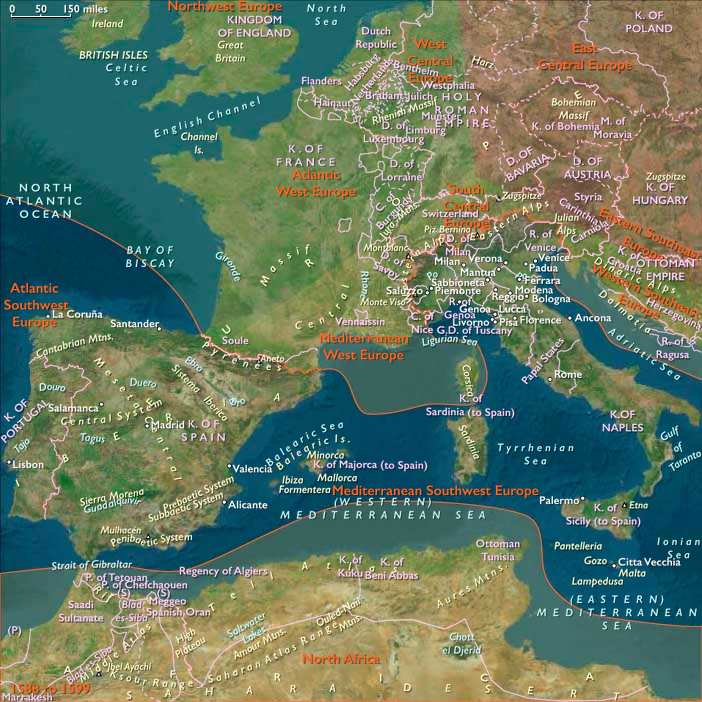
Between 1588 and 1599 CE, Atlantic Southwest Europe—including northern Portugal, Galicia, Asturias, Cantabria, northern León and Castile, northern Navarre, northern Rioja, and the Basque Country—faced substantial upheaval triggered by the catastrophic defeat of the Spanish Armada. This era witnessed significant political strain, mounting economic pressures, intensified religious repression, and growing regional dissatisfaction. Under the Iberian Union, the tensions between local autonomy and centralized Habsburg authority deepened, profoundly reshaping regional dynamics, economic stability, and cultural life.
Political and Military Developments
The Spanish Armada’s Catastrophic Failure (1588)
The disastrous defeat of the Spanish Armada by England in 1588 profoundly impacted Atlantic Southwest Europe. Significant losses of Basque and Cantabrian ships severely disrupted local maritime economies, particularly in Bilbao, Santander, and San Sebastián. The defeat gravely weakened Philip II’s imperial prestige, intensifying regional criticism over heavy taxation, forced levies, and financial burdens imposed to fund ultimately unsuccessful military endeavors.
Heightened Regional Resentment and Governance Strains
In the aftermath, resentment toward central authorities surged, especially in Galicia, Asturias, Cantabria, and the Basque territories—regions historically protective of their local autonomy. Philip II’s continued attempts to impose centralized governance further strained relationships with regional nobility, city councils, and merchant classes. This fostered increased regional tensions, highlighting longstanding grievances over autonomy and governance.
Northern Navarre’s Diplomatic Resilience
Northern Navarre carefully balanced these pressures, leveraging its privileged legal status (fueros) to resist excessive central interference. Pamplona’s pragmatic diplomacy maintained relative autonomy and internal stability despite escalating imperial demands, providing a model for regional resilience amidst broader geopolitical turmoil.
Economic Developments and Maritime Challenges
Maritime Economic Disruption and Basque-Cantabrian Decline
Heavy losses incurred during the Armada campaign triggered severe economic disruption, particularly impacting Basque and Cantabrian maritime communities. Ports such as Bilbao and Santander faced prolonged hardship, as vital shipbuilding industries struggled to recover amid shortages of timber, skilled labor, and financial resources. Northern maritime commerce faced further pressures due to increased English and Dutch privateering and naval hostilities, significantly constraining economic recovery.
Portuguese Maritime Pressures and Commercial Decline
Portuguese northern cities—particularly Porto and Viana do Castelo—faced declining maritime trade with Northern Europe, exacerbated by intensified Anglo-Spanish conflicts and growing aggression from English and Dutch naval forces. Despite Philip II’s assurances of Portuguese commercial privileges, these external threats progressively eroded the profitability and security of Portuguese Atlantic trade, laying bare vulnerabilities within the Iberian Union’s economic structure.
Inflation and Deepening Economic Disparities
Continued silver imports from American colonies intensified inflation, substantially weakening local purchasing power. Inland agricultural communities in Galicia, Asturias, northern León, and Castile suffered severe economic hardship and declining agricultural productivity, prompting rural populations to migrate increasingly toward urban centers in search of employment, deepening regional socioeconomic inequalities.
Cultural and Religious Developments
Intensification of Counter-Reformation and the Inquisition
The Armada’s defeat prompted even greater religious vigilance and inquisitorial activity throughout northern Spain and Portugal. The Spanish and Portuguese inquisitions pursued Protestant sympathizers, conversos, suspected heretics, and intellectual dissidents with heightened severity, significantly affecting urban populations in cities like Pamplona, Valladolid, Porto, Coimbra, and Bilbao. Frequent autos-da-fé publicly reinforced Catholic orthodoxy, drastically restricting intellectual freedom and reinforcing strict doctrinal conformity.
Persistent Cultural Patronage Amid Repression
Despite the restrictive atmosphere, artistic patronage persisted, particularly in religious works reflecting Counter-Reformation ideals. Northern Spanish cities continued investing in religious architecture, painting, sculpture, and literature embodying Tridentine spirituality and orthodox themes. In Portugal, the University of Coimbra and northern monastic institutions sustained scholarly traditions, preserving classical learning and theological studies within increasingly rigid orthodox frameworks.
Galician Cultural Resilience and Pilgrimage Traditions
Galicia maintained cultural resilience and international recognition through Santiago de Compostela’s continued ecclesiastical prominence and pilgrimage traditions. Artistic and architectural patronage remained vibrant, reinforcing Galician identity, cultural vitality, and regional prestige despite mounting religious and economic pressures.
Social and Urban Developments
Urban Strain and Rising Social Unrest
Economic decline and increased fiscal burdens led to rising urban discontent across the region, notably in Portuguese cities like Braga and Porto and Spanish centers such as Valladolid, Burgos, Bilbao, and Santander. Elevated taxation, compulsory military service, and declining local economies prompted sporadic urban riots and public demonstrations, reflecting intensifying resistance against centralization and perceived imperial overreach.
Rural Hardship and Demographic Pressures
Inland rural regions, particularly Galicia, Asturias, northern León, and Castile, faced persistent economic stagnation and rising poverty. Declining agricultural yields, demographic pressures, and heavy taxation contributed significantly to rural impoverishment, prompting migration toward more prosperous urban areas and deepening urban-rural divides.
Regional Autonomy in Basque and Navarrese Territories
The Basque and northern Navarrese territories continued vigorously defending their traditional fueros, preserving local governance structures and regional identities despite increasing pressures from Madrid. This resolute defense of local autonomy underscored the persistent cultural, administrative, and political distinctiveness of these northern communities.
Notable Regional Groups and Settlements
-
Portuguese: Faced declining maritime trade and economic vulnerabilities intensified by ongoing Anglo-Spanish conflicts, yet sustained resilient local governance and cultural continuity despite centralization pressures.
-
Spaniards (Cantabrians, Castilians, Riojans): Experienced heightened fiscal demands, military obligations, and intensified religious orthodoxy, significantly influencing regional political tensions, economic hardships, and cultural production.
-
Galicians: Maintained economic resilience, cultural vitality, and pilgrimage traditions despite growing religious repression and rural economic stagnation, reinforcing regional identity and international significance.
-
Basques (Navarre): Preserved substantial regional autonomy, cultural distinctiveness, and economic resilience despite intensified central authority, decisively shaping regional stability and identity.
Long-Term Significance and Legacy
Between 1588 and 1599 CE, Atlantic Southwest Europe:
-
Experienced profound geopolitical shifts triggered by the Spanish Armada’s catastrophic defeat, significantly weakening Philip II’s imperial authority and prestige, and heightening regional resistance.
-
Faced intensified religious repression under Counter-Reformation pressures, shaping intellectual and cultural landscapes through restrictive inquisitorial oversight.
-
Struggled with severe economic disruption, maritime decline, inflationary pressures, and widening socioeconomic disparities, underscoring vulnerabilities within imperial economic frameworks.
-
Successfully preserved significant regional autonomy, notably in Basque and Navarrese territories, laying enduring foundations for future resistance movements, autonomy struggles, and regional identity politics.
This era profoundly reshaped regional dynamics, highlighting tensions between centralized imperial authority and regional autonomy, decisively influencing Atlantic Southwest Europe’s historical trajectory toward intensified resistance, economic adaptation, heightened religious orthodoxy, and enduring cultural resilience.
People
Groups
Topics
Commodities
Subjects
Regions
Southwest Europe
View →Subregions
