Atlantic Southwest Europe (4–15 CE): Established Roman…
4 CE to 15 CE
Atlantic Southwest Europe (4–15 CE): Established Roman Provincial Order and Cultural Synthesis
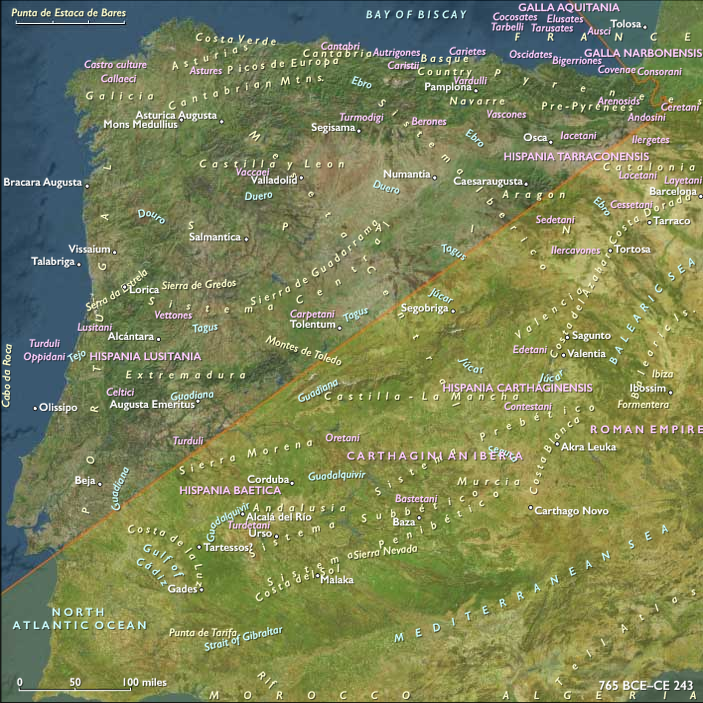
Between 4 and 15 CE, Atlantic Southwest Europe—encompassing northern and central Portugal, Galicia, Asturias, Cantabria, and northern Spain south of the Franco-Spanish border (43.05548° N, 1.22924° W)—continued to experience sustained stability and prosperity under well-established Roman provincial governance. This era saw the solidification of Roman administrative structures and intensified economic integration into the broader Mediterranean world, firmly entrenching slavery within local economies. Concurrently, distinct local cultures remained resilient, dynamically adapting their identities and traditions within an increasingly Romanized society.
Political and Military Developments
Sustained Provincial Stability and Roman Governance
-
Under the early imperial rule of Augustus and Tiberius, Roman provincial administration maintained effective stability throughout the region. Established military garrisons, administrative centers, fortified towns, and expansive road networks reinforced the long-term stability of Roman authority and enabled efficient governance.
-
Local tribal elites remained integral partners in Roman administration, providing essential leadership, supporting internal peace, and facilitating widespread acceptance of Roman provincial rule.
Northern Tribes: Adaptation and Regional Stability
-
Tribes of the previously resistant northern regions—particularly the Gallaeci, Astures, and Cantabri—increasingly accepted Roman provincial authority, though isolated incidents of localized tension persisted. Roman military presence and infrastructure significantly stabilized these northern territories, supporting a smooth administrative integration process.
-
The Vascones effectively maintained their diplomatic neutrality, securing territorial autonomy and preserving cultural distinctiveness within the stable Roman provincial framework.
Economic and Technological Developments
Expansion and Integration into Mediterranean Trade Networks
-
Economic integration with Roman-controlled Mediterranean trade expanded steadily. Atlantic Southwest Europe exported metals (silver, copper, tin), agricultural produce, livestock, timber, salt, textiles, and notably slaves, while importing Mediterranean luxury goods, ceramics, wine, olive oil, and advanced iron products.
-
Provincial elites continued to benefit significantly from these trade relationships, reinforcing social stratification, economic specialization, and regional dependency on Rome.
Ongoing Importance of Slave Labor
-
Slavery continued as a central economic institution, extensively employed in mining, agricultural estates, domestic roles, artisanal production, and urban development. The vibrant slave trade reinforced regional economic integration into the Mediterranean economy and solidified social hierarchies.
Continued Technological and Metallurgical Advancements
-
Advances in metallurgy, notably ironworking, enhanced regional agricultural productivity, artisanal capabilities, and military effectiveness. Skilled artisans produced sophisticated weaponry, armor, agricultural tools, and decorative objects, reflecting a blend of indigenous traditions and Roman technology.
-
Roman infrastructural projects, including roads, aqueducts, urban centers, and fortifications, supported provincial stability, economic growth, and administrative cohesion.
Cultural and Religious Developments
Cultural Integration and Regional Artistic Synthesis
-
Regional material culture continued to exhibit dynamic integration of indigenous Iberian traditions, Celtic influences, and strong Roman artistic styles. Artistic expressions—including elaborate metalwork, decorative jewelry, pottery, ceremonial artifacts, and household goods—highlighted enduring cultural identities and regional pride.
-
Despite Roman provincial dominance, local tribal cultures—particularly among Lusitanians, Gallaeci, Astures, Cantabri, and Vascones—remained notably resilient, creatively adapting within Romanized cultural contexts.
Ritual Continuity and Religious Adaptation
-
Ritual practices maintained their complexity, integrating indigenous Iberian, Celtic, and Roman religious elements. Sacred landscapes, established sanctuaries, and communal ceremonies remained vital, reinforcing communal cohesion, cultural continuity, and tribal identities.
-
Local ancestral rites, communal festivals, and traditional warrior rituals persisted actively, reinforcing regional identity and cultural resilience amidst stable Roman governance.
Notable Tribal Groups and Settlements
-
Lusitanians: Fully integrated within the stable Roman provincial framework, benefiting economically and culturally from sustained prosperity and internal peace.
-
Vettones and Vaccaei: Maintained local autonomy, economic prosperity, and territorial integrity through diplomatic cooperation with Roman authorities.
-
Gallaeci, Astures, Cantabri: Continued transitioning toward full accommodation within Roman provincial structures, maintaining strong local identities and regional traditions.
-
Vascones: Continued their diplomatic neutrality, effectively preserving territorial autonomy, cultural distinctiveness, and internal stability within the provincial system.
Long-Term Significance and Legacy
Between 4 and 15 CE, Atlantic Southwest Europe:
-
Further solidified comprehensive Roman provincial administration, ensuring long-term stability, economic prosperity, and societal integration.
-
Strengthened economic and infrastructural integration into Mediterranean networks, firmly entrenching slavery as a fundamental component of the regional economy and society.
-
Demonstrated sustained cultural resilience, dynamically adapting local traditions within the stable, integrated Roman provincial context, shaping future cultural identities and historical trajectories.
This era reinforced Roman administrative and economic foundations across Atlantic Southwest Europe, decisively shaping the region’s historical evolution and cultural dynamics within the Roman Empire.
Groups
Commodities
Subjects
Regions
Southwest Europe
View →Subregions