
Atlantic West Europe (1540–1551): Religious Tensions, Economic …
Years: 1540 - 1551
Atlantic West Europe (1540–1551): Religious Tensions, Economic Shifts, and Dynastic Ambitions
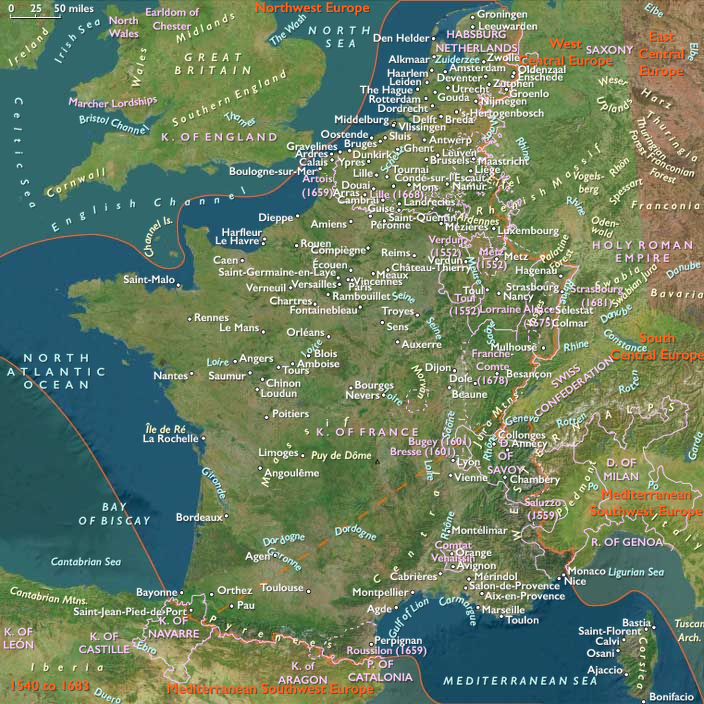
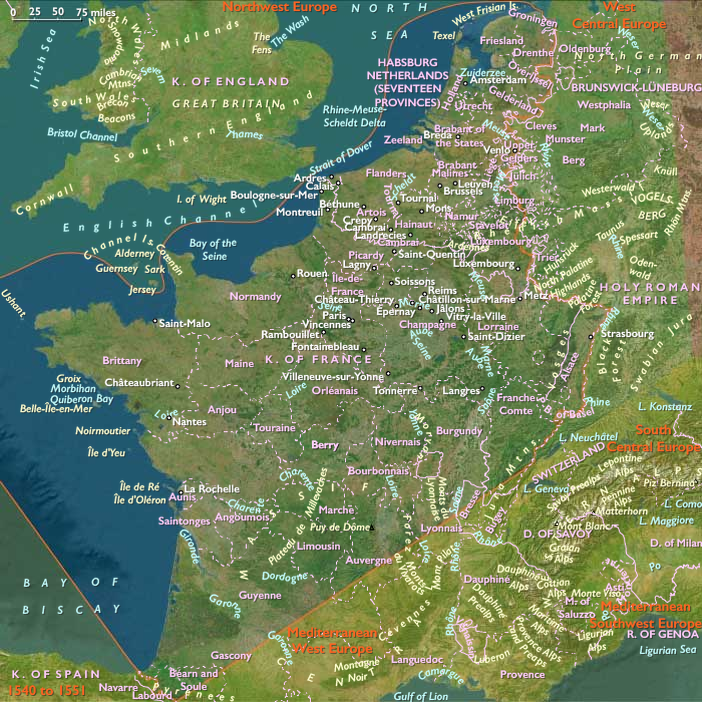
From 1540 to 1551, Atlantic West Europe—including northern France, the Low Countries (modern Belgium, the Netherlands, Luxembourg), and coastal territories facing the Atlantic and English Channel—underwent significant shifts marked by intensifying religious conflict, economic expansion driven by global trade, cultural flourishing, and dynastic struggles. This era, immediately following the height of Renaissance humanism, saw the onset of deeper religious divisions and growing centralization of political power, laying the groundwork for future upheavals.
Political and Military Developments
Francis I and Charles V: Dynastic Rivalries
-
France under King Francis I (r. 1515–1547) continued intense rivalry with the Habsburg Emperor Charles V, whose vast dominions included the Low Countries. The Italian Wars (1494–1559) repeatedly embroiled these territories, with intermittent battles and shifting alliances destabilizing the region politically.
-
The fragile Truce of Nice (1538) ended in 1542 as hostilities reignited between Francis and Charles, extending conflict from Italy into northern France and the Low Countries.
-
The resulting war (1542–1546) strained local economies, increased military taxation, and intensified regional alliances, leading to a temporary stalemate settled by the Treaty of Crépy (1544), which confirmed status quo borders but maintained underlying tensions.
Henry II’s Succession and Continued Conflict
-
Following Francis I’s death in 1547, his son, Henry II (r. 1547–1559), pursued aggressive anti-Habsburg policies, further heightening tensions in the Low Countries and along France’s northern borders.
-
Henry II strengthened French defenses, notably fortifying strategic cities and coastal ports like Boulogne and Calais, reinforcing Atlantic West Europe's militarization in anticipation of continued conflicts.
Economic and Maritime Expansion
Rise of Antwerp as Commercial Hub
-
Antwerp rose as Europe's premier commercial and financial center in this period, benefiting from its strategic location and openness to foreign merchants, including Portuguese spice traders and German banking families such as the Fuggers.
-
In 1549, Antwerp hosted the entry of Prince Philip (later Philip II of Spain), symbolically cementing the city's pivotal role within the Habsburg domains. Its bourse (stock exchange) further facilitated growth in banking, trade finance, and commodity markets.
Bordeaux and Maritime Trade Networks
-
Bordeaux’s wine industry thrived during this era, expanding exports of prized clarets to England, the Netherlands, and the Hanseatic cities. Robust maritime trade boosted the city’s economic vitality, reinforcing Atlantic commerce as a pillar of regional prosperity.
-
Coastal ports across Normandy, Brittany, and the Low Countries also intensified maritime commerce, driven by expanding European demand for salted fish, textiles, grain, and luxury goods, further integrating Atlantic West Europe into global trade networks.
Religious and Intellectual Developments
Rise of Protestantism and Early Repression
-
Protestant ideas, particularly Calvinism, spread rapidly through the Low Countries and northern France, driven by growing dissatisfaction with Catholic ecclesiastical authority. Antwerp and Ghent became early Protestant hubs, fostering clandestine communities of reformers.
-
Emperor Charles V intensified anti-Protestant measures during the 1540s, instituting the Edicts of 1540–1550, which sought severe penalties for heresy, including confiscation of property and execution. These edicts heightened regional tensions and foreshadowed deeper religious conflict.
Humanist Scholarship and Cultural Vibrancy
-
Despite religious strife, humanist scholarship thrived. The University of Leuven (Louvain) continued as a leading intellectual center, attracting humanist scholars who navigated carefully between reformist thought and Catholic orthodoxy.
-
In France, humanist culture flourished at royal courts in Paris and Fontainebleau, attracting scholars and artists who balanced classical Renaissance ideals with contemporary religious and political realities.
Cultural and Artistic Flourishing
Late Renaissance and Early Mannerism
-
Artistic and cultural vitality remained pronounced. The School of Fontainebleau, patronized by Francis I and subsequently Henry II, continued to introduce Italian-influenced Mannerist aesthetics into northern European art and architecture.
-
In the Low Countries, artists such as Pieter Bruegel the Elder (active from the early 1550s) prepared to redefine northern painting, though his major works appeared slightly later. Nevertheless, Flemish painting maintained prominence through artists like Frans Floris, who blended Renaissance naturalism with local traditions.
Literature and Language
-
French literary life was invigorated by figures such as the poet Clément Marot (d. 1544), whose innovative poetry and translations of the Psalms into French shaped the language and influenced Protestant communities.
-
Printing presses in Antwerp, Paris, and Lyon published influential religious, scholarly, and literary texts, significantly impacting intellectual life across Atlantic West Europe.
Social Developments and Urban Growth
Urbanization and Merchant Influence
-
Rapid urbanization continued, driven by trade and commerce, especially in cities such as Antwerp, Bordeaux, Bruges, Ghent, and Rouen. Urban merchant elites increasingly shaped local governance, economic policies, and cultural patronage.
-
However, heightened taxation due to prolonged warfare and imperial conflicts led to periodic urban unrest, particularly in cities burdened by Habsburg military requisitions.
Rural Economy and Social Tensions
-
The rural economy saw gradual changes, as larger landholdings increased productivity through improved farming methods, although rural poverty and social disparities persisted. Tensions occasionally erupted into small-scale rural uprisings and resistance to taxation.
Legacy and Significance
The years 1540–1551 marked the outset of critical transformations across Atlantic West Europe. Intense dynastic struggles between France and Habsburg domains, early stages of Protestant-Catholic conflict, and rapid economic expansion profoundly reshaped the region’s political, economic, and social landscape. This era set the stage for heightened religious conflicts, culminating in the brutal Wars of Religion later in the century, while consolidating economic foundations crucial for the subsequent rise of maritime powers and commercial capitalism.
People
- Charles V, Holy Roman Emperor
- Clément Marot
- Francis I of France
- Frans Floris
- Henry II of France
- Jean Calvin
- Pieter Bruegel the Elder
Groups
- Normandy, Duchy of
- Brittanny, Duchy of
- Christians, Roman Catholic
- Austria, Archduchy of
- Moravian Margravate
- Bohemia, Kingdom of
- France, (Valois) Kingdom of
- Holy Roman Empire
- Netherlands, Habsburg
- Lutheranism
- Protestantism
- Anabaptists
Topics
- Humanism, Renaissance
- Renaissance Architecture
- Renaissance in the Low Countries
- Renaissance, French
- Protestant Reformation
- Colonization of the Americas, French
- Western Art: 1528 to 1540
- Italian War of 1536–38
Commodoties
Subjects
Regions
Subregions
Years: 1540 - 1551
People
- Charles V, Holy Roman Emperor
- Clément Marot
- Francis I of France
- Frans Floris
- Henry II of France
- Jean Calvin
- Pieter Bruegel the Elder
Groups
- Normandy, Duchy of
- Brittanny, Duchy of
- Christians, Roman Catholic
- Austria, Archduchy of
- Moravian Margravate
- Bohemia, Kingdom of
- France, (Valois) Kingdom of
- Holy Roman Empire
- Netherlands, Habsburg
- Lutheranism
- Protestantism
- Anabaptists
Topics
- Humanism, Renaissance
- Renaissance Architecture
- Renaissance in the Low Countries
- Renaissance, French
- Protestant Reformation
- Colonization of the Americas, French
- Western Art: 1528 to 1540
- Italian War of 1536–38
Commodoties
Subjects
Regions
Subregions