
East Central Europe (1636–1647 CE): Continued Warfare, …
Years: 1636 - 1647
East Central Europe (1636–1647 CE): Continued Warfare, French Intervention, Imperial Resilience, and Deepening Crisis
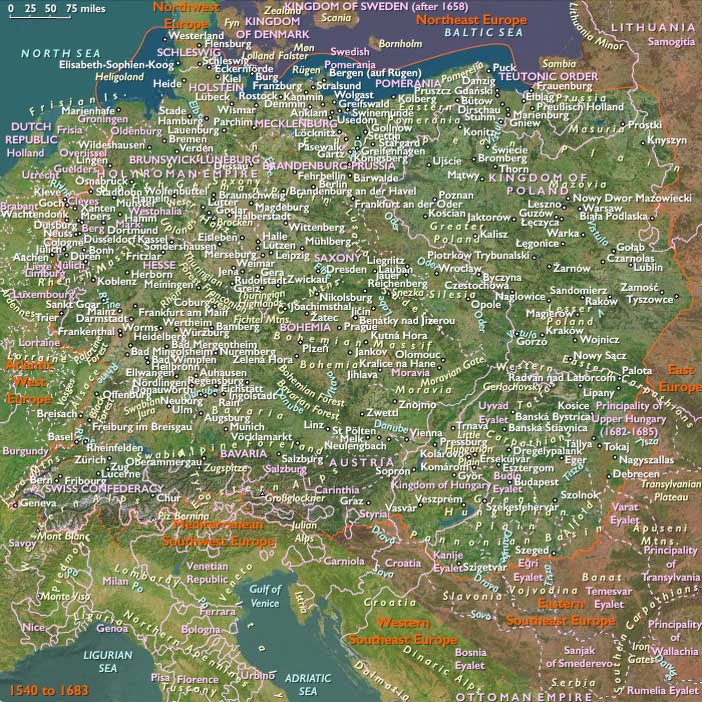
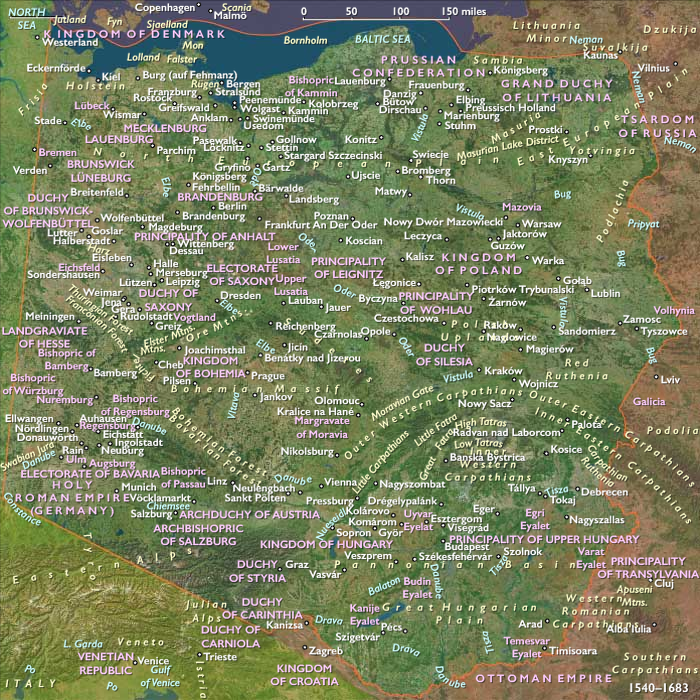
Between 1636 and 1647 CE, East Central Europe—encompassing modern-day Poland, Czechia, Slovakia, Hungary, and eastern Germany and Austria—endured continued devastation during the prolonged Thirty Years' War, which entered its final and most destructive phase. Following the Peace of Prague (1635), the conflict broadened, notably through increased French involvement under Cardinal Richelieu, aimed at countering Habsburg dominance. This period featured relentless fighting, weakening Imperial authority, territorial instability, and severe economic and demographic hardships, ultimately laying the foundation for the war’s eventual conclusion.
Political and Military Developments
Expanded French Intervention and Renewed Conflict
-
The entry of France into active military conflict from 1635 onwards drastically intensified and internationalized the war. Under Cardinal Richelieu, France openly supported Protestant powers to undermine Habsburg influence, despite being Catholic itself.
-
Battles spread deeper into Imperial territory, notably affecting Austria, Bavaria, and territories in Bohemia and Moravia, further destabilizing the region.
Battles and Shifting Alliances
-
Significant military engagements—including the Battle of Wittstock (1636), where Swedish forces decisively defeated Imperial and Saxon troops, reaffirmed Protestant military resilience.
-
The shifting alliances following the Peace of Prague fragmented German states’ loyalties, complicating military strategy and prolonging regional instability.
Imperial Resilience and Declining Authority
-
Despite extensive French and Swedish assaults, the Holy Roman Empire under Emperor Ferdinand III (r. 1637–1657) managed a tenuous defense of core territories in Austria and Bohemia, sustaining Habsburg political resilience.
-
However, Imperial authority weakened notably in peripheral territories, particularly Saxony, Brandenburg, and other Protestant-aligned states increasingly aligned with Swedish-French interests.
Economic and Technological Developments
Ongoing Economic Devastation
-
Persistent warfare further ravaged regional economies, particularly in Bohemia, Moravia, and Bavaria, causing widespread famine, depopulation, inflation, and severe disruption of trade networks and agricultural production.
-
Urban centers continued to suffer from prolonged sieges, looting, and frequent occupations, contributing to widespread economic collapse.
Military Technological Advances and Defensive Strategies
-
Innovations continued in military technology, notably in artillery effectiveness, fortification enhancements, and improved infantry tactics. This period solidified the shift toward professional standing armies, permanently transforming regional military structures.
Cultural and Artistic Developments
Cultural and Intellectual Decline amid Instability
-
Wartime destruction severely disrupted cultural patronage, education, and artistic endeavors across East Central Europe. The instability forced many intellectuals and artists to flee or cease their activities, furthering the region’s cultural impoverishment.
Continued Spread of Baroque Culture
-
Despite widespread devastation, the Baroque style persisted in ecclesiastical architecture, notably in Vienna and other Habsburg-controlled cities, symbolizing continued Catholic resilience and authority.
Settlement and Urban Development
Urban Devastation and Demographic Decline
-
East Central European urban centers—such as Prague, Leipzig, Dresden, and Vienna—faced continued depopulation, infrastructure destruction, and economic paralysis from prolonged military campaigns.
-
Villages and rural areas remained devastated, with many regions becoming nearly depopulated due to famine, disease, forced migration, and military conscription.
Social and Religious Developments
Persistent Religious Polarization and Conflict
-
Despite the Peace of Prague’s efforts at temporary religious reconciliation, sectarian tensions persisted. Protestant-Catholic divides continued fueling regional conflicts and societal polarization, maintaining social instability throughout East Central Europe.
Severe Social Displacement and Population Loss
-
The relentless war precipitated massive human suffering, including forced conscription, refugee displacement, widespread disease outbreaks, and starvation. The profound demographic losses permanently reshaped social structures and regional identities.
Long-Term Consequences and Historical Significance
The era from 1636 to 1647 CE deepened East Central Europe's crisis during the prolonged Thirty Years' War, bringing intense devastation, economic ruin, and demographic catastrophe. French intervention further complicated regional alliances, significantly weakening Imperial authority. Persistent warfare reshaped regional political dynamics, permanently weakening feudal structures, reinforcing territorial fragmentation, and laying the groundwork for the Treaty of Westphalia (1648). These developments set the stage for the war’s conclusion, profoundly altering the subsequent historical trajectory of East Central Europe.
People
Groups
- Polytheism (“paganism”)
- Saxons
- Germans
- Hungarian people
- Wends, or Sorbs (West Slavs)
- Christianity, Chalcedonian
- Bavarians (West Germanic tribe)
- Thuringia, Duchy of
- Passau, Bishopric of
- Saxony, Duchy of
- Germany, Kingdom of (within the Holy Roman Empire)
- Holy Roman Empire
- Slovaks (West Slavs)
- Carinthia, Duchy of
- Austria, Margravate of
- Czechs [formerly Bohemians] (West Slavs)
- Hanseatic league (informally organized)
- Hungary, Kingdom of
- Bamberg, Prince-Bishopric of
- Poland, Greater
- Mazovia, Duchy of
- Austria, Archduchy of
- Bohemia, Kingdom of
- Styria, Duchy of
- Lübeck, Free City of
- Brunswick-Lüneburg, Duchy of
- Regensburg (Ratisbon), Imperial Free City of
- Cammin, Prince-Bishopric of
- Anhalt-Bernburg, Principality of
- Anhalt-Zerbst, Principality of
- Regensburg, Prince-Bishopric of
- Holy Roman Empire
- Brunswick-Wolfenbüttel, Duchy of
- Salzburg, Archbishopric of
- Poland of the later Piasts, Kingdom of
- Lithuania, Grand Duchy of
- Mecklenburg, Duchy of
- Ottoman Empire
- Palatinate, Electoral (Wittelsbach)
- Saxony, Electorate of
- Crown of the Kingdom of Poland
- Poland of the Jagiellonians, Kingdom of
- Lithuania, Grand Duchy of
- Saxe-Lauenburg, Duchy of
- Brandenburg, (Hohenzollern) Margravate of
- Prussian Confederation
- Transylvania (Hungarian governate)
- Ottoman Empire
- Teutonic Knights of Prussia, or Monastic state of the Teutonic Knights (House of the Hospitalers of Saint Mary of the Teutons in Jerusalem)
- Prussia, Royal (autonomous subject of the Polish Crown)
- Bavaria, Wittelsbach Duchy of
- Lutheranism
- Sweden, (second) Kingdom of
- Hungary, Royal
- Jesuits, or Order of the Society of Jesus
- Hungary, Ottoman
- Hungary (Transylvania), Ottoman vassal Kingdom of
- Swedish Empire
- Anhalt-Köthen, Principality of
- Saxe-Weimar, Duchy of
- Saxe-Eisenach, Duchy of
- Saxe-Coburg, Duchy of
- France, (Bourbon) Kingdom of
- Mecklenburg-Güstrow, Duchy of
- Mecklenburg-Schwerin, Duchy of
- Anhalt-Dessau, Principality of
- Anhalt-Plotzkau, Principality of
- Anhalt-Dessau
Topics
- Humanism, Renaissance
- Renaissance Architecture
- Protestant Reformation
- Counter-Reformation (also Catholic Reformation or Catholic Revival)
- Thirty Years' War
- Wittstock, Battle of
Commodoties
Subjects
Regions
Subregions
Related Events
Showing 10 events out of 32410 total
Years: 1636 - 1647
People
Groups
- Polytheism (“paganism”)
- Saxons
- Germans
- Hungarian people
- Wends, or Sorbs (West Slavs)
- Christianity, Chalcedonian
- Bavarians (West Germanic tribe)
- Thuringia, Duchy of
- Passau, Bishopric of
- Saxony, Duchy of
- Germany, Kingdom of (within the Holy Roman Empire)
- Holy Roman Empire
- Slovaks (West Slavs)
- Carinthia, Duchy of
- Austria, Margravate of
- Czechs [formerly Bohemians] (West Slavs)
- Hanseatic league (informally organized)
- Hungary, Kingdom of
- Bamberg, Prince-Bishopric of
- Poland, Greater
- Mazovia, Duchy of
- Austria, Archduchy of
- Bohemia, Kingdom of
- Styria, Duchy of
- Lübeck, Free City of
- Brunswick-Lüneburg, Duchy of
- Regensburg (Ratisbon), Imperial Free City of
- Cammin, Prince-Bishopric of
- Anhalt-Bernburg, Principality of
- Anhalt-Zerbst, Principality of
- Regensburg, Prince-Bishopric of
- Holy Roman Empire
- Brunswick-Wolfenbüttel, Duchy of
- Salzburg, Archbishopric of
- Poland of the later Piasts, Kingdom of
- Lithuania, Grand Duchy of
- Mecklenburg, Duchy of
- Ottoman Empire
- Palatinate, Electoral (Wittelsbach)
- Saxony, Electorate of
- Crown of the Kingdom of Poland
- Poland of the Jagiellonians, Kingdom of
- Lithuania, Grand Duchy of
- Saxe-Lauenburg, Duchy of
- Brandenburg, (Hohenzollern) Margravate of
- Prussian Confederation
- Transylvania (Hungarian governate)
- Ottoman Empire
- Teutonic Knights of Prussia, or Monastic state of the Teutonic Knights (House of the Hospitalers of Saint Mary of the Teutons in Jerusalem)
- Prussia, Royal (autonomous subject of the Polish Crown)
- Bavaria, Wittelsbach Duchy of
- Lutheranism
- Sweden, (second) Kingdom of
- Hungary, Royal
- Jesuits, or Order of the Society of Jesus
- Hungary, Ottoman
- Hungary (Transylvania), Ottoman vassal Kingdom of
- Swedish Empire
- Anhalt-Köthen, Principality of
- Saxe-Weimar, Duchy of
- Saxe-Eisenach, Duchy of
- Saxe-Coburg, Duchy of
- France, (Bourbon) Kingdom of
- Mecklenburg-Güstrow, Duchy of
- Mecklenburg-Schwerin, Duchy of
- Anhalt-Dessau, Principality of
- Anhalt-Plotzkau, Principality of
- Anhalt-Dessau
Topics
- Humanism, Renaissance
- Renaissance Architecture
- Protestant Reformation
- Counter-Reformation (also Catholic Reformation or Catholic Revival)
- Thirty Years' War
- Wittstock, Battle of
Commodoties
Subjects
Regions
Subregions