
The French Invasion at Fuenterrabía (March–June 1476)…
1476 CE
The French Invasion at Fuenterrabía (March–June 1476)
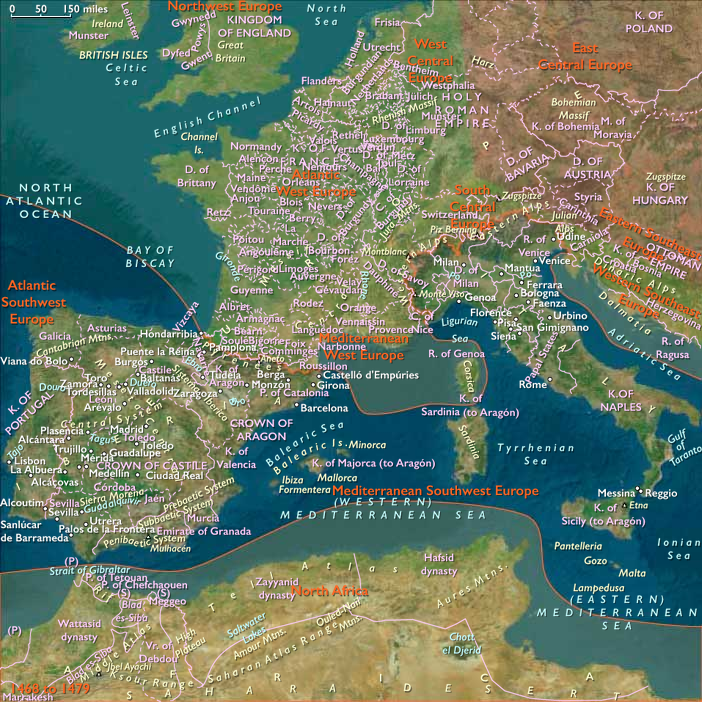
- Alain I of Albret, a powerful French noble and ally of Portugal, led a French force into the Basque border town of Fuenterrabía, attempting to penetrate Castilian territory.
- The objective was to destabilize Isabella and Ferdinand’s rule by creating pressure on the northern frontier and possibly opening a second front to aid Portuguese forces.
- However, between March and June 1476, Castilian forces successfully repelled the French invaders, preventing them from advancing into Castile.
Ferdinand’s Opportunity in Navarre
- With France weakened and unable to break through Castile’s northern defenses, Ferdinand took advantage of the situation to secure Navarre.
- The Kingdom of Navarre, located between Castile and France, was in a state of political instability, with factions aligned either with France or Castile.
- Ferdinand increased Castilian influence in Navarre, strengthening his alliances and neutralizing potential threats.
Impact on the War and Castilian Stability
- France’s failure at Fuenterrabía meant that Portugal was left without direct military support from its ally, weakening Joanna la Beltraneja’s position.
- Ferdinand’s success in Navarre ensured that Castile had a secure northern frontier, allowing him and Isabella to focus on consolidating control in Castile.
- The defeat of the French invasion attempt reinforced Isabella and Ferdinand’s legitimacy, as they were seen as capable defenders of Castile against foreign threats.
Conclusion: The War Tilts Further in Isabella’s Favor
The French failure at Fuenterrabía in 1476 was another blow to the pro-Joanna faction, while Ferdinand’s strategic gains in Navarre further cemented Isabella’s dominance in the war. This event helped set the stage for the final defeat of Portuguese claims to Castile and the eventual Treaty of Alcáçovas (1479), which ended the war in Isabella and Ferdinand’s favor.
Locations
People
Groups
Topics
Commodities
Subjects
Regions
Southwest Europe
View →Subregions
