The Roman Empire is plagued by internal…
244 CE to 387 CE
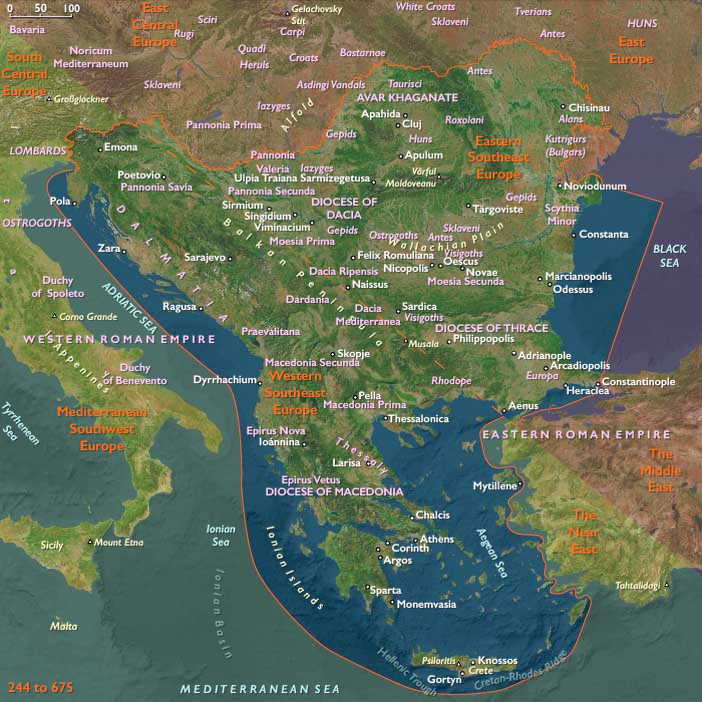
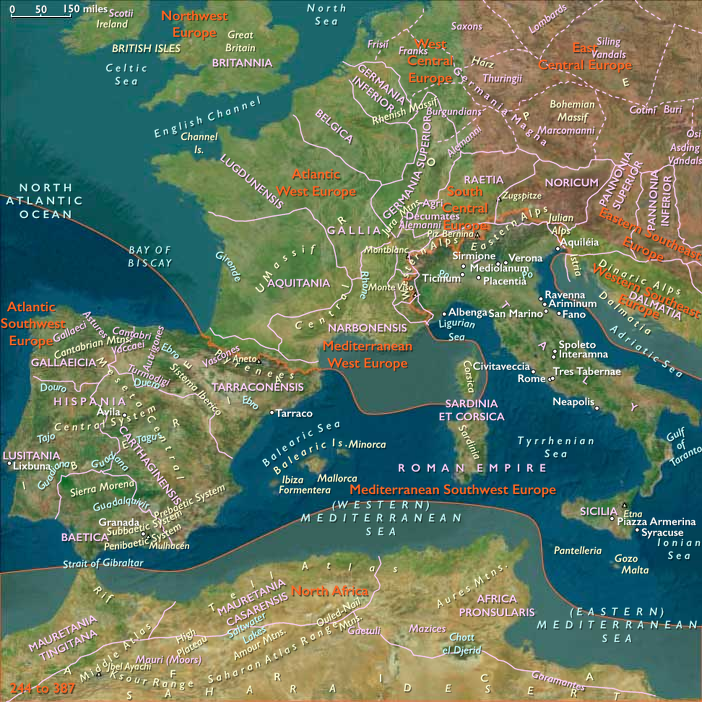
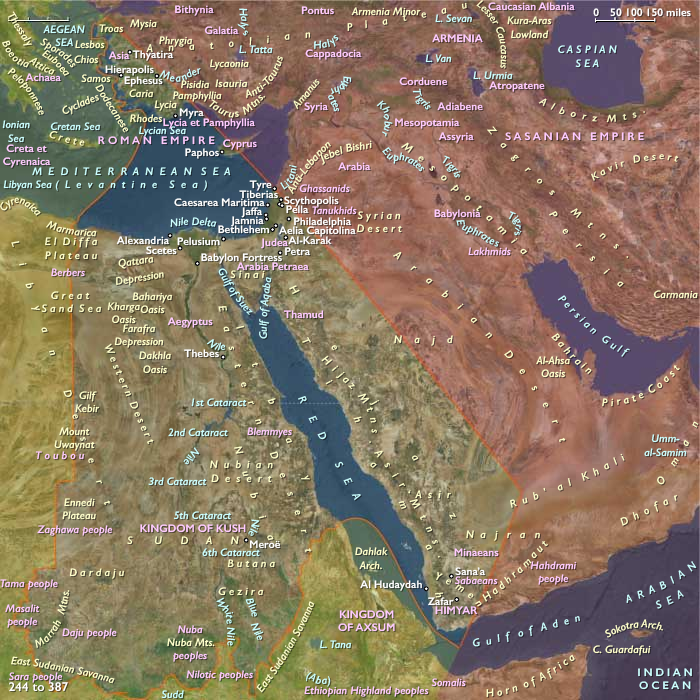
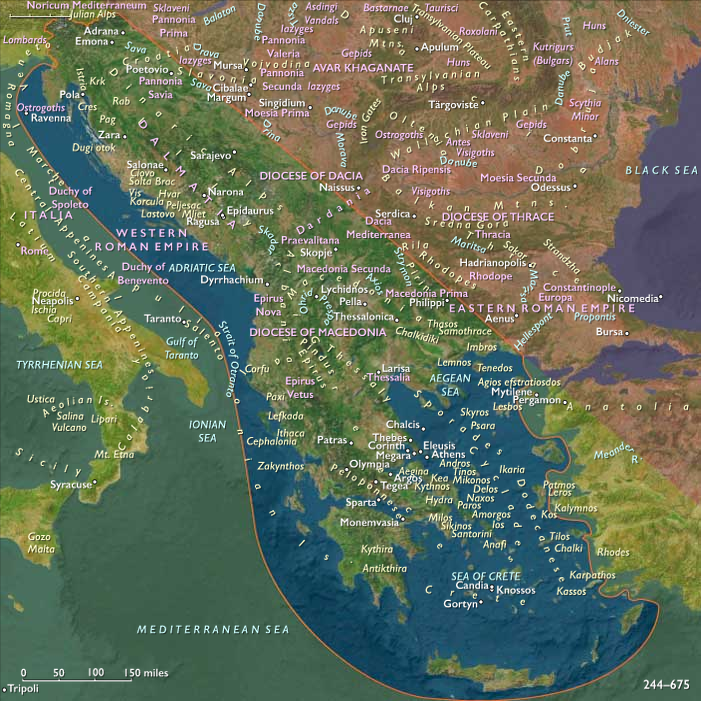
The Roman Empire is plagued by internal strife and economic crisis in the third century CE. Two ethnic Illyrian emperors, both born in Southeastern Europe, take decisive steps to prolong the empire’s survival.
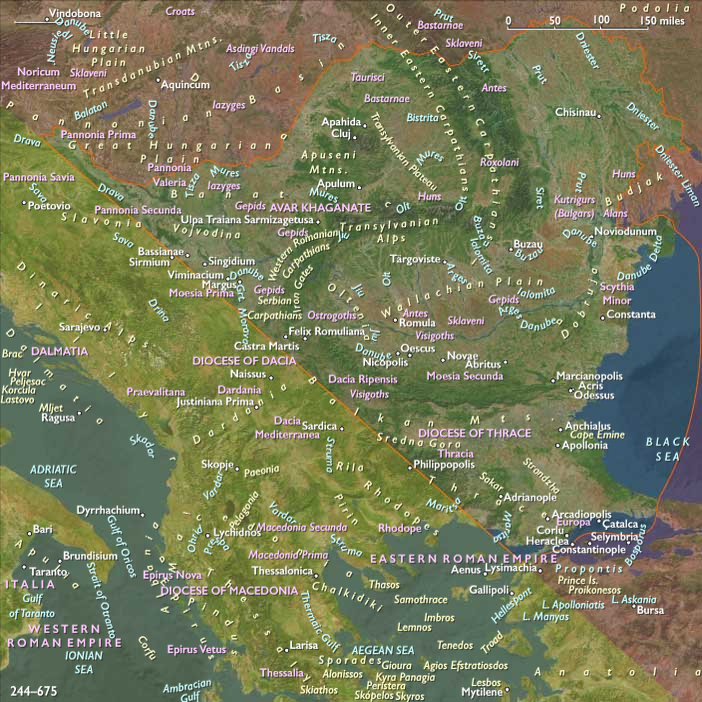
- Emperor Diocletian, born in Dalmatia, implements strong central control, establishes a bureaucratic system, and abolishes the last remnants of Roman republican institutions. In an effort to strengthen loyalty to the state, he launches a persecution of Christians, seeking to reduce their allegiance to the church.
- Emperor Constantine, born near Naissus (modern Niš, Serbia), reunites the empire after years of turmoil, introduces dynastic succession, and in 330 CE, founds a new capital at Byzantium, later named Constantinople. He also legalizes Christianity, marking a pivotal shift in Roman religious policy.
Groups
Polytheism (“paganism”)
View →
Veneti, Adriatic
View →
Thracians
View →
Celts
View →
Illyrians
View →
Macedonia, Roman
View →
Dalmatia (Roman province)
View →
Christians, Jewish
View →
Christians, Early
View →
Moesia Superior (Roman province)
View →
Moesia Inferior (Roman province)
View →
Roman Empire (Rome): Nerva-Antonine dynasty
View →
Pannonia Inferior (Roman province)
View →
Pannonia Superior (Roman province)
View →
Roman Empire (Rome): Non-dynastic
View →
Roman Empire: Tetrarchy
View →
Dardania (Roman province)
View →
Roman Empire: Constantinian dynasty (Nicomedia)
View →
Christianity, Nicene
View →
Roman Empire: Constantinian dynasty (Constantinople)
View →