
Northeast Europe (1648–1659 CE): Treaty of Westphalia, …
Years: 1648 - 1659
Northeast Europe (1648–1659 CE): Treaty of Westphalia, Swedish Expansion, and Regional Rivalries
Between 1648 and 1659 CE, Northeast Europe experienced profound changes driven by the aftermath of the Thirty Years' War and the Treaty of Westphalia. The era was characterized by continued Swedish territorial expansion, renewed Danish–Swedish rivalry, and complex diplomatic maneuverings that reshaped regional alliances and cultural developments.
Impact of the Treaty of Westphalia
The Treaty of Westphalia (1648), ending the Thirty Years' War, confirmed Sweden's status as a major European power. Sweden secured significant territories along the Baltic coast, including Western Pomerania, reinforcing its dominance in the region and bolstering its economic and strategic influence. This settlement marked a critical turning point, enhancing Swedish prestige and geopolitical power.
Continued Swedish Expansion and Influence
Under Queen Christina until her abdication in 1654, and subsequently under Charles X Gustav (r. 1654–1660), Sweden consolidated territorial acquisitions in Livonia, Estonia, and along the Baltic coastline. Cities such as Reval (Tallinn), Riga, and Narva saw enhanced military fortifications and expanded governance, solidifying Swedish authority and economic prosperity.
Danish–Swedish Rivalry and Conflicts
Renewed hostilities emerged between Sweden and Denmark–Norway, culminating in the Northern Wars. Under King Frederick III (from 1648), Denmark–Norway challenged Sweden's regional ascendancy, leading to the outbreak of war in 1657. Despite initial Danish successes, Sweden achieved significant victories, notably crossing the frozen Danish straits in 1658 and forcing Denmark into the Treaty of Roskilde (1658), transferring substantial territories, including Scania, Halland, and Blekinge, to Sweden.
Polish–Lithuanian Commonwealth and Eastern Stability
The Polish–Lithuanian Commonwealth under King John II Casimir Vasa (from 1648) faced significant internal strife and external threats, notably from Sweden and Muscovy. The devastating Swedish invasion during the Deluge (1655–1660) severely weakened the Commonwealth, prompting diplomatic and military efforts to stabilize eastern territories and recover lost influence.
Muscovy’s Assertiveness and Expansion
Under Tsar Alexis I (r. 1645–1676), Muscovy intensified efforts to reclaim influence in the Baltic and neighboring regions. Alexis pursued active diplomatic and military strategies, challenging Polish–Lithuanian and Swedish interests, especially in contested territories like Livonia and Ingria, marking a more assertive Muscovite presence in regional politics.
Prussian Strength and Strategic Neutrality
The Duchy of Prussia, under Duke Frederick William I (the Great Elector), continued strengthening internal stability and economic prosperity. Prussian neutrality during regional conflicts enabled Königsberg and surrounding urban centers to flourish economically and politically, establishing Prussia as a significant and stable entity within Northeast Europe.
Economic Prosperity in Key Urban Centers
Cities such as Reval (Tallinn), Riga, Königsberg, and Visby remained economic hubs, driven by robust maritime commerce, merchant activities, and effective urban governance. These urban centers maintained regional economic stability despite military conflicts and political turbulence.
Cultural and Intellectual Vibrancy
Protestant institutions, particularly Lutheran universities and academies, continued to thrive, advancing educational and cultural development. Increased literacy, intellectual exchanges, and scholarly pursuits significantly enhanced Northeast Europe's cultural and intellectual landscape, reaffirming its position as a leading intellectual hub.
Scientific and Scholarly Advances
The region maintained a strong intellectual tradition, with continued contributions in astronomy, mathematics, and natural sciences. Inspired by scholars like Tycho Brahe, Northeast European scientists and intellectuals contributed significantly to European scientific discourse, fostering innovation and scholarly prestige.
Complex Diplomatic Maneuvers
Diplomatic interactions intensified during this period, marked by shifting alliances, strategic negotiations, and careful management of territorial interests. Relations among Sweden, Denmark–Norway, Poland–Lithuania, Muscovy, and Prussia remained fluid and strategically complex, reflecting ongoing geopolitical uncertainties.
Legacy of the Era
The period from 1648 to 1659 CE significantly reshaped Northeast Europe's political, territorial, and cultural landscapes. The aftermath of Westphalia, renewed rivalries, and substantial cultural advancements deeply influenced subsequent historical trajectories, setting enduring regional boundaries, political alliances, and cultural identities.
People
- Alexis Romanov
- Axel Oxenstierna
- Charles X Gustav of Sweden
- Christina of Sweden
- Frederick III of Denmark
- Frederick William, Elector of Brandenburg
- John II Casimir Vasa
- Tycho Brahe
Groups
- Polytheism (“paganism”)
- Latvians, or Letts (Eastern Balts)
- Estonians
- Christians, Roman Catholic
- Finland under Swedish rule
- Hanseatic League
- Crown of the Kingdom of Poland
- Lutheranism
- Sweden, (second) Kingdom of
- Prussia, Duchy of
- Denmark-Norway, Kingdom of
- Forest Finns
- Russia, Tsardom of
- Estonia, Duchy of (Swedish Estonia)
- Courland and Semigallia, Duchy of
- Polish-Lithuanian Commonwealth (Commonwealth of the Two Nations)
- Finland, (Swedish) Grand Duchy of
- Ingria, Swedish
- Livonia, Swedish
- Pomerania, Swedish
Topics
Subjects
Regions
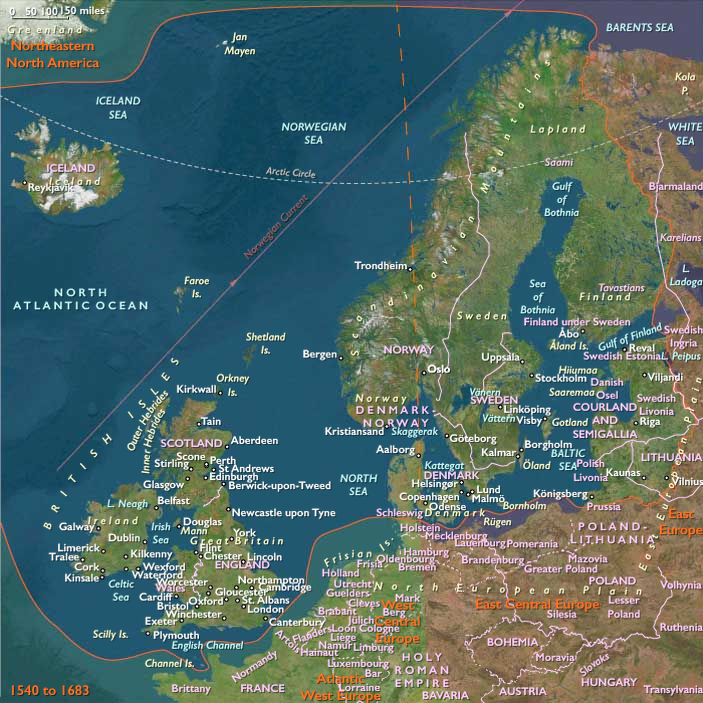
Subregions
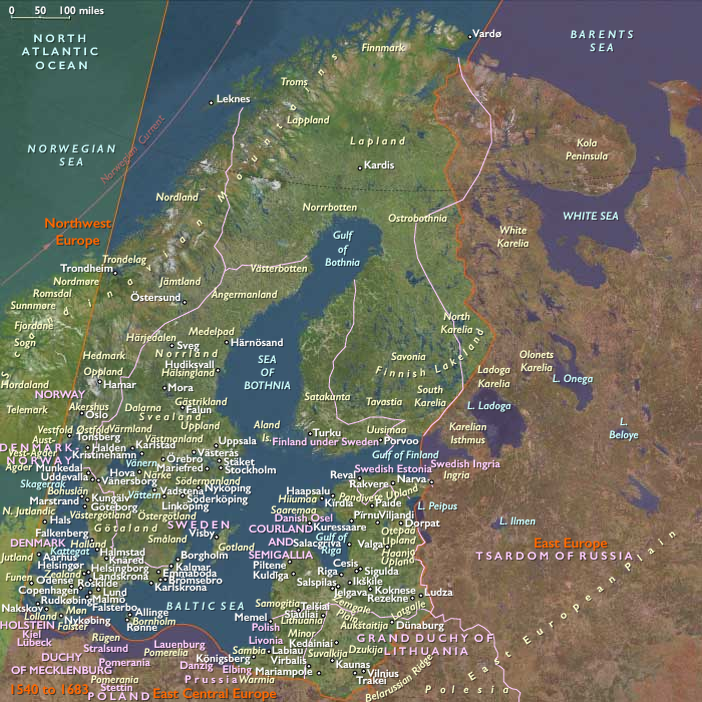
Related Events
Showing 10 events out of 31953 total
Years: 1648 - 1659
People
- Alexis Romanov
- Axel Oxenstierna
- Charles X Gustav of Sweden
- Christina of Sweden
- Frederick III of Denmark
- Frederick William, Elector of Brandenburg
- John II Casimir Vasa
- Tycho Brahe
Groups
- Polytheism (“paganism”)
- Latvians, or Letts (Eastern Balts)
- Estonians
- Christians, Roman Catholic
- Finland under Swedish rule
- Hanseatic League
- Crown of the Kingdom of Poland
- Lutheranism
- Sweden, (second) Kingdom of
- Prussia, Duchy of
- Denmark-Norway, Kingdom of
- Forest Finns
- Russia, Tsardom of
- Estonia, Duchy of (Swedish Estonia)
- Courland and Semigallia, Duchy of
- Polish-Lithuanian Commonwealth (Commonwealth of the Two Nations)
- Finland, (Swedish) Grand Duchy of
- Ingria, Swedish
- Livonia, Swedish
- Pomerania, Swedish
Topics
Subjects
Regions
Subregions